Call Forwarding vs Call Routing: What’s the Difference
By Jamila Parker · · 5 min read

Call forwarding sends calls to another destination, while call routing uses rules to decide where calls should go. Learn when to use each for a smarter business phone system.
Key takeaways
- Call forwarding redirects a call to a chosen number, extension, or device.
- Call routing applies rules such as time, caller, availability, department, or location.
- Forwarding is useful for simple failover and remote work; routing is better for structured customer journeys.
- Many businesses use both: routing decides the path, while forwarding provides the final backup destination.
Call Forwarding vs Call Routing: The Short Answer
Call forwarding and call routing are related VoIP features, but they solve different problems. Call forwarding moves an incoming call from one endpoint to another. Call routing is the broader decision-making process that determines which person, team, queue, voicemail, or external number should receive the call.
A useful way to remember the difference is this: forwarding is the destination change, while routing is the strategy behind the journey. A small business might forward an unanswered office call to the owner’s mobile. A growing support team might route calls by department, business hours, caller selection, agent availability, or priority.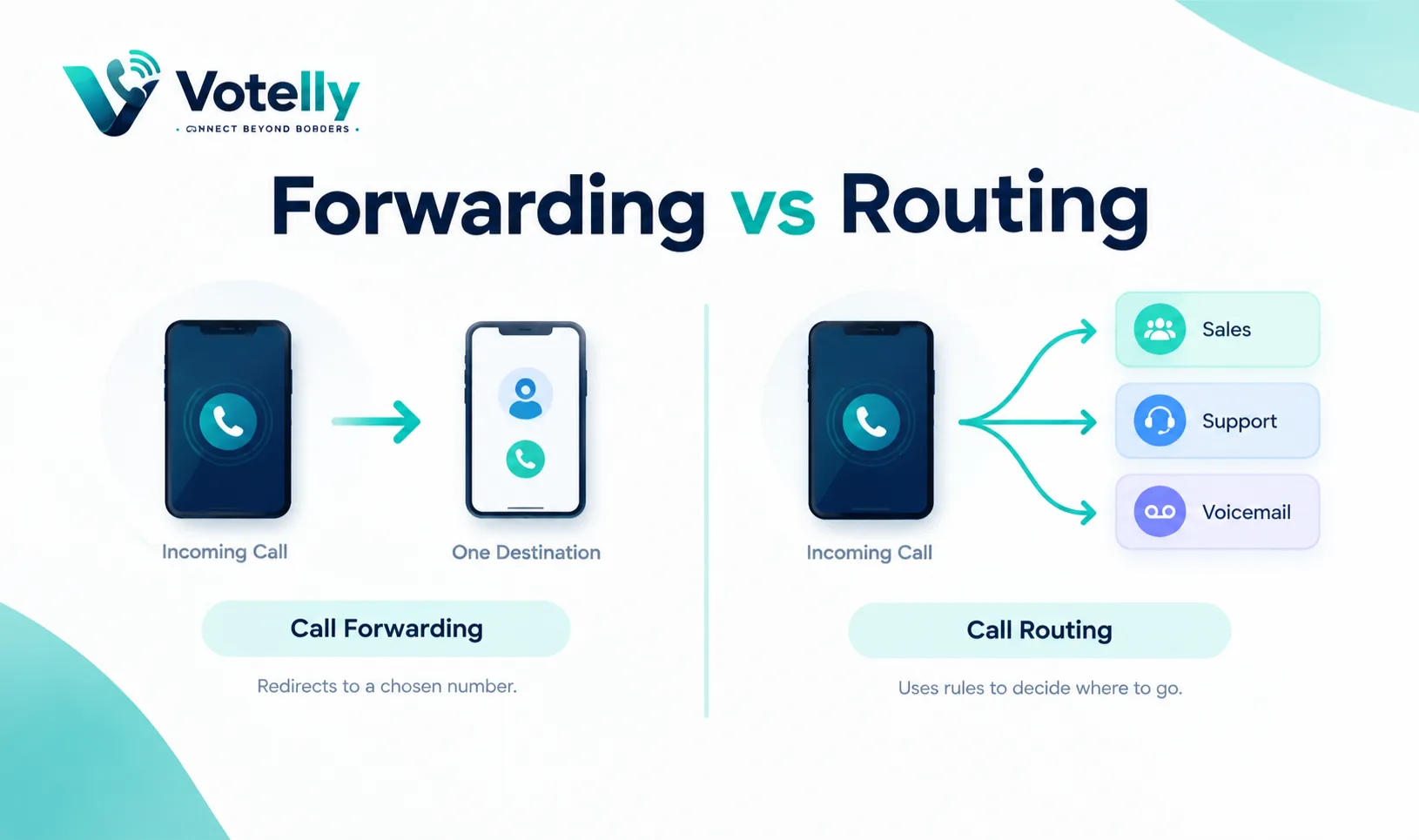
What Is Call Forwarding?
Call forwarding automatically redirects calls from one phone number or extension to another destination. In a VoIP system, the destination may be a colleague’s extension, a mobile phone, a softphone, a ring group, voicemail, or an external office.
Common forwarding types
- Always forward: every call goes directly to another destination.
- Busy forwarding: calls move elsewhere when the original line is engaged.
- No-answer forwarding: calls transfer after a chosen number of rings or seconds.
- Unavailable forwarding: calls use a backup destination when a device or service is offline.
- Follow-me forwarding: calls try several destinations so staff can remain reachable.
Forwarding is easy to understand and quick to deploy. It is particularly helpful for sole traders, mobile teams, after-hours coverage, and business continuity. However, forwarding alone can become difficult to manage when several teams, schedules, priorities, and customer options are involved.
What Is Call Routing?
Call routing uses conditions and rules to direct callers to the most appropriate destination. The rules can consider the number dialled, caller ID, menu selections, time of day, holiday schedules, agent availability, language, location, or queue status.
Examples of routing rules
- Send sales calls to the sales ring group and support calls to a support queue.
- Play a closed message and offer voicemail outside business hours.
- Route priority customers to a dedicated team.
- Send calls to the Melbourne office during local hours, then use an after-hours team.
- Overflow calls to another queue or external number when wait times become too long.
Call routing is usually configured in a cloud phone system, auto attendant, interactive voice response menu, or contact-centre platform. It can combine ring groups, hunt groups, queues, schedules, and failover rules into one call flow.
The Main Differences
Area |
Call forwarding |
Call routing |
Primary purpose |
Redirect a call to another destination. |
Choose the best destination using rules. |
Typical complexity |
Simple to moderate. |
Moderate to advanced. |
Best for |
Remote work, backup, and missed-call prevention. |
Departments, queues, schedules, and customer journeys. |
Decision logic |
Usually based on status or a preset destination. |
Can use time, caller, menu, availability, and priority. |
Reporting |
Often limited to call history and outcomes. |
Can include wait time, abandonment, routing, and agent metrics. |
Which One Should Your Business Use?
Choose call forwarding when you need a straightforward solution. For example, a consultant may want unanswered calls to reach a mobile phone, or a small shop may need its main number to ring a staff member after closing. It is fast, practical, and often enough for a small call volume.
Choose call routing when callers need to reach different people or teams. A business with sales, billing, and technical support should not send every caller to one person. A routed flow can greet the caller, offer options, check opening hours, distribute calls to available staff, and provide an overflow path.
In practice, the strongest setup often combines both features. Routing can send a support call to a queue first; no-answer forwarding can then send it to voicemail, a backup team, or an external number. This creates a reliable experience without forcing staff to monitor every line manually.
Try this on your own numbers
Local numbers in 118 countries, AI call notes and one shared inbox. Live the same day, no contract.
A Practical VoIP Call Flow
Imagine a customer calling a business at 10:00 am:
1. The main number reaches an auto attendant.
2. The caller selects “sales”.
3. Call routing sends the call to the sales ring group.
4. If nobody answers, no-answer forwarding sends it to a sales queue.
5. If the queue reaches its limit, overflow routing sends the caller to voicemail or a backup number.
This example shows why the features are not interchangeable. Forwarding can perform individual transfers, but routing manages the complete logic and caller experience.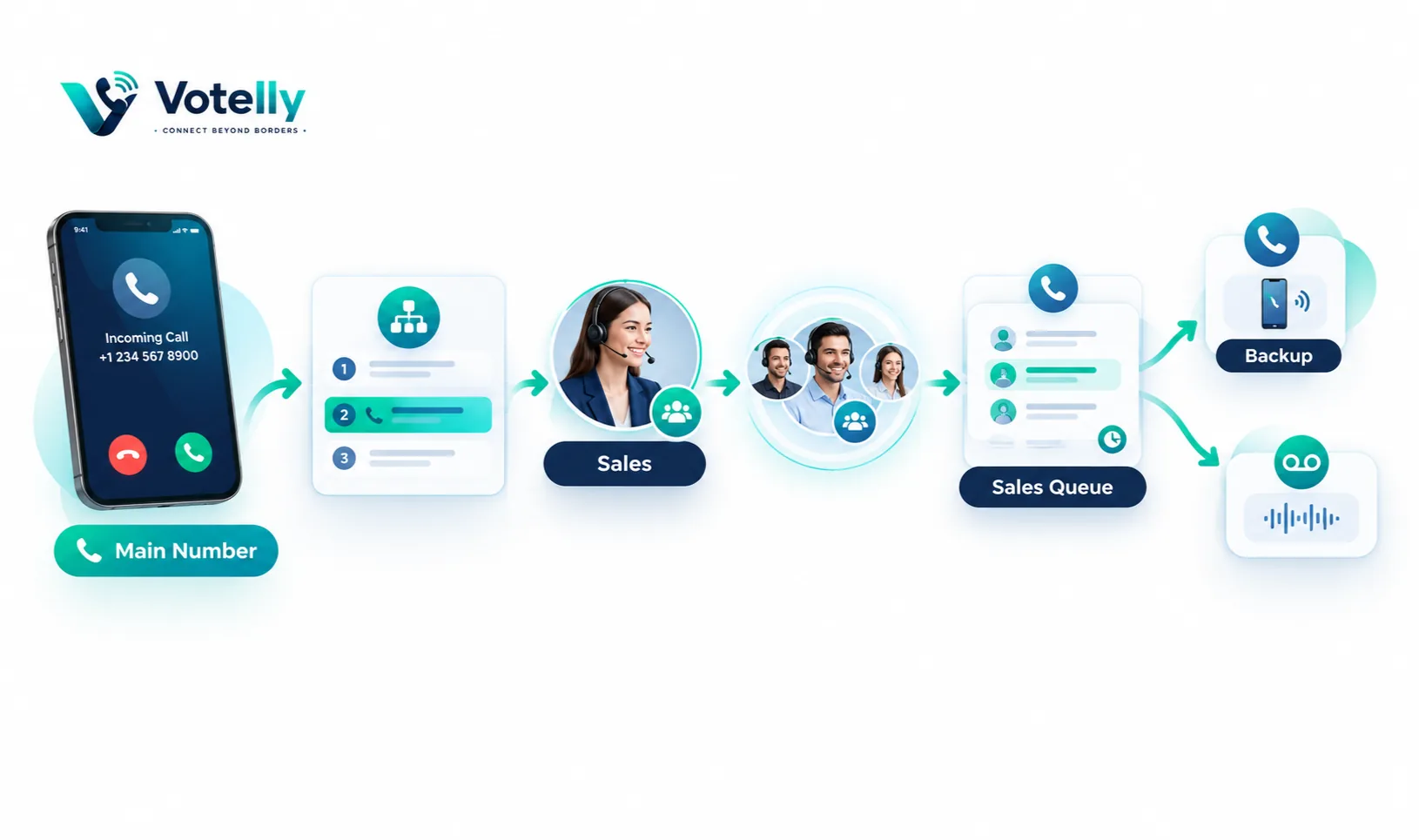
Best Practices for Setup
- Map the caller journey before creating rules. List every department, schedule, queue, and backup destination.
- Use clear greetings and menu labels so callers know what to choose.
- Set a sensible no-answer time and test the flow from an outside number.
- Create holiday and after-hours rules rather than relying on staff to change settings manually.
- Review missed calls, queue wait times, and abandoned calls monthly.
Keep external links and internal links relevant. Link to useful Votelly pages such as your business phone system, virtual phone number, call queue, and VoIP features pages once the exact URLs are confirmed.
Final Verdict
Call forwarding is a simple redirect. Call routing is a rules-based system for managing where calls go and what callers experience. If your business only needs a backup number, forwarding may be enough. If you need departments, schedules, queues, overflow, or customer prioritisation, use call routing—and add forwarding as a failover layer.
Frequently asked questions
- Is call forwarding the same as call routing?
- No. Call forwarding redirects calls to a destination, while call routing uses conditions and rules to select the right destination.
- Can call routing include call forwarding?
- Yes. A routing flow can forward unanswered, overflow, or after-hours calls to another extension, mobile number, voicemail, or external team.
- Is VoIP call forwarding expensive?
- Pricing depends on the provider and plan. Check whether external forwarding minutes, call charges, and advanced routing features are included.
- Can I route calls by business hours?
- Yes. Most business VoIP systems support time-based schedules, holiday rules, closed messages, voicemail, and after-hours destinations.
- Which is better for a small business?
- Forwarding is often sufficient for a simple operation. Routing becomes more useful as the business adds departments, staff, queues, or multiple locations.
- How do I test my call flow?
- Call the main number from an external phone during open, closed, and busy periods. Check every menu option, timeout, overflow rule, voicemail, and external destination.