What Is a Virtual Phone Number and Who Actually Needs One?
By Jamila Parker · · 6 min read

A virtual phone number is not tied to one physical handset. It can route calls and messages to apps, teams or workflows, making it useful for remote work, local presence and privacy.
Key takeaways
- A virtual phone number is a normal telephone number whose routing is not fixed to one physical phone line.
- Businesses use virtual numbers for shared teams, local presence, campaign tracking, privacy and remote work.
- The number still lives inside telecom regulation: country eligibility, identity documents, emergency calling and messaging rules can apply.
- Choose a provider based on number ownership/portability and workflow, not the word “virtual.”
Virtual phone number meaning in plain English
A virtual phone number looks like any other local, mobile, national or toll-free number to the caller, but the service can route it to software, multiple devices or a workflow instead of one fixed copper line. Twilio defines a virtual number as a standard telephone number that is not locked to a specific phone and can route a voice call or text to a phone or software workflow.
That flexibility is why modern business phone systems can let an employee answer the same company number on a laptop at home, a mobile phone while travelling and a desk phone in the office. The caller does not need to know where the employee is.
What happens when someone calls
The public telephone network delivers the call to the provider that controls the number. The provider then applies your routing rules. It might ring one person, ring a team, play an IVR, put the caller in a queue, forward to another number, send the call to voicemail or trigger application logic.
The “virtual” part is therefore about routing and service location, not about the number being fake. It can still be a legitimate public telephone number with local regulatory requirements and porting rules.
Who actually needs a virtual number?
Use case |
Why a virtual number helps |
|
Solo business |
Separates personal and business identity without carrying a second phone |
|
Remote team |
One company number can ring apps and staff in different locations |
|
Sales/support team |
Shared numbers, queues, transfers and conversation history |
|
International expansion |
Local-number presence where regulations and coverage allow |
|
Marketing |
Different numbers can attribute inbound calls to campaigns |
|
Marketplace/platform |
Temporary or masked numbers can protect personal details |
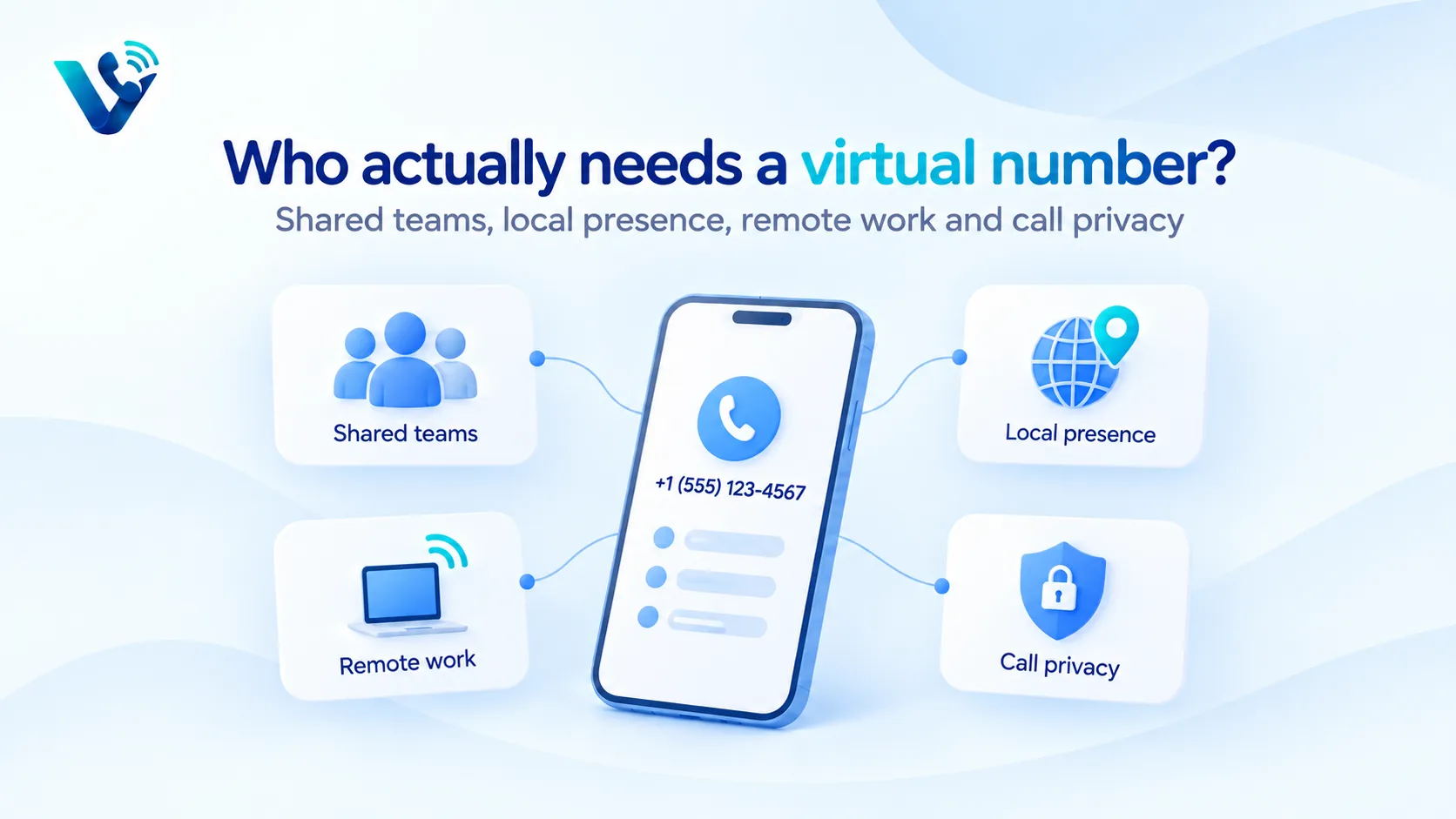
Local, toll-free and mobile virtual numbers are not interchangeable
A provider may offer several number types. Local geographic numbers can create a familiar area presence. Toll-free numbers let callers reach a business without ordinary long-distance charges in supported markets. Mobile-capable numbers can behave differently for SMS and caller expectations. National or non-geographic numbers have their own rules.
Do not assume a provider with “global coverage” can provide every type in every country. Telecom regulators may require a local address, company registration or identity documents. Porting can also differ by number type. Confirm the exact number, not just the country.
How much does a virtual number cost?
Some business phone subscriptions include one number per user or account, while extra numbers are charged monthly. API providers can price the number separately from call minutes. Free consumer services exist, but number retention, business-use terms and support may be weaker.
For a business, the most important cost question is portability. A number published on websites, ads and invoices accumulates value. Prefer a provider that clearly explains how you can port the number in and out, and keep account ownership documented.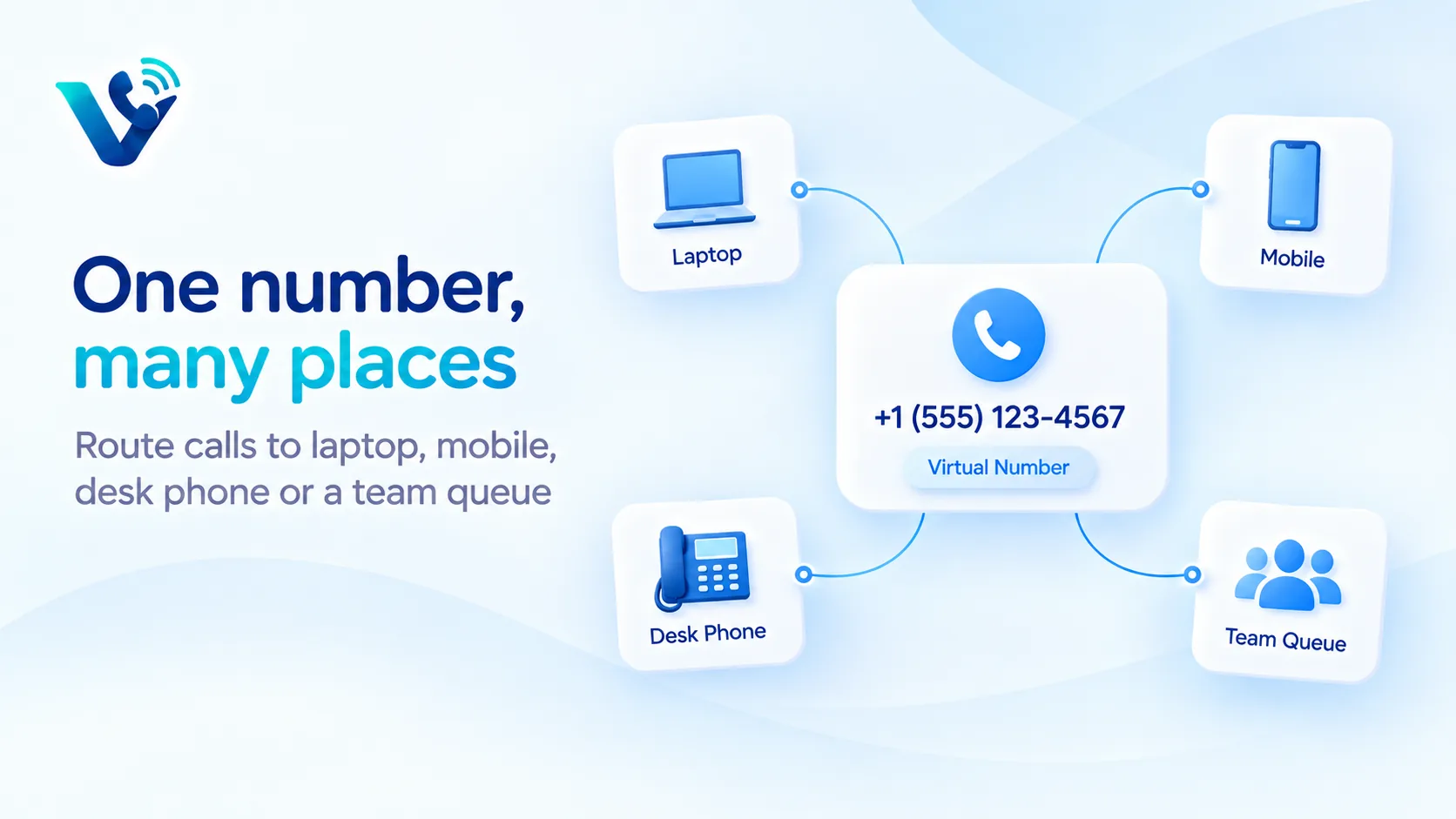
When you do not need one
If a company already has a cloud phone platform with suitable numbers, those are effectively doing the virtual-number job already. Buying another standalone virtual number adds another inbox, bill and routing layer. Likewise, temporary consumer numbers are a poor choice for a long-lived business identity.
Start with the workflow: who should answer, on which devices, during which hours, and what happens if nobody answers. Then choose the number and platform that implements that flow.
What this means when choosing a business phone provider
Translate the technical concept into an operational requirement. Ask the provider to show the setting or workflow in a live tenant, explain which plan includes it, and identify any country, number, device or network limitations. The same technical term can hide very different implementations. A simple queue, for example, may be enough for a five-person team while a contact centre needs skills, priority, callbacks, supervisor controls and detailed reporting. Document the outcome you need before comparing terminology, then test it with a real call rather than accepting a diagram as proof.
Common implementation mistakes
Most failures happen around the edges: number porting is scheduled before routing is tested; remote users are not told how emergency location works; Wi-Fi is assumed to be fine because ordinary web browsing works; recording is enabled without a retention or consent policy; or an integration is purchased without checking what fields it actually writes back. Treat the phone system as an end-to-end service that includes carrier, network, devices, users, identity, data and support. A short pre-launch checklist and named owner for each area prevents far more problems than adding another advanced feature.
A simple validation checklist
Test inbound and outbound calls on desktop and mobile, hold and transfer, voicemail, caller ID, business hours, no-answer behaviour and at least one failure path. If the design uses queues or IVR, call every branch of the flow. If it uses an API or CRM, verify both successful write-back and what happens when the destination is unavailable. Review call-quality data during the pilot and ask users about audio, delay and ease of use. Finally, confirm support escalation and a rollback route before moving a high-value published number.
Try this on your own numbers
Local numbers in 118 countries, AI call notes and one shared inbox. Live the same day, no contract.
Security, privacy and policy checks
Confirm how the service encrypts signalling and media, how administrators control access, and how recordings, transcripts and messages are retained. If SSO or automated user provisioning matters, test the exact identity workflow rather than assuming an enterprise logo means it is included in your tier. Review recording-consent obligations and data-location requirements with the people responsible for privacy and compliance. Also ask how fraud, compromised credentials and unusual international calling are detected. Security features are most useful when administrators can understand and operate them without specialist intervention.
Support and day-two administration
The system still needs to be easy after the implementation team leaves. Have your own administrator add and remove a user, change a number, edit a holiday schedule, update routing, find a recording, export a call report and troubleshoot a poor-quality call. Then review support hours, severity definitions, escalation channels and any extra cost for faster response. For a business phone system, day-two administration and support are part of the product: a small monthly saving can disappear quickly if every routine change becomes a ticket or a consultant task.
Frequently asked questions
- Is a virtual phone number a real phone number?
- Yes. It is a standard telephone number; “virtual” describes flexible routing rather than being tied to one physical line.
- Can a virtual number receive SMS?
- Some can, but messaging capability depends on number type, country and provider. Confirm SMS/MMS support and registration requirements.
- Can I use a virtual number internationally?
- Yes where a provider can legally supply the number and you meet local requirements. Availability varies by country and number type.
- Can I port a virtual number?
- Often yes, but eligibility depends on the number, provider and country. Confirm port-in and port-out before buying.
- Do virtual numbers work on mobile phones?
- Yes. Many cloud phone services let users answer through mobile apps or forward calls to other numbers.
- Is a virtual number good for a small business?
- Yes when it separates personal and business calls or lets a team share a professional number without maintaining a physical PBX.