Mobile vs Landline Numbers: Which Gets Answered More?
By Jamila Parker · · 6 min read

Mobile numbers can reach people directly, while landline-style local numbers can signal place and business identity. The best answer rate depends on who you call, where and why.
Key takeaways
- There is no reliable universal rule that one number type always gets answered more.
- Mobile direct dials can reach a person without a switchboard or gatekeeper.
- Geographic numbers can communicate local business presence in some markets.
- Caller reputation, identification and relevance often matter more than prefix alone.
- The right answer comes from an A/B test using your own audience and local-time windows.
The honest answer: There is no universal winner
Mobile vs landline numbers is often framed as a simple answer-rate contest, but public benchmark data rarely provides a clean head-to-head experiment with the same audience, time, list quality, caller reputation and script. Number type is only one signal among many.
A mobile number may feel personal and can reach an individual directly. A geographic or landline-style number may feel more established or locally relevant. Those perceptions vary by country, age group, industry and whether the recipient already knows the company.
Why mobile direct dials can perform well
Direct mobile numbers remove the switchboard step. Cognism’s B2B direct-dial research argues that verified mobile numbers are substantially more likely to connect than calling a company main line because the call reaches the prospect directly wherever they are.
That is a reach advantage, not proof that every unknown mobile caller ID is more trusted than every local business number. The comparison depends on the baseline: “mobile versus switchboard” is not the same experiment as “mobile caller ID versus geographic caller ID to the same person.”
Why local or landline-style numbers still have advantages
Geographic numbers communicate place. Ofcom describes UK 01 and 02 numbers as geographic numbers linked to an area code. In local services, professional practices and regional support, that location signal can help a recipient understand who may be calling.
A published office number may also be easier to verify on a website or business listing. On the other hand, a local-looking number with no genuine relationship to the business can reduce trust if the recipient searches it and finds inconsistent information.
Perception varies by country
In some countries, mobile prefixes are strongly associated with individuals and direct contact. In others, businesses commonly publish mobile numbers. Geographic numbers may signal a fixed office, but that signal can be less important for remote-first and digital-native buyers.
Do not import assumptions from another market. Look at how legitimate competitors publish contact details, ask customers what they expect and test the number types common in that country. The prefix is part of the message before the call is answered.
Caller reputation can outweigh the prefix
A perfectly chosen mobile or local number performs badly if it is repeatedly flagged as spam. High-volume outbound patterns, abandoned calls, inconsistent caller ID and complaint rates can damage reputation regardless of number type.
Use a valid number customers can return, keep the identity stable long enough to build recognition, and keep website and directory information consistent. Where supported, branded calling or caller-name tools may help. The strongest improvement may come from reputation hygiene rather than switching prefixes.
Inbound and Outbound are different decisions
For inbound marketing, a local or toll-free number may make a customer comfortable initiating contact. For outbound prospecting, a verified direct mobile number can improve access to the intended person. One company can rationally use different number types for each direction.
The public support number does not have to be the same caller ID an account executive uses to reach a known buyer. Cloud calling can manage multiple approved identities as long as return calls route to the correct owner or team.
Match number type to the use case
For outbound B2B sales, direct numbers can reduce gatekeeper friction. For a regional service business, a recognisable local number can support familiarity. For national support, a national or toll-free number may be clearer than either. Freelancers may prefer a dedicated mobile or virtual number that feels direct without exposing a personal line.
Choose based on the customer journey and operating model, not one headline benchmark taken from a different market.
How to run a useful A/B test
Take one audience segment and split it randomly. Call half from one approved number type and half from the other over the same days and local-time windows. Use the same reps, list quality, script and cadence. Measure answered calls, intended-person connects, conversations, positive dispositions, callbacks and meetings.
Answer rate alone can reward accidental pickups that do not become useful conversations. The commercial metric is closer to cost per meaningful conversation or cost per meeting.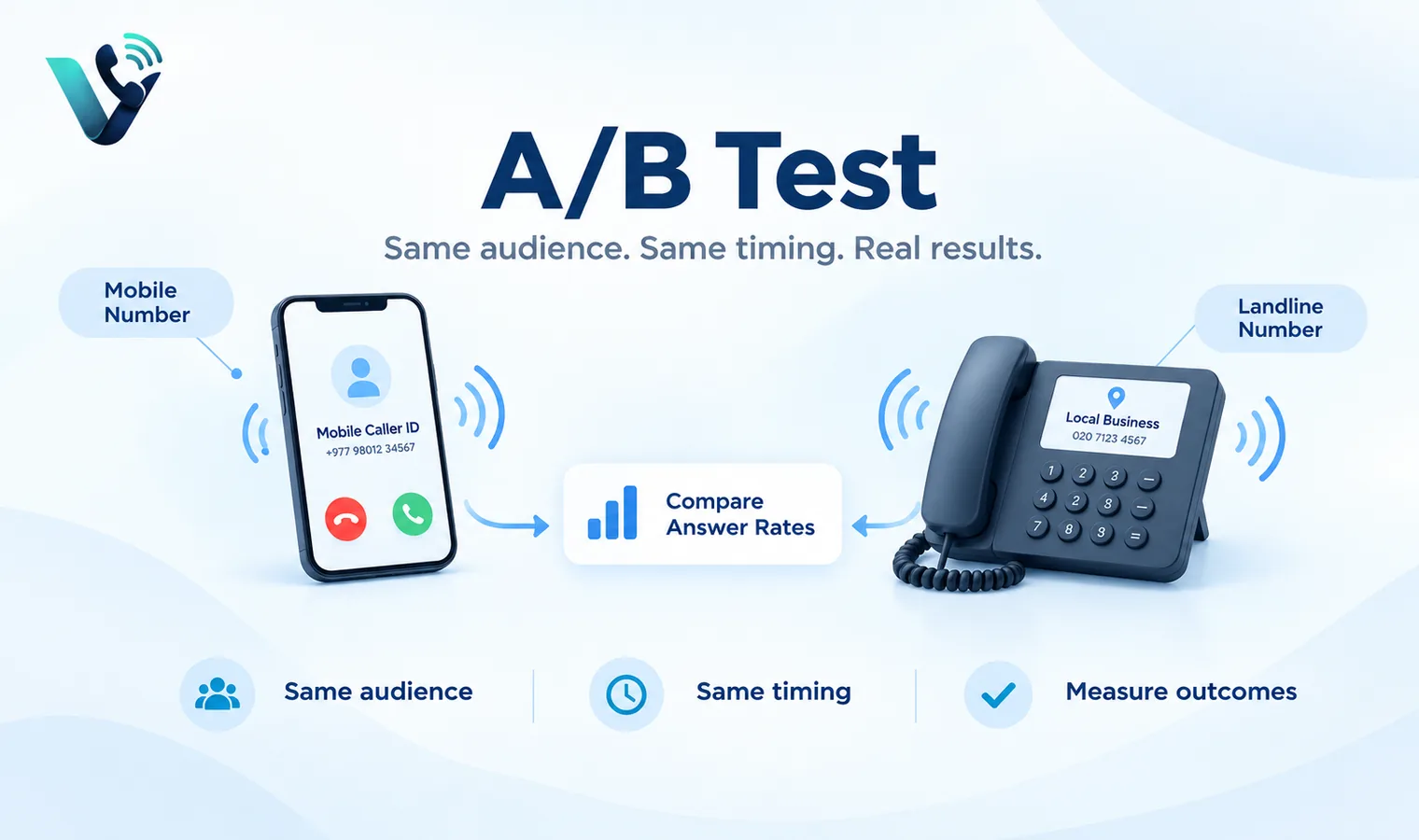
How to interpret the result
If mobile caller ID wins on raw pickups but produces more immediate hang-ups, the apparent advantage may be weak. If a local number has fewer answers but more qualified conversations, it may be commercially stronger. Watch callback behaviour too some prospects ignore an unknown call but later return a number they can verify online.
Repeat the test after caller reputation, list quality or campaign changes. Number-type performance can shift when the underlying audience changes.
What to do in 2026
Use mobile numbers where direct access is the main challenge. Use geographic numbers where local identity is meaningful. Use toll-free or national numbers when one consistent brand identity matters across regions. Then improve the factors that apply to every number type: accurate data, local-time calling, clear identification, low abandonment, sensible frequency and fast follow-up.
Mobile vs landline numbers is not a permanent winner-takes-all choice. Modern cloud calling lets businesses use different approved number types for different markets and measure which one actually works.
Warm calls and cold calls behave differently
A customer expecting a callback may answer almost any clearly identified number. A cold prospect is more likely to screen unfamiliar calls. That means the same mobile or landline caller ID can perform very differently depending on whether the recipient has context.
Analyse warm follow-up calls separately from cold outbound. Otherwise strong callback performance can hide poor cold-call recognition, or vice versa.
The role of contact data quality
Number type matters only after the team is calling the right number. Stale switchboard records, recycled mobiles and incorrect direct dials lower performance regardless of caller ID. Verified contact data can improve the denominator by reducing calls that never had a realistic chance of reaching the buyer.
Before changing caller ID strategy, measure invalid-number rate, wrong-person rate and gatekeeper rate. Fixing data quality may deliver a larger improvement than changing the prefix displayed to prospects.
Try this on your own numbers
Local numbers in 118 countries, AI call notes and one shared inbox. Live the same day, no contract.
Local-time calling and timing effects
A mobile number does not compensate for calling at a bad time. Run tests in the recipient’s local time and compare the same windows across number types. Morning, lunch and late-afternoon patterns can differ by industry, so a blended daily answer rate can hide useful timing effects.
Keep the timing test separate from the number-type test. If you change both at once, you will not know which variable caused the difference.
Where Votelly fits
Votelly can sit behind the public number as the cloud business-calling layer for routing, team access and call management. Keep product-specific claims aligned with the features currently available in your Votelly account and use the live product pages as the source of truth before publishing.
Frequently asked questions
- Do mobile numbers get answered more than landlines?
- Sometimes, especially when a mobile direct dial reaches the intended person directly, but there is no universal benchmark proving mobile always wins.
- Are landline numbers more trusted?
- They can signal local business presence in some markets, but trust also depends on caller reputation, brand recognition and whether the number can be verified.
- What is a direct dial?
- A direct dial reaches a specific person without going through a company switchboard or receptionist.
- Does caller ID reputation affect answer rate?
- Yes. Numbers associated with spam complaints or unusual calling patterns may be screened regardless of whether they are mobile or geographic.
- Should a sales team use local numbers?
- Local numbers can work well where location is meaningful, but teams should use legitimate numbers and test performance with their own audience.
- How should I test mobile vs landline caller IDs?
- Run a controlled A/B test with the same audience, timing and script, then compare intended-person connects, conversations and outcomes not only raw pickups.