Virtual Number Restrictions by Country: Why They Exist and What to Do
By Jamila Parker · · 6 min read

Some countries limit who can obtain local, mobile or national virtual numbers. Learn why those restrictions exist and the compliant alternatives when your preferred number type is unavailable.
Key takeaways
- Countries regulate number ranges differently; “virtual number” is not one universal product.
- Local geographic numbers often carry the strictest local-presence requirements.
- Restrictions are usually tied to identity, locality, anti-fraud or numbering policy.
- A different lawful number type may solve the problem without bypassing regulation.
- Never use false documents, rented identities or unauthorised caller-ID spoofing as a workaround.
Why a country can restrict a number that works over the internet
Virtual number restrictions by country can feel strange because the call may run through cloud infrastructure while the number itself still belongs to a national numbering plan. Regulators decide how local, mobile, national and toll-free ranges can be assigned and what providers must collect from the end user.
The technology can be global while the numbering resource remains local. That is why one provider may offer numbers in many countries but require different documents or entirely different number types in each market. Think of the number as regulated public infrastructure with cloud routing attached, not as an unrestricted internet username.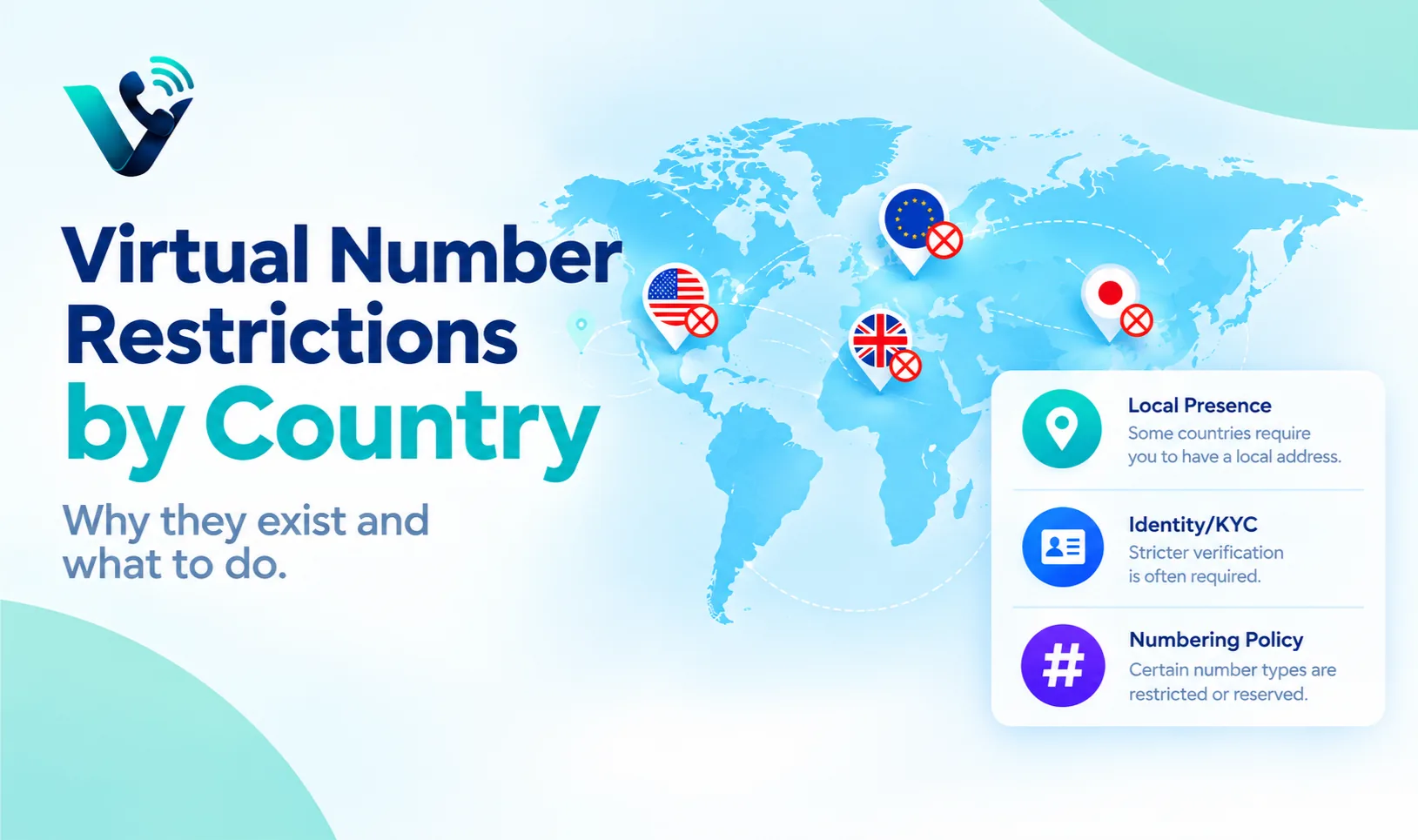
Local-presence rules protect geographic meaning
Geographic numbers traditionally indicate a place. Some regulators still require the end user to have an address in the country, region or locality represented by the prefix. Twilio’s German guidance, for example, requires qualifying business local numbers to be associated with an address in the locality or region covered by the prefix.
Where geography has legal meaning, the compliant choice may be a national or toll-free number rather than a local one. Cloud routing does not erase the numbering rule.
Identity rules are getting stricter
Providers may ask for passports, business-register records, tax IDs, local contact numbers or authorised-representative details. Twilio’s regulatory FAQ says scrutiny has increased because of number misuse, abuse, security concerns and pressure on numbering resources.
For businesses, number procurement is therefore becoming part of compliance operations rather than simply a click in a dashboard. The person who buys the number needs to know which legal entity and end user will actually use it.
Some number types are reserved for particular users
A country may make a number type available to businesses but not individuals, or require different evidence for mobile, national and toll-free ranges. Messaging may have a separate registration layer again. A number that works for voice does not automatically qualify for application-to-person messaging, identity verification or emergency services.
Evaluate the exact use case before choosing the number: inbound voice, outbound calling, SMS, support, sales, verification or emergency calling. Availability in one category is not approval for every use.
Regulatory restriction versus provider limitation
Not every unavailable number is legally prohibited. A provider can lack inventory, carrier coverage, emergency-service support or commercial agreements even when another provider can offer the number compliantly.
Ask whether the limitation is regulatory, inventory-related or platform-specific. If it is regulatory, shopping around usually will not create a lawful bypass. If it is inventory or provider coverage, another provider or number type may solve the problem.
Emergency calling changes the design
Some virtual services require a registered emergency address, and some number configurations are not intended to replace a local emergency-capable line. Rules vary by country and platform. If a virtual number will replace an office landline, emergency behaviour needs to be confirmed before migration.
Remote teams should also document how employees reach local emergency services when working away from the registered office. Emergency capability is an operational requirement, not a feature to discover during an incident.
Compliant alternatives when your first choice is blocked
First, choose another permitted number type. If a geographic number requires a local address you do not have, a national, mobile or toll-free number may have different rules. Second, use a number in a market where your business has a legitimate presence and route it internationally behind the scenes.
Third, if the business genuinely operates locally, complete the required registration through the correct legal entity. These are operational solutions, not regulatory shortcuts.
What not to do
Do not submit a friend’s address, fabricate utility bills, use a borrowed identity solely to obtain a number or present caller ID you do not control. Those tactics can lead to suspension, loss of the number and broader account restrictions.
Caller-identification rules matter too. Ofcom’s UK conditions emphasise valid, diallable calling-line identification so the calling party can be identified and called back. A workaround is only useful if it remains compliant.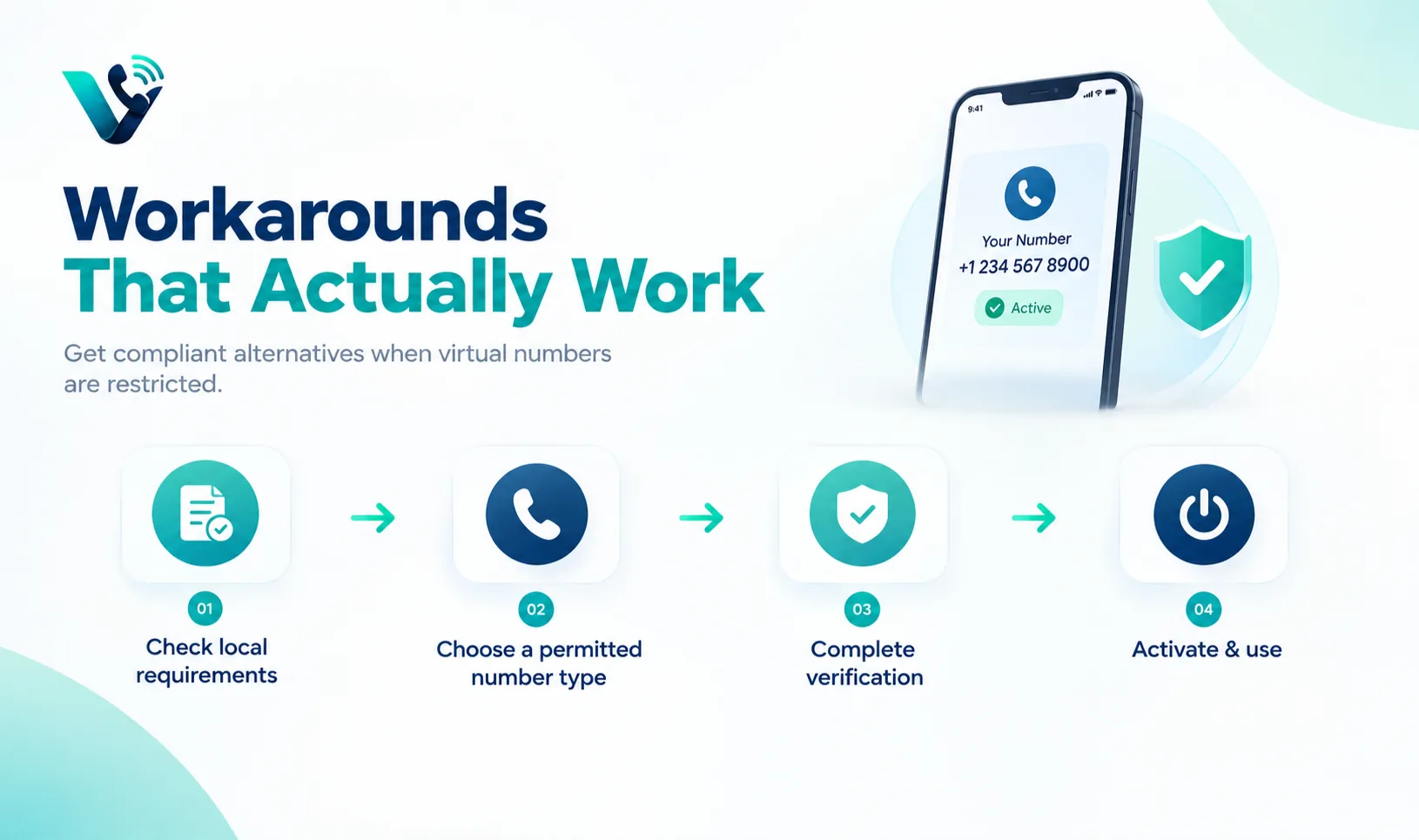
A safer launch sequence for new countries
Start with compliance discovery before marketing. Choose the market, identify number types you can lawfully obtain, collect documents, provision the number, test inbound and outbound calling, then publish it. Do not print a pending number on packaging or launch ads before verification is complete.
For multi-country expansion, build an availability matrix and launch one or two markets at a time. The second country is rarely identical to the first, and documenting the differences makes future expansion faster.
Number scarcity and numbering-plan policy
Not every restriction is about fraud. Number ranges are finite resources, and regulators may protect certain prefixes for particular services or geographic communities. Local presence rules can also prevent organisations with no connection to an area from consuming scarce geographic numbers.
That policy can feel old-fashioned in a cloud environment, but providers are still required to respect it. Businesses should design around the numbering plan rather than assume internet delivery makes geographic rules irrelevant.
Messaging and voice can have different answers
A country may permit a number for inbound voice while restricting application-to-person messaging, sender-ID presentation or bulk outbound traffic. Carrier filtering and registration can also differ by mobile network. One “supported country” label therefore does not describe every capability.
Build a capability checklist for voice, SMS, MMS where relevant, emergency calling, caller ID, number portability and verification use cases. If one feature is essential, confirm it before buying the number.
Try this on your own numbers
Local numbers in 118 countries, AI call notes and one shared inbox. Live the same day, no contract.
How to communicate limitations to customers
If the preferred local number is unavailable, explain the alternative in customer terms rather than regulatory jargon. A national or toll-free number can still provide reliable access. Publish expected call costs where relevant, keep the number consistent across channels and make sure return calls show a valid identity.
The customer usually cares more about reachability, clarity and trust than whether the business obtained a specific prefix. A compliant number with a good call experience is better than a fragile workaround.
Where Votelly fits
Votelly can sit behind the public number as the cloud business-calling layer for routing, team access and call management. Keep product-specific claims aligned with the features currently available in your Votelly account and use the live product pages as the source of truth before publishing.
Frequently asked questions
- Why do some countries restrict virtual numbers?
- Because phone numbers are part of national numbering plans and may be regulated for locality, identity, anti-fraud, security and number-supply reasons.
- Can I buy a local number without a local address?
- Sometimes, but not always. Many geographic number types require a country, region or locality-matched address.
- What is the safest alternative if a local number is unavailable?
- Use another permitted number type such as national, mobile or toll-free, or use a number in a market where your business has a legitimate presence.
- Can I use a virtual office to meet a local-address rule?
- Not necessarily. Some providers reject PO boxes and virtual addresses where a physical local address is required.
- Can I spoof a local caller ID instead?
- No. You should present only authorised, valid caller IDs that comply with the relevant network and regulatory rules.
- Do restrictions apply only to voice calls?
- No. Messaging, identity verification, emergency calling and caller-ID presentation can have separate rules.