Vanity Phone Numbers: Do They Still Work for Modern Businesses?
By Jamila Parker · · 10 min read

Vanity phone numbers can still improve recall when customers hear or briefly see a number, but they work best as part of a modern VoIP, tracking and caller-identity strategy.
Key takeaways
- Vanity phone numbers still have value where recall matters, especially radio, outdoor, print, video and word-of-mouth marketing.
- The word must be short, obvious and easy to map to digits; a confusing vanity phrase can perform worse than a simple numeric pattern.
- VoIP lets a memorable public number route to queues, remote teams and analytics without tying the brand to one physical line.
- Memorability does not replace caller-ID reputation, callback reliability, attribution or compliance.
A decade of mobile apps, click-to-call buttons and messaging has not made the telephone number disappear. Customers still call businesses to buy, book, confirm, complain and get help. That means vanity phone numbers, numbers whose digits correspond to a memorable word or brand phrase still have a role in modern marketing.
What has changed is the job they need to do. A vanity number is no longer the entire phone strategy. It is the memorable front door to a communications system that may include VoIP routing, call queues, CRM records, analytics, branded caller ID and multiple channels.
The right question in 2026 is therefore not simply "do vanity numbers still work?" It is "where does memorability create enough value to justify the number, and how should it fit into a digital customer journey?"
What Is A Vanity Phone Number?
A vanity phone number uses the letters printed on a telephone keypad to turn part or all of a number into a word. Instead of asking customers to remember an arbitrary sequence, a business can promote a service word, category term or brand name.
The FCC has historically described vanity toll-free numbers as numbers whose alphanumeric equivalents spell a name or word that can increase recognition. The concept is familiar in the United States because toll-free vanity numbers have been used heavily in television, radio and direct-response advertising.
Vanity formats are not limited to toll-free numbers in every market or provider, but availability depends on the country's numbering plan and the inventory controlled by providers or numbering administrators.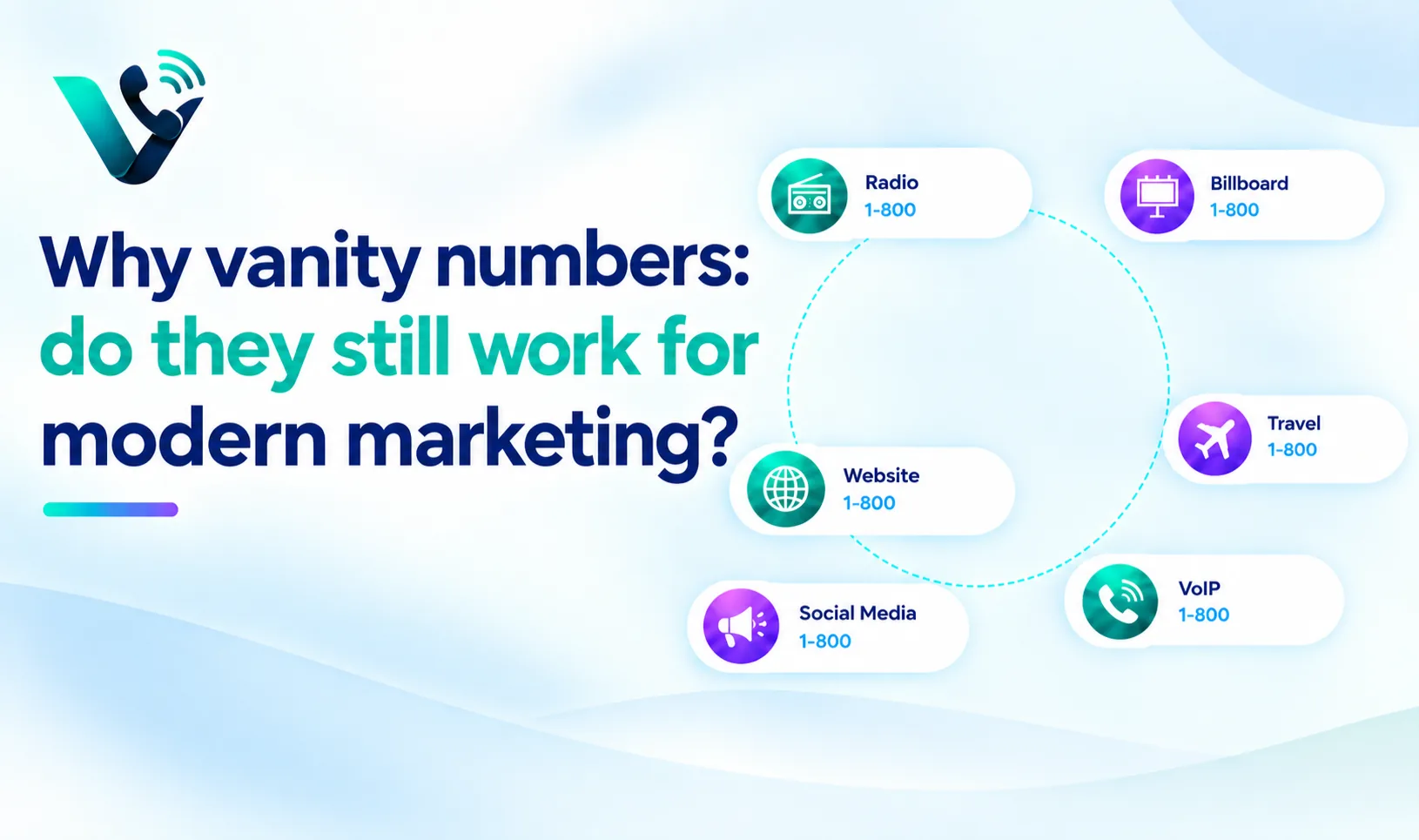
Why Vanity Numbers Became Popular
Traditional advertising often gave the customer only a few seconds to remember a phone number. Radio listeners could not click a link. Drivers passed a billboard. Television viewers saw an advert between programmes. A word was easier to retain than seven random digits.
That memory advantage still applies whenever the customer cannot immediately tap the number. The modern equivalent includes podcasts, streaming audio, short-form video viewed on a television, event signage, vehicle wraps and offline referrals.
A good vanity number compresses the business proposition into a contact action. The customer remembers the service and the route to reach it at the same time.
Where Vanity Phone Numbers Still Work Well
Radio, Podcast And Audio Advertising
Audio is a natural environment for vanity numbers because there is no visible link to click. A clear phrase repeated once or twice can be easier to recall after the advert ends.
Outdoor And Vehicle Advertising
Drivers and pedestrians have limited attention. A simple vanity number or memorable numeric pattern can be more useful than a long URL, especially when the goal is a phone call.
Television And Connected-Tv Campaigns
People frequently watch television on a different device from the one they use to search or call. A memorable phone identity gives them another response path.
Service Businesses With Urgent Intent
Legal services, home services, roadside assistance, reservations and similar categories can benefit when the customer wants to call immediately and remember who to contact later.
Word-Of-Mouth Referrals
A customer can tell a friend "call this phrase" more easily than reciting an unfamiliar digit string. That makes the number itself part of the brand language.
Where A Vanity Number Matters Less
For a software company whose prospects almost always arrive through search, click a demo button and book online, a premium vanity number may contribute little. The same is true for businesses where customers communicate primarily through an authenticated app or account portal.
Digital ads also allow precise click tracking and direct calls from the screen, reducing the need to memorise digits. In those situations, money may be better spent on faster call answering, branded caller identity, customer support or conversion tracking.
A vanity number is strongest when human memory is part of the path to conversion.
What Makes A Good Vanity Number?
The Word Is Obvious
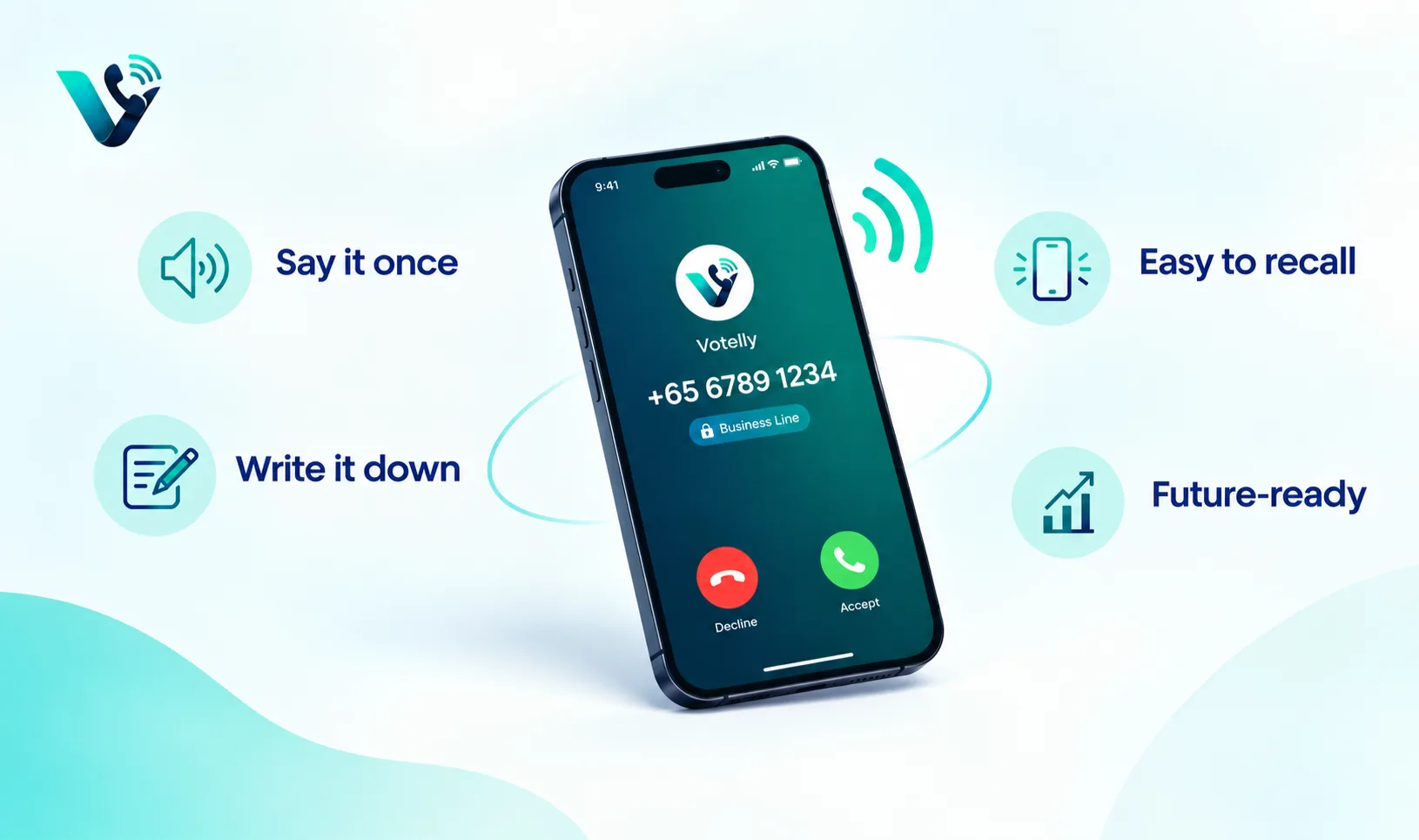
Choose a word that a customer naturally associates with the company, service or category. Avoid obscure abbreviations and clever spellings that need explanation.
The Spelling Is Unambiguous
If customers can spell the word several ways, some will dial the wrong number. Say it aloud to people who have not seen the written form and ask them what they would dial.
The Word Fits The Keypad Cleanly
Do not force extra characters or confusing extensions into the core message. If the word is longer than the required digit sequence, make sure your carrier supports the intended over-dial behaviour before advertising it.
The Numeric Version Is Still Usable
Always know and publish the numeric equivalent somewhere. Customers outside the target market, screen readers, software systems and some devices may work better with digits.
It Will Age With The Business
A number based on one narrow product can become limiting if the company expands. A brand-led or category-led word often has more longevity.
Vanity Number Vs Memorable Numeric Number
A vanity word is not the only way to make a number memorable. Repeating digits, sequences and symmetrical patterns can work extremely well and do not require customers to translate letters.
For international audiences, a simple numeric pattern may be safer because telephone keypads and marketing conventions differ. A numeric pattern also works naturally in messaging apps, forms and machine-readable contexts.
Test both options. Show a small group the number for a few seconds, distract them, and ask them to recall it later. The best choice is the one real customers remember not the one the marketing team finds cleverest.
Vanity Numbers And Voip: A Better Combination Than Old Landlines
Modern VoIP makes a vanity number more flexible than it was in the traditional single-line era. The public number can route to an IVR, sales queue, support team, remote employee, mobile app or after-hours answering service.
A business can also keep the memorable main number stable while changing the people, locations and devices behind it. That protects the marketing investment when the organisation grows or moves offices.
Call analytics can record source, queue, duration and outcome without forcing the company to advertise a different main number for every team. For campaign attribution, you can still use tracking numbers in specific digital channels while preserving the vanity number as the flagship identity.
Do Vanity Numbers Improve Conversion Rates?
There is no single trustworthy conversion percentage that applies across industries. Performance depends on the advertising channel, creative, audience, offer, call handling and how memorable the number actually is.
A more useful business case is to measure assisted recall and call behaviour. Run matched campaigns where one creative uses the vanity number and another uses a standard number or digital response mechanism. Track qualified calls and conversions, not just dial volume.
If a vanity number increases low-quality curiosity calls but not revenue, the result is less valuable than it appears. If it increases qualified calls from offline media where attribution is otherwise difficult, it may justify a premium price.
Vanity Numbers And Caller ID Reputation
A memorable inbound number can also be used for outbound callbacks, but that introduces a second responsibility: Reputation. Customers may remember the number and still ignore it if the handset labels it as suspected spam.
Register business identity where appropriate, use consistent caller ID, keep callbacks working and monitor complaint patterns. If your outbound sales operation makes high-volume prospecting calls, consider whether those calls should share the same number used for important customer support.
A flagship brand number is valuable enough to protect.
Vanity Numbers, Toll-Free Numbers And Modern Trust
In the US, vanity numbers are often associated with toll-free ranges such as 800 and other toll-free codes. Toll-free can support a national identity and reduce geographic bias, while the vanity word creates recall.
However, a toll-free prefix does not automatically signal trust. Customers increasingly judge the business name, website, reviews and caller identification together. The number should reinforce those signals rather than attempt to replace them.
For other countries, the most familiar business number categories differ. A UK company might prefer a geographic 01/02 number, a nationwide 03 number or an 080 free-to-caller number. An Australian company may evaluate geographic, 13, 1300 or 1800 options. Build the branding concept around the numbering plan customers actually understand.
SEO And Digital Marketing: Does The Phone Number Itself Help Ranking?
A vanity phone number is not an SEO shortcut. Search engines rank pages based on many signals, and there is no reason to expect a clever number by itself to improve organic rankings.
What matters digitally is consistency. Use the correct business phone number in relevant business listings and contact pages. Avoid creating inconsistent contact information across important profiles. For local businesses, keep business identity details accurate and current.
The number can still improve conversion from SEO traffic if a visitor prefers to call. Make it clickable on mobile, place it near high-intent content and route it to a team that can answer quickly.
How To Choose And Launch A Vanity Number
- Define the channels where memorability matters.
- List short brand, category and service words customers already understand.
- Convert the words to keypad digits and review available numbers.
- Check the number's previous use and current reputation where possible.
- Confirm provider ownership, portability and routing terms.
- Test the phrase aloud and in visual creative.
- Configure the VoIP routing, voicemail and business hours before launch.
- Publish the numeric equivalent as well as the vanity version.
- Track calls, qualified outcomes and conversion value.
- Protect the number's caller-ID reputation over time.
Note: Availability, assignment and portability of memorable numbers depend on the relevant numbering authority and provider. Confirm the current terms before buying media or printing permanent materials.
Common Mistakes To Avoid
- Choosing a word that is longer or harder to spell than the number itself.
- Using a phrase that only employees understand.
- Paying a premium before testing whether phone recall matters in the target channel.
- Forgetting the numeric equivalent on the website and accessible materials.
- Routing a famous number to an understaffed queue.
- Mixing the flagship number with risky high-volume outbound campaigns.
- Assuming a memorable number means customers will automatically trust the call.
Try this on your own numbers
Local numbers in 118 countries, AI call notes and one shared inbox. Live the same day, no contract.
Final Takeaway
Vanity phone numbers still work for modern businesses when they solve a real memory problem. They are especially useful when customers hear the brand away from a clickable screen or when a business wants one recognisable national contact identity.
Their role is narrower and more sophisticated than it used to be. The winning setup combines a memorable public number with reliable VoIP routing, good caller identity, analytics, accessibility and strong call handling.
If the number makes the business easier to remember and easier to reach, it is doing useful work. If it is only clever, expensive and disconnected from how customers actually buy, the nostalgia is not enough.
When A Vanity Number Is Most Useful
Channel / use case |
Vanity-number value |
Why |
|
Radio / podcast |
High |
Listeners cannot immediately click a link |
|
Billboard / vehicle |
High |
Very short attention window rewards recall |
|
Search / website |
Medium |
Click-to-call reduces memory requirement |
|
Logged-in app / portal |
Low to medium |
Customers already have an authenticated contact path |
|
National customer service |
Potentially high |
One memorable identity can unify multiple locations |
Frequently asked questions
- What is a vanity phone number?
- It is a phone number whose keypad letters form a memorable word, name or phrase, often used in advertising and branding.
- Do vanity phone numbers still work in 2026?
- Yes, particularly in audio, outdoor, TV and word-of-mouth contexts where customers need to remember a number rather than click it immediately.
- Are vanity phone numbers only toll-free?
- Not necessarily. Availability depends on the country, number type and provider, although toll-free vanity numbers are especially familiar in the United States.
- Are vanity numbers good for SEO?
- They are not a direct SEO shortcut. Their digital value is mainly conversion and business-identity consistency when visitors choose to call.
- Can a vanity number work with VoIP?
- Yes. A vanity number can route through a VoIP platform to IVRs, queues, remote teams, mobile apps and other destinations.
- What is better: a vanity word or repeating digits?
- Whichever your customers remember more easily. Test recall, spelling and international usability before choosing.