Should You Publish a Different Phone Number Per Marketing Channel?
By Jamila Parker · · 9 min read

Learn when to use a different phone number per marketing channel, how call tracking and dynamic number insertion work, and how to connect phone leads to CRM attribution.
Key takeaways
- You do not need a different phone number for every marketing channel. Use separate tracking numbers only where the attribution will change a real marketing or sales decision.
- Keep one stable main business number for core identity and use tracking numbers selectively for paid campaigns, offline media, or high-value channels.
- Static tracking numbers work well for fixed assets such as flyers, billboards, radio, print, and event materials.
- Dynamic Number Insertion (DNI) is better suited to websites because the displayed number can change based on the visitor source or campaign.
- Connect each tracking number to CRM source, ownership, call outcome, and next action so phone attribution leads to measurable commercial outcomes.
- Judge channels by qualified calls, meetings, opportunities, and revenue where possible - not simply total call volume.
Publishing a different phone number per marketing channel can make call attribution much clearer, but using too many numbers can also create unnecessary cost and operational complexity. The right strategy is not to assign a unique number to every campaign by default. It is to use call tracking where the additional source data helps the business make better marketing, routing, or sales decisions.
When one business phone number appears everywhere-on the website, paid ads, social profiles, Google Business Profile, brochures, print campaigns, event materials, and offline advertising-every inbound call can look the same once it reaches the phone system. The team knows that someone called, but it may not know which channel created the enquiry. That makes it harder to compare spend, lead quality, and downstream sales outcomes.
A different phone number per marketing channel solves that attribution gap by using selected tracking numbers that forward into the same sales or support workflow. The caller experience can stay simple while the dialled number becomes a source signal that can be recorded with the lead, campaign, call outcome, and CRM record.
Why one business number can hide marketing performance
A single main business number is excellent for brand consistency, but it can make source attribution weak when the same number is published across many channels. If paid search, organic traffic, social media, direct mail, a billboard, and an event banner all use the same line, the phone system cannot reliably identify the source from the dialled number alone.
Asking callers how they found the business is better than having no attribution, but it depends on memory, staff consistency, and how clearly the caller remembers the source. A tracking number creates a stronger signal because the source is known before the conversation begins.
The goal is not to replace every form of attribution. Phone-source data should sit alongside campaign tags, web analytics, landing-page data, CRM records, and eventual opportunity outcomes. The strongest setup connects the call event to the same customer journey used for other lead channels.
How channel-based phone numbers work
The basic model is straightforward. Keep one primary business number and add a small pool of tracking numbers for selected marketing sources. Each tracking number forwards calls into the same destination, queue, team, or routing workflow. Customers do not need to understand the tracking layer, and the sales team does not need a separate phone for each number.
The difference appears in the reporting. Because the system knows which number the caller dialled, that number can act as a source label. The business can then associate the call with a channel such as paid search, organic website traffic, social advertising, a trade show, a print campaign, or another defined source.
For a useful implementation, name each number clearly inside the phone platform and CRM. A label such as Paid Search-Brand Campaign is much easier to report on than an unlabeled phone number that must be decoded later.
Static tracking numbers vs Dynamic Number Insertion
Static tracking numbers are best for sources where the phone number is fixed. A flyer, billboard, radio advertisement, direct-mail piece, printed brochure, trade-show stand, or partner campaign can each use a dedicated number when the business wants to measure calls from that asset.
Dynamic Number Insertion, or DNI, is more useful on websites. Instead of permanently publishing one tracking number for every visitor, the site can display different numbers based on the visitor source or campaign. A visitor arriving from Google Ads may see one number while an organic visitor sees another. The call can then be tied back to the source data associated with that visit.
DNI becomes especially useful when website traffic comes from several meaningful acquisition sources and call volume is high enough to justify more detailed attribution. For a small site with only a few phone leads, a simpler channel-level setup may be easier to maintain.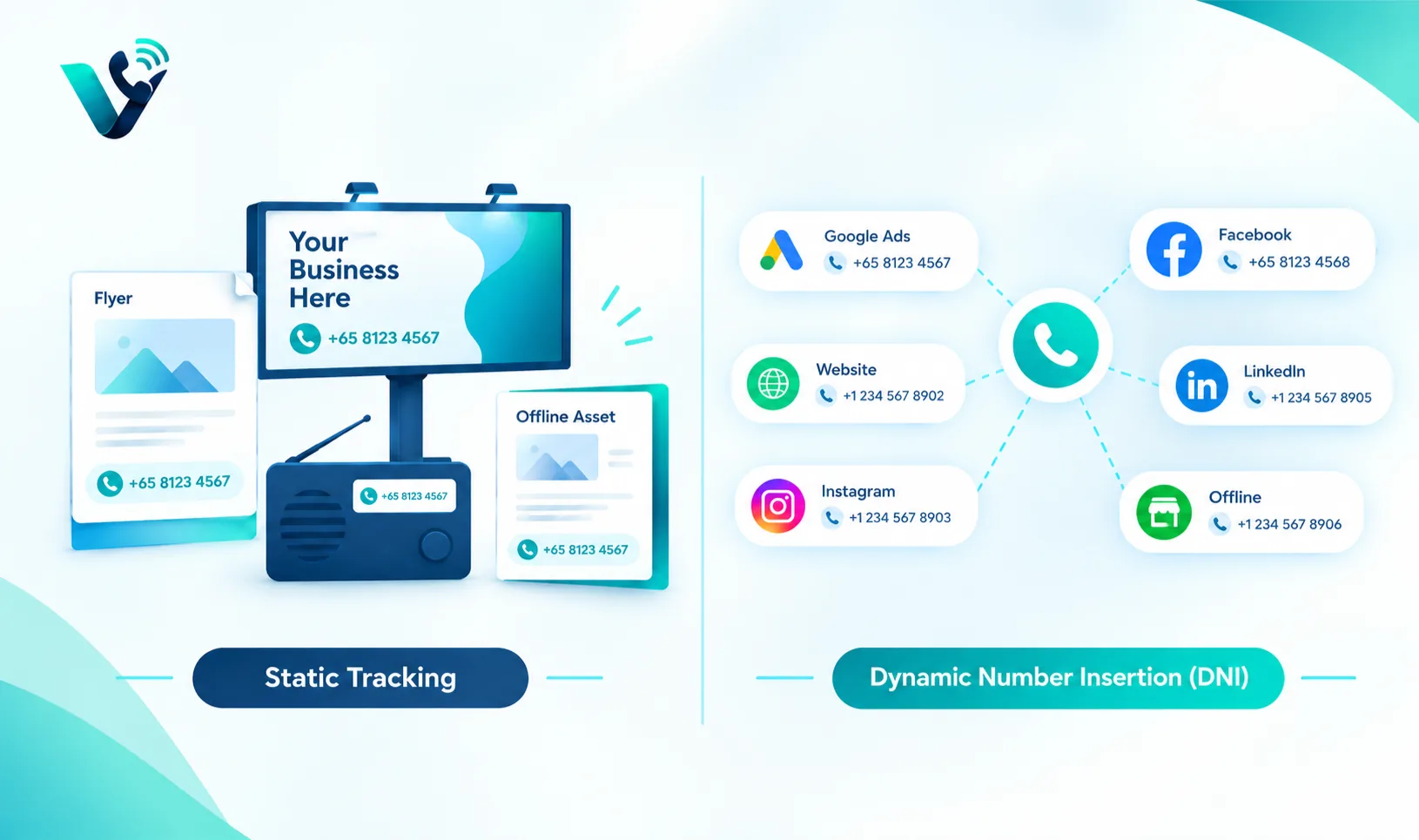
Do you need a different phone number for every marketing channel?
Usually, no more numbers do not automatically create better marketing intelligence. The right number of tracking lines depends on the decisions the business wants to make.
Start with the channels that receive meaningful budget, produce a significant share of phone leads, or are difficult to measure in another way. For example, a business might separate paid search, organic website traffic, and one major offline campaign. That can already answer important questions without creating a large number pool.
Create another number only when the distinction will change a decision. If two small campaigns would be managed the same way regardless of the result, separate tracking numbers may add reporting complexity without adding useful insight.
A practical attribution framework
Begin by listing every channel that can generate a phone lead. Group sources into paid, owned, referral, partner, directory, and offline channels. Then decide the level of attribution the business actually needs: channel-level, campaign-level, or visitor/session-level.
For fixed offline assets, a dedicated static number is usually the simplest option. For websites, DNI can provide more detailed source attribution. Whatever method is used, the source should follow the lead into the CRM instead of remaining isolated inside a call-tracking dashboard.
This matters because attribution becomes useful only when the marketing source can be compared with what happened next. A channel that generates many phone calls but very few qualified opportunities may need a different message, audience, keyword set, or landing-page experience.
Protect the main business number
The main business number should normally remain the stable identity used across core listings, invoices, contracts, customer records, directories, and long-term brand materials. Tracking numbers are better treated as measurement endpoints that route into the same operation.
Frequent changes to the primary phone identity can confuse returning customers and create maintenance work across listings. Use a different phone number per marketing channel selectively, not as a replacement for one dependable public business number.
When a tracking number is retired, make sure the campaign has ended, any important callbacks are handled, and the number is not still visible on a live asset. Number reuse should be controlled so an old campaign source is not accidentally attributed to a new one.
What to measure beyond call volume
Total calls are useful, but they are not enough to judge marketing performance. A channel can generate a high number of calls while producing few qualified opportunities. Another source may generate fewer calls but a stronger conversion rate.
Where the data is available, compare answered calls, missed calls, qualified conversations, booked meetings, sales opportunities, conversion rate, and revenue. Call duration can be a supporting signal, but it should not be treated as a perfect definition of lead quality.
The strongest marketing attribution connects the tracking number to the CRM record and eventual commercial outcome. That lets the team compare channels using the same sales-stage definitions instead of analysing phone activity in isolation.
Use call tracking data to improve marketing decisions
Once call sources are captured consistently, marketing teams can compare channels using evidence instead of assumptions. If paid search generates many calls but few qualified opportunities, the issue might be targeting, keyword intent, campaign messaging, or the landing page.
If organic traffic creates fewer calls but a higher share of qualified opportunities, the business may decide to invest more heavily in SEO or content. If an offline campaign produces very few calls, the team can decide whether the placement, audience, creative, or offer needs to change.
The purpose is not to declare one channel universally better. The purpose is to make each channel measurable enough that budget and sales effort can be allocated more deliberately.
Where the CRM fits into phone call attribution
A call-tracking platform identifies the source of the call, but the CRM should carry that information into the sales workflow. Store the source, owner, call outcome, lead status, recent activity, and next action together.
LeadMino can act as the sales CRM layer after a call, form, or other enquiry becomes a lead. The same operating principle applies across channels: preserve attribution when the lead arrives, assign clear ownership, and make the next sales action visible.
This prevents a common reporting gap where marketing knows which number generated the call but sales does not know which campaign the lead came from. Phone attribution and CRM ownership should be treated as one connected workflow.
Try this on your own numbers
Local numbers in 118 countries, AI call notes and one shared inbox. Live the same day, no contract.
Common mistakes with marketing tracking numbers
- Creating too many tracking numbers: A large pool can fragment reporting, increase cost, and make campaign management harder. Add numbers only when the distinction matters.
- Replacing the main business number everywhere: Keep a stable core number for brand identity and use tracking numbers selectively.
- Tracking calls but not sales outcomes: Call volume alone cannot show which sources create qualified opportunities or revenue.
- Leaving source data outside the CRM: Marketing attribution loses value when the sales team cannot see it on the lead or opportunity record.
- Failing to test forwarding and fallback: Every number should be tested for routing, business hours, voicemail, missed-call handling, and CRM behaviour before launch.
- Reusing numbers without control: A number moved from one campaign to another can contaminate attribution if old assets are still live.
How to set up different phone numbers by marketing channel
- List the phone-lead sources: Identify the website, paid campaigns, social media, directories, partner sources, events, print materials, and other channels that can generate calls.
- Choose the attribution level: Decide whether reporting needs to distinguish channels, campaigns, or individual website sessions.
- Keep the main number stable: Use one core business number for brand identity and customer continuity.
- Assign static tracking numbers where appropriate: Use dedicated numbers for fixed offline or campaign assets that need separate measurement.
- Use DNI where website attribution justifies it: Display source-aware numbers to visitors when session or campaign-level tracking is useful.
- Connect source data to the CRM: Store the tracking source with the lead, owner, status, activity, and next action.
- Test the full journey: Verify the number, forwarding, business hours, fallback, missed-call process, CRM capture, and reporting before launch.
- Review results by qualified outcome: Compare calls with meetings, opportunities, conversions, and revenue where the data is available.
Practical implementation checklist
Element |
Purpose |
What to check |
|
Main business line |
Stable public identity |
Keep consistent across core listings and long-term materials |
|
Static tracking numbers |
Channel or campaign attribution |
Use for fixed assets where source distinction changes a decision |
|
Dynamic Number Insertion |
Website source attribution |
Use when source- or session-level website tracking is needed |
|
Routing |
Customer experience |
Confirm all tracking numbers reach the correct team or queue |
|
CRM source field |
Attribution continuity |
Store source, owner, outcome, status, and next action |
|
Call outcome |
Lead quality |
Record whether the conversation was qualified, booked, converted, or closed |
|
Number lifecycle |
Attribution accuracy |
Avoid uncontrolled reuse while old campaigns remain visible |
|
Reporting |
Budget decisions |
Compare qualified outcomes, not only total calls |
Frequently asked questions
- Do I need a different phone number for every marketing channel?
- No. Start with channels where source attribution will affect a real marketing or sales decision. Too many numbers can fragment reporting and increase complexity.
- Can all tracking numbers ring the same team?
- Yes. Tracking numbers can route to the same destination or queue while preserving the dialled number as a source signal.
- What is Dynamic Number Insertion?
- Dynamic Number Insertion, or DNI, changes the number displayed on a website based on source, campaign, or visitor context so phone calls can be attributed more accurately.
- Should I keep my main business number?
- Usually yes. Keep one stable number for core business identity and use tracking numbers selectively for attribution.
- Can call tracking measure revenue?
- It can support revenue attribution when call events are connected to CRM records and downstream opportunities or closed sales.
- Does a separate tracking number guarantee accurate attribution?
- No. Attribution still depends on correct configuration, controlled number reuse, working forwarding, and complete CRM data.
- When should I use a static tracking number?
- Use a static number when the source is a fixed asset such as a flyer, billboard, radio ad, event banner, print campaign, or dedicated landing page.
- When should I use DNI call tracking?
- Use DNI when website traffic comes from multiple important sources and the business needs source- or session-level phone attribution.
- What should I measure besides total phone calls?
- Where possible, compare answered calls, qualified conversations, meetings, opportunities, conversions, and revenue.