Keep Your Phone Number When Switching Carrier: A Porting Guide
By Jamila Parker · · 6 min read

Changing provider does not always mean changing the number customers already know. Learn how number porting works, what information you need and how to avoid preventable delays.
Key takeaways
- Number portability lets many customers retain a number when changing provider.
- Do not cancel the old service too early unless the local process explicitly allows it.
- Account name, number, address and authorisation details usually need to match exactly.
- Porting rules differ by country, number type and business account structure.
- Plan a fallback for inbound calls during the change.
Porting is a transfer, not a simple cancellation
Keep your phone number when switching carrier by treating the move as a porting project rather than closing one account and opening another. Number portability is the regulated process that lets an eligible number move from one provider to another while customers continue using the same number.
In the United States, the FCC explains that customers can generally keep an existing number when changing providers within the same geographic area, including between wireline, IP and wireless services. In the United Kingdom, Ofcom has separate switching processes for mobile and landline services and requires providers to support number portability.
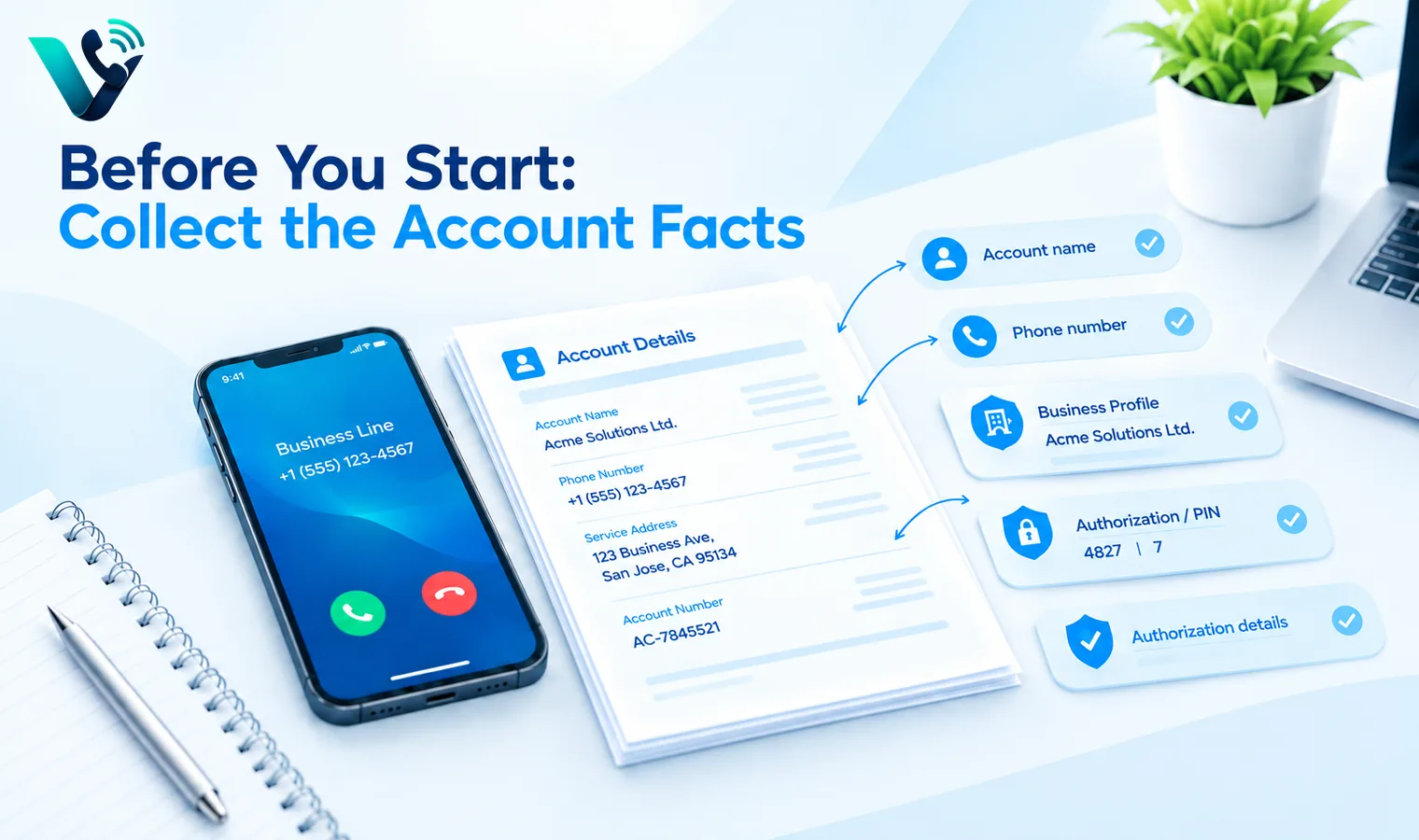
Before you start: Collect the account facts
Most failed ports are ordinary data problems. Collect the legal account holder or business name exactly as recorded, service address, account number, phone number or range, billing details, authorised contact and any porting PIN or switching code used in your country.
Do not shorten business names or improvise addresses. If the losing provider has “Northline Services Pty Ltd” and the request says “Northline”, the mismatch can trigger manual review. For multi-number business accounts, document the whole service before moving anything.
Do not cancel too early
In many porting processes, the old number should remain active while the transfer is initiated. Cancelling first can create avoidable risk, especially for business numbers that may be released, quarantined or tied to another service.
Ofcom allows many UK customers to retain a right to port for a limited period after cancellation, but that safety net should not become the normal plan. Follow the gaining provider’s instructions and ask whether the port itself will terminate the old service.
Mobile, landline and VoIP ports are not identical
Mobile switching is often highly standardised. In the UK, a customer can request a PAC and give it to the new provider Ofcom says the switch should normally complete within one working day after the code is used. Business landline and VoIP arrangements can be more complex.
A number may be attached to broadband, SIP trunks, channels, fax services, alarms or a block of direct-dial numbers. Moving one number can affect other services if the architecture is not mapped first. International virtual numbers can add local regulatory or address requirements.
A practical porting timeline
One or two weeks before the intended move, obtain a recent bill or account record and confirm the exact legal name, address and account number. Ask the new provider to verify eligibility and list the required authorisation. Freeze unnecessary account changes while the port is pending.
On the cutover day, keep both providers, support details available, test inbound and outbound calls and record when service changes. Do not assume voicemail, messaging or other features will move automatically.
Porting a business number range
Businesses may own a main number plus a block of direct inward dial numbers. Porting only the public main number without understanding the block can break extensions or strand numbers at the old carrier. Inventory every number and identify which are published, used for departments, connected to staff, fax, alarms or integrations.
Ask whether the range must move together and whether temporary forwarding is available. Larger migrations deserve a staged plan rather than a single untested cutover.
Common reasons a port is delayed
Typical causes include mismatched account information, an expired code, incorrect service address, a number that is not active, unsupported number types, bundled-service complications or a request submitted by someone who is not authorised on the account.
A port may also fail when only part of a number block is requested incorrectly. Treat rejection messages as useful data: correct the exact mismatch instead of resubmitting the same information repeatedly.
What number portability does not transfer
Porting moves the telephone number, not the entire communications setup. Voicemail greetings, call recordings, message history, IVR menus, call queues, emergency addresses, analytics and integrations may remain with the old provider.
Rebuild and test those items on the new platform. Export records you need for compliance or continuity. The number is the address the calling experience around it must be recreated.
After the number moves
Test calls from multiple networks, verify outbound caller ID, SMS if applicable, voicemail, forwarding, business-hours rules and integrations. Keep the old account records accessible until everything is stable because they may be needed to resolve a delayed or partial port.
Then document the new provider, account owner and future porting requirements. A successful port should be invisible to customers, and that invisibility is the result of preparation.
Business continuity during the port
For a critical sales or support number, build a temporary fallback before the port date. This might be a secondary published number, a website notice, a live-chat option or a short-term forward if the providers support it. The goal is to prevent one technical delay from making the business unreachable.
Tell internal teams when the port is scheduled and what symptoms to report. A failed outbound caller ID, missing SMS or one-way calling problem may only appear for certain networks, so staff should know where to escalate quickly.
Porting and messaging registration
Moving a number can affect more than voice. Business messaging programmes, toll-free verification, A2P registration or sender identity may need to be recreated or transferred separately. Do not assume that a successful voice port automatically preserves every messaging permission attached to the old provider.
Before the move, list every channel using the number: voice, SMS, WhatsApp verification, two-factor authentication, fax, alarms, CRM workflows and marketing forms. Each dependency needs its own migration check.
Try this on your own numbers
Local numbers in 118 countries, AI call notes and one shared inbox. Live the same day, no contract.
What to keep after the migration
Retain confirmation emails, port order numbers, old account details and the first successful test records. For important business numbers, record the gaining carrier and any future port-out PIN or authorisation process. This makes the next move easier and helps prove ownership if a dispute occurs.
Once the old account is fully closed, verify there are no continuing charges and no residual services that still depend on the old carrier. A port is finished only when both communications and billing are clean.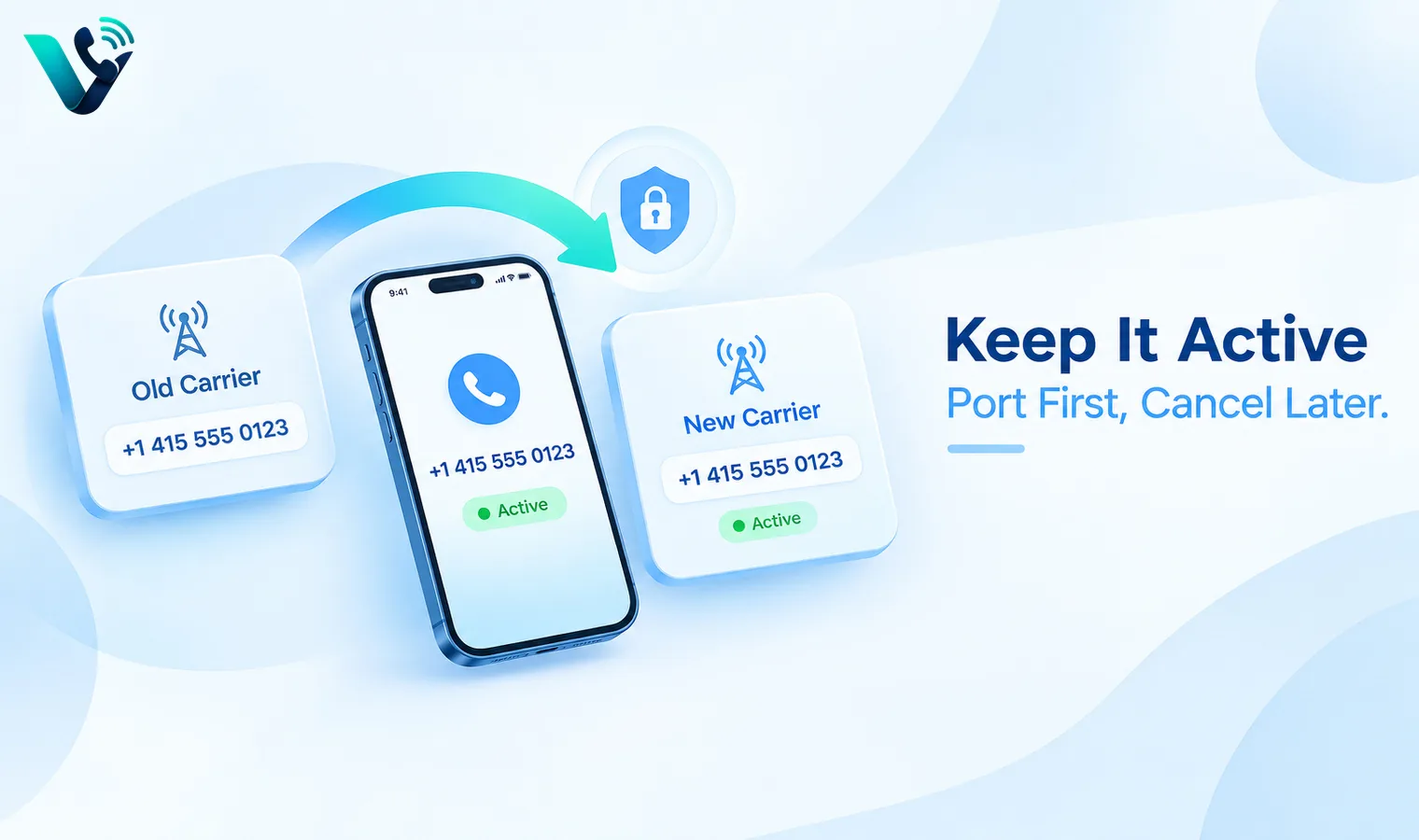
Where Votelly fits
Votelly can sit behind the public number as the cloud business-calling layer for routing, team access and call management. Keep product-specific claims aligned with the features currently available in your Votelly account and use the live product pages as the source of truth before publishing.
Frequently asked questions
- What is number porting?
- Number porting is the process of moving an existing phone number from one provider to another while retaining the number.
- Can I keep my mobile number when changing carrier?
- Often yes. The exact process depends on the country; for example, UK mobile users can use a PAC under Ofcom switching rules.
- Should I cancel my old service before porting?
- Usually no. Follow the new provider’s instructions and avoid premature cancellation unless the local process specifically says otherwise.
- How long does porting take?
- It varies. Some mobile ports can complete in a working day, while business, landline and international ports may take longer.
- Why was my port rejected?
- Common causes include mismatched account details, wrong authorisation information, inactive numbers, unsupported number types or bundled-service complications.
- Can a virtual business number be ported?
- Sometimes. Portability depends on the jurisdiction, number type and whether the new provider supports that range.