French Virtual Numbers: Regulation, Requirements and Setup
By Jamila Parker · · 10 min read

Learn how French virtual numbers work, what changed for 01–05 fixed numbers, how regulation affects number use, and what businesses should check before launch.
Key takeaways
- French virtual numbers should be chosen around the customer journey, number category, routing model, and actual business use not only the country prefix.
- France uses several numbering categories, including 01–05 fixed numbers, 06–07 mobile ranges, 08 value-added ranges, and other specialised ranges.
- Since 1 January 2023, ARCEP allows fixed 01–05 numbers to be used across the corresponding metropolitan or DROM territory without the former narrow geographic restriction described in older guidance.
- Relaxed geographic constraints do not remove numbering, identity, provider, caller-authentication, or anti-fraud requirements.
- Remote teams can use virtual routing where the provider supports it, but French business hours, language routing, fallback, and accurate caller identity should be planned before launch.
- Connect French calls to the CRM with source, owner, status, outcome, and next action so the number supports measurable lead handling rather than only telephony.
French virtual numbers can give a business a practical way to receive and route calls for the French market without tying every conversation to a single desk or office. But the important part is not simply obtaining a +33 number. A useful setup starts with the correct number category, current regulatory guidance, provider eligibility, accurate caller identity, reliable routing, and a follow-up process that connects calls to the wider sales or support workflow.
For businesses using French virtual numbers, regulation and operations should be planned together. The company needs to understand what type of French number it is using, how that number can be presented, whether caller-authentication or anti-fraud measures apply, how calls will reach the team, and what happens after a customer contacts the business.
This guide reorganises those requirements into a practical publishing and operations framework. It explains the French numbering structure, the major change affecting 01–05 fixed numbers, remote routing, caller ID, messaging, CRM integration, launch testing, and post-launch monitoring.
How French numbering is organised
France uses a ten-digit numbering plan managed by ARCEP. The source material identifies several categories, including fixed numbers beginning 01 to 05, mobile ranges beginning 06 and 07, value-added ranges beginning 08, and other specialised number ranges.
For a business evaluating French virtual numbers, the number category matters because different ranges are intended for different services and can be subject to different rules. Choosing a number only because the prefix looks familiar can create the wrong customer expectation or lead the team to overlook provider and regulatory requirements.
The safer approach is to start with the intended use conventional fixed-line identity, mobile-style service, specialised service, or another category. Then confirm the current allocation and use conditions with the provider before publishing the number on a website, directory, campaign, or customer-facing asset.
The important change for 01–05 French numbers
A major change in the French numbering environment affects fixed numbers beginning 01 to 05. The source states that since 1 January 2023, these numbers can be used across the corresponding metropolitan or DROM territory without the former narrow geographic restriction.
That change is important because older assumptions may still suggest that every 01–05 prefix must remain tied to a small local area. For businesses considering French virtual numbers, the current framework is more flexible than that older model.
The change does not mean that fixed French numbers are completely unrestricted. Provider eligibility, service conditions, number category, identity requirements, and other regulatory rules still need to be checked. The practical lesson is to use current ARCEP and provider information rather than relying on outdated explanations of French geographic numbering.
Why regulation still matters for French virtual numbers
Relaxed geographic constraints do not mean that every French number can be used for every purpose. ARCEP manages numbering resources and the rules that govern their allocation and use. Businesses should confirm the exact number category, intended use, identity requirements, and provider documentation before activation.
The source also highlights automated calling, caller authentication, and anti-fraud measures as areas that may involve additional requirements. That means the business should consider not only whether a number can receive calls, but also how the number will be presented when making calls and whether the planned use is consistent with the provider's supported framework.
French virtual numbers work best when compliance is treated as part of implementation rather than a final checkbox. The number, caller identity, routing rules, customer-facing information, and CRM workflow should all describe the same real business journey.
Choosing the right French virtual phone number
Start with the customer experience. If the business wants a conventional fixed-line identity, an appropriate 01–05 number may fit. If the service is designed around a mobile range, a 06–07 category may be more relevant. For nationwide, value-added, or specialised services, another category may be more suitable.
The source explicitly warns against choosing a number only because its prefix sounds local. The service model and regulatory category are more important than the marketing appeal of the prefix.
A good decision framework is to ask three questions: what type of customer will call, what experience should they receive, and what number category accurately matches that service. Then confirm availability and provider conditions before building the campaign around the number.
Virtual routing for remote French sales and support teams
A French virtual number can be routed to a remote sales or support team when the provider supports that workflow. That makes French virtual numbers useful for distributed companies that serve customers in France while team members work from different offices or countries.
Routing should be built around the French customer experience. Configure French business hours and local holiday handling separately from the physical time zone of the answering team. If the company offers multilingual support, route French-language enquiries to the correct queue instead of leaving the caller to navigate internal team structures.
Fallback also matters. Decide what happens when nobody answers, whether the call moves to another team member, enters a queue, reaches voicemail, or triggers another follow-up process. A virtual number is only useful if the customer receives a consistent experience when the primary team is unavailable.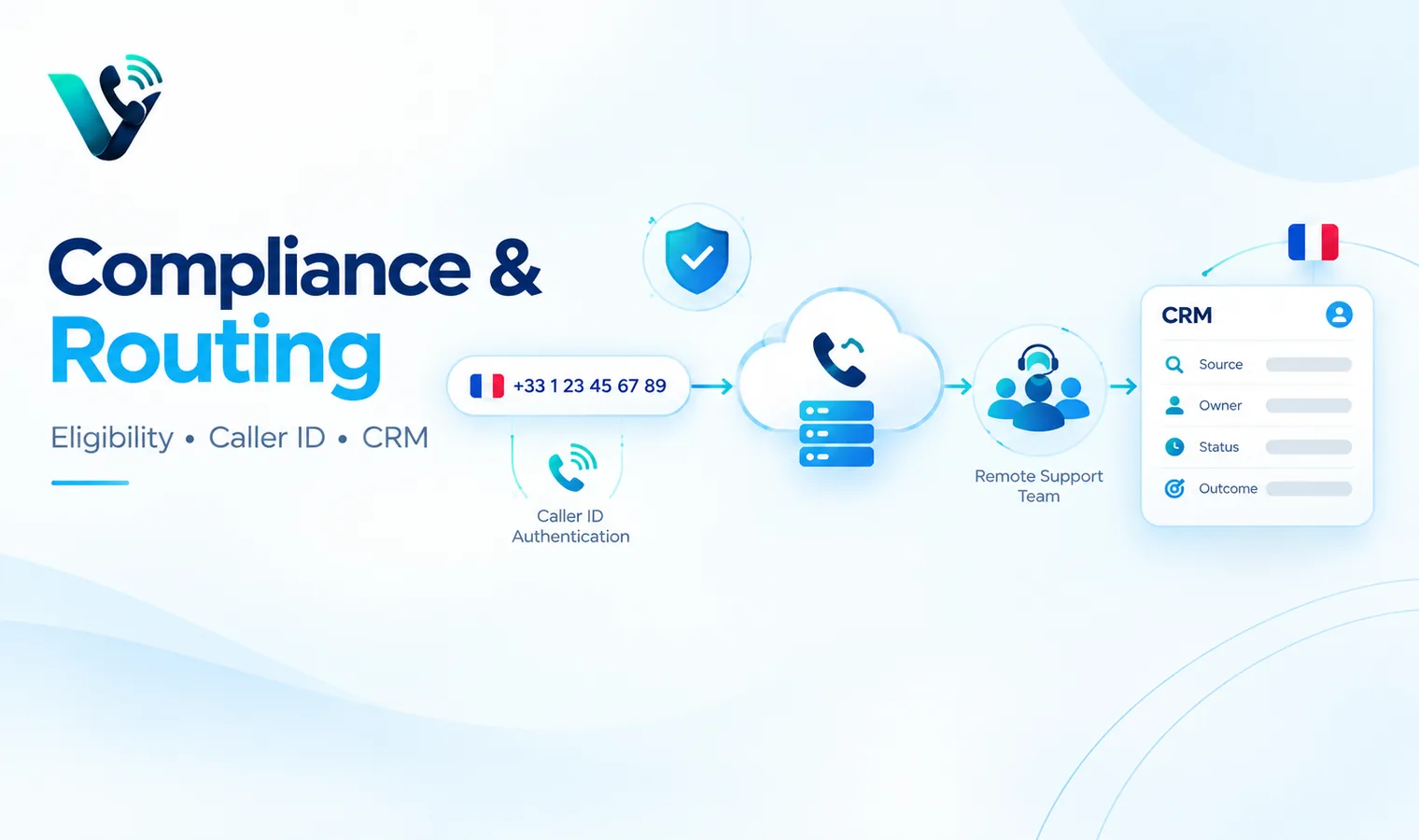
Caller ID authentication and fraud prevention
The source notes that ARCEP's current numbering information includes measures intended to protect users from number spoofing and improve caller authentication. For businesses, that reinforces the importance of using French virtual numbers accurately rather than manipulating caller ID to look like another entity or location.
Work with a provider that supports the relevant authentication and number-use framework for the intended service. If the business uses outbound calling, verify what caller ID will be displayed and make sure it represents the business consistently.
Caller trust is operational as well as regulatory. Customers are more likely to understand a call when the displayed number matches the business identity and the same number is used consistently across the website, support material, and CRM records.
Connect French virtual numbers to the CRM
The phone system should feed the same lead process as web forms, chat, email, and other channels. For each relevant call, store the source, owner, status, outcome, and next action.
For a French campaign, additional fields such as language, region, or campaign can be useful when those distinctions affect routing or reporting. This gives the team a way to see whether French virtual numbers are producing qualified conversations rather than measuring success only by call volume.
LeadMino's published workflow guidance follows the same principle: preserve attribution and ownership when the lead arrives, then keep the next step visible. That approach helps prevent a technically successful call from turning into an unowned enquiry after it leaves the phone system.
Voice and messaging should be evaluated separately
A French virtual phone number that can receive calls may have different capabilities or requirements for SMS and automated messages. The source recommends evaluating voice and messaging separately rather than assuming that one number automatically supports every communication channel.
If the business needs appointment reminders, two-way customer texts, or automated outbound messaging, confirm the exact permitted use with the provider before launch. The same caution applies to any automated communication workflow that may be affected by additional provider or regulatory requirements.
The operational plan should make channel ownership clear. Voice, messaging, and automated outreach can feed the same CRM record, but the team should know which channel triggered the interaction and what follow-up is expected.
Launch checklist for French virtual numbers
Before publishing a French number, verify the number category, current ARCEP rules, provider eligibility, any required documentation, caller ID, routing, business hours, voicemail, and CRM integration. Test the number from France and from the locations where the team will actually answer.
If the business uses automated calls or messages, review the applicable requirements before the campaign begins. Keep the business name, caller identity, website information, and directory listings consistent so customers receive a clear picture of who is contacting them.
The final test should cover the full journey a customer sees the number, calls it, reaches the correct team or fallback, the interaction is recorded correctly, and the responsible person knows what to do next.
What to monitor after launch
After launch, track more than total calls. The source recommends monitoring missed calls, response time, call outcomes, and customer complaints. Also review whether the number is generating qualified enquiries and whether customers understand the business identity behind the number.
If the company expands from one French market to several, do not automatically buy another number for every campaign or region. Use CRM source and region fields when one well-managed number can support the wider market without creating unnecessary operational complexity.
Review the workflow periodically. If routing rules, provider configuration, campaign structure, or number use changes, test the full journey again so the phone setup and internal sales process remain aligned.
Common mistakes to avoid
Using outdated assumptions about 01–05 numbers: The regulatory framework changed. Use current ARCEP and provider information instead of older geographic rules.
Choosing a number only for its prefix: Match the number category to the real service model and customer journey.
Ignoring caller identity requirements: Verify how the business number is displayed and avoid misleading caller-ID behaviour.
Treating voice and messaging as identical: Confirm SMS and automated-message capabilities separately from voice.
Skipping French-hours and fallback planning: Remote routing should still reflect French business hours, local customer expectations, and clear after-hours handling.
Tracking call volume without outcomes: Use CRM fields to measure qualified conversations, ownership, outcome, and next action.
Try this on your own numbers
Local numbers in 118 countries, AI call notes and one shared inbox. Live the same day, no contract.
How to set up a French virtual number step by step
Define the customer use case: Decide whether the number is for sales, support, a fixed-line identity, mobile-style service, a specialised service, or campaign tracking.
Choose the correct French number category: Match the intended use to the appropriate 01–05, 06–07, 08, or other supported range.
Confirm current provider and regulatory conditions: Check the latest allocation, identity, caller-authentication, and service requirements before publication.
Configure routing for the French market: Set French business hours, queues, language routing, voicemail, fallback, and remote answering.
Connect the number to the CRM: Capture source, owner, status, outcome, language or region where useful, and the next action.
Test voice, caller ID, and any messaging workflow: Verify the experience from the customer side and from the team's actual answering locations.
Monitor qualified outcomes after launch: Review missed calls, response time, outcomes, customer feedback, and whether the number supports the intended market.
Practical implementation checklist
Element |
Purpose |
What to check |
|
01–05 fixed numbers |
Conventional fixed identity |
Use current rules; older narrow geographic assumptions may be outdated |
|
06–07 mobile ranges |
Mobile services |
Use only where appropriate for the intended service |
|
08 ranges |
Value-added / specialised services |
Check the exact category and supported use |
|
Provider eligibility |
Activation |
Confirm current conditions before publication |
|
Caller authentication |
Trust and anti-fraud |
Confirm provider and regulatory requirements |
|
Routing |
Remote answering |
Set French hours, language queues, fallback, voicemail, and overflow |
|
Messaging |
SMS / automation |
Confirm permitted use separately from voice |
|
CRM |
Attribution and ownership |
Store source, owner, status, outcome, and next action |
Frequently asked questions
- What regulator manages French numbering?
- ARCEP manages the French national numbering plan.
- What changed for French 01–05 fixed numbers?
- According to the source, since 1 January 2023 these fixed numbers can be used across the corresponding metropolitan or DROM territory without the former narrow geographic restriction.
- Does the 2023 change mean French virtual numbers have no restrictions?
- No. Numbering resources and use remain subject to the current plan, provider conditions, identity requirements, and other applicable rules.
- Can a French virtual number be routed to a remote team?
- Provider capabilities may allow remote routing, but the business still needs to meet the applicable numbering and communication requirements.
- Are caller ID and anti-fraud rules relevant to French virtual numbers?
- Yes. The source highlights caller-number authentication and anti-spoofing measures as important parts of the current environment.
- Can every French virtual number support SMS?
- Do not assume so. Voice and messaging should be checked separately with the provider.
- Should a business use a separate French number for every campaign?
- Not automatically. Tracking numbers may help when attribution is important, but one well-managed number may support a broader market without unnecessary complexity.
- What should be tracked in the CRM?
- At minimum, store source, owner, status, outcome, and next action. Add language, region, or campaign fields when they affect routing or reporting.