German Virtual Numbers and the Local Address Requirement
By Jamila Parker · · 8 min read

Understand German geographic numbers, local presence requirements, provider documentation and practical setup for compliant virtual business calling.
Key takeaways
- Choose the number type and routing model around the customer journey, not just the country name.
- Capture source, ownership and next action as soon as a lead arrives.
- Check current numbering and compliance requirements before publishing a local or geographic number.
- Use reporting to compare qualified outcomes, not only call volume.
- Test voice, routing, fallback and CRM behaviour before launch.
German Virtual Numbers and the Local Address Requirement is primarily a question of matching phone infrastructure to a real customer and sales workflow. For businesses using German virtual numbers local address requirement, the practical priorities are eligibility, clear routing, accurate customer-facing information, fast follow-up and measurable attribution. The sections below explain the implementation in a way that can be used as a publishing and operations checklist.
Why German geographic numbers are different
Germany has a structured geographic numbering system in which local area codes indicate a geographic location of the network access. The Bundesnetzagentur explains that local network numbers, or Ortsnetzrufnummern, are governed by specific numbering rules. That geographic relationship is important when a business wants a German local number: the number is not simply a decorative country-code asset.
A useful implementation principle is to keep the customer-facing experience simple while making the internal workflow measurable. The phone number, routing rule and CRM record should describe the same journey. If one part changes, test the full path again: from the first impression and incoming call through ownership, follow-up and reporting. This avoids a common failure mode in which the telephony system works technically but the sales process still loses enquiries between systems.
What the local address requirement means in practice
Providers can apply eligibility and documentation checks before assigning a geographic German number. For a business seeking a local number, this can involve evidence connecting the service to the relevant geographic area. The exact documents and acceptable address depend on the provider and the number range. Businesses should therefore ask for the current allocation criteria before assuming that any German number can be ordered from anywhere without local documentation.
A useful implementation principle is to keep the customer-facing experience simple while making the internal workflow measurable. The phone number, routing rule and CRM record should describe the same journey. If one part changes, test the full path again: from the first impression and incoming call through ownership, follow-up and reporting. This avoids a common failure mode in which the telephony system works technically but the sales process still loses enquiries between systems.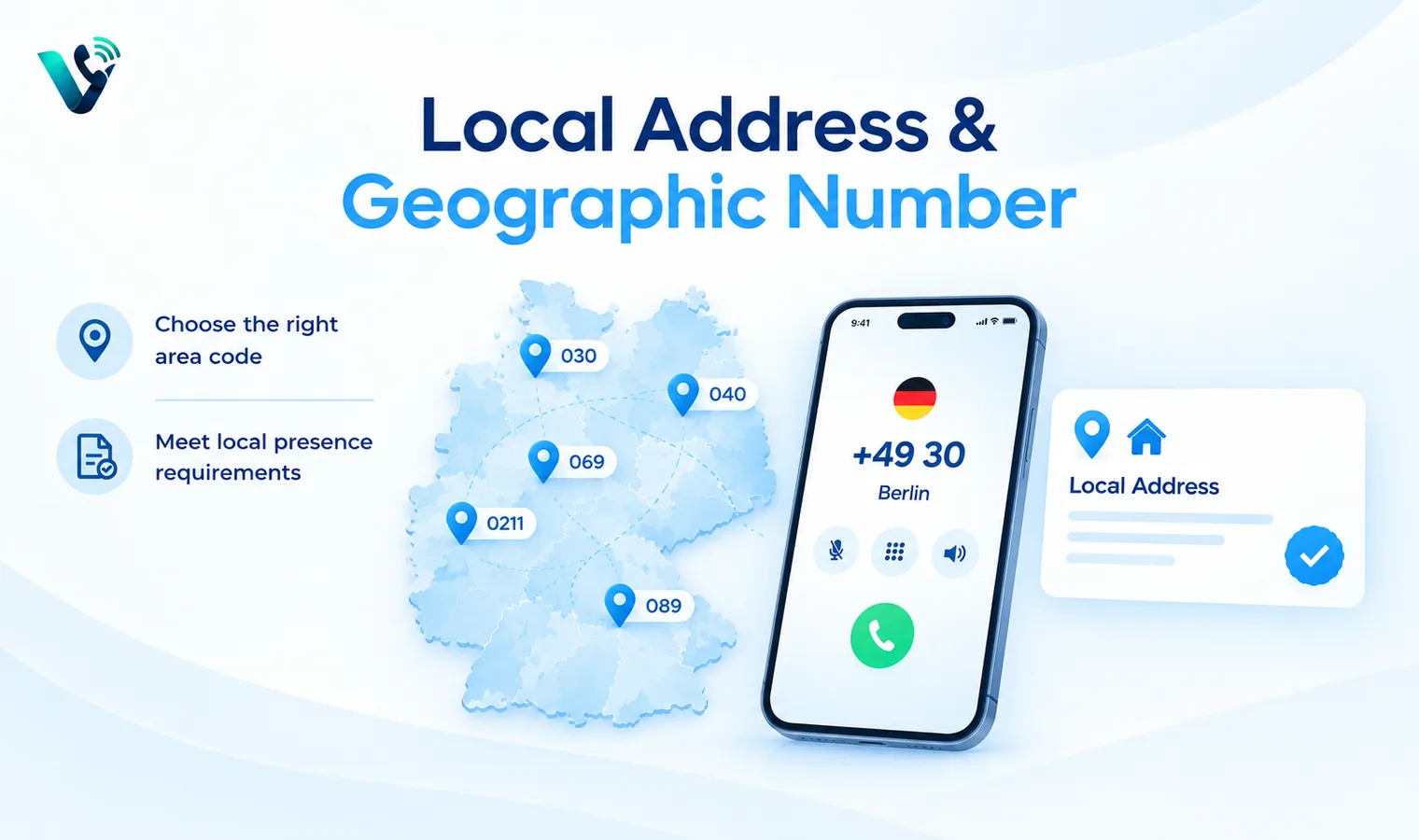
Germany has many local area codes
The Bundesnetzagentur states that Germany is divided into thousands of local network areas, each with a corresponding area code. This means a business should choose a number based on the market it actually serves rather than treating +49 as the only decision. If the company wants a Berlin, Hamburg, Frankfurt or Munich presence, it should check the relevant geographic range and provider eligibility.
A useful implementation principle is to keep the customer-facing experience simple while making the internal workflow measurable. The phone number, routing rule and CRM record should describe the same journey. If one part changes, test the full path again: from the first impression and incoming call through ownership, follow-up and reporting. This avoids a common failure mode in which the telephony system works technically but the sales process still loses enquiries between systems.
Can a remote team answer a German number?
Once a compliant number is assigned, the physical location of the answering employee can be different from the geographic identity of the number, depending on the service. Calls can be routed to remote employees, queues or mobile destinations. The business should keep the public representation accurate: the number identifies a German geographic service area, but it should not be presented as proof of a physical office unless one exists.
A useful implementation principle is to keep the customer-facing experience simple while making the internal workflow measurable. The phone number, routing rule and CRM record should describe the same journey. If one part changes, test the full path again: from the first impression and incoming call through ownership, follow-up and reporting. This avoids a common failure mode in which the telephony system works technically but the sales process still loses enquiries between systems.
Documents and verification
Prepare the business name, service address, identity or company documents requested by the provider and any additional information needed for the number range. Do not submit inconsistent information across the provider account and company records. Verification failures often happen because the name or address format does not match. Ask the provider which documents are current rather than relying on a third-party checklist that may be outdated.
A useful implementation principle is to keep the customer-facing experience simple while making the internal workflow measurable. The phone number, routing rule and CRM record should describe the same journey. If one part changes, test the full path again: from the first impression and incoming call through ownership, follow-up and reporting. This avoids a common failure mode in which the telephony system works technically but the sales process still loses enquiries between systems.
Alternative number types
Germany also has other number categories, including mobile, national subscriber and freephone ranges. If a geographic number creates eligibility friction, consider whether the business actually needs a geographic identity. A national or other appropriate number type may fit a company serving Germany broadly. The correct alternative depends on the intended use, customer expectations and provider availability.
A useful implementation principle is to keep the customer-facing experience simple while making the internal workflow measurable. The phone number, routing rule and CRM record should describe the same journey. If one part changes, test the full path again: from the first impression and incoming call through ownership, follow-up and reporting. This avoids a common failure mode in which the telephony system works technically but the sales process still loses enquiries between systems.
Connect German calls to the CRM
Once the number is active, connect it to the sales workflow. Store the source, owner, call outcome and next action. If the business runs German campaigns separately from other European markets, make that distinction visible in the CRM. LeadMino can provide the pipeline layer for follow-up, ensuring that a compliant phone setup also results in accountable lead management.
A useful implementation principle is to keep the customer-facing experience simple while making the internal workflow measurable. The phone number, routing rule and CRM record should describe the same journey. If one part changes, test the full path again: from the first impression and incoming call through ownership, follow-up and reporting. This avoids a common failure mode in which the telephony system works technically but the sales process still loses enquiries between systems.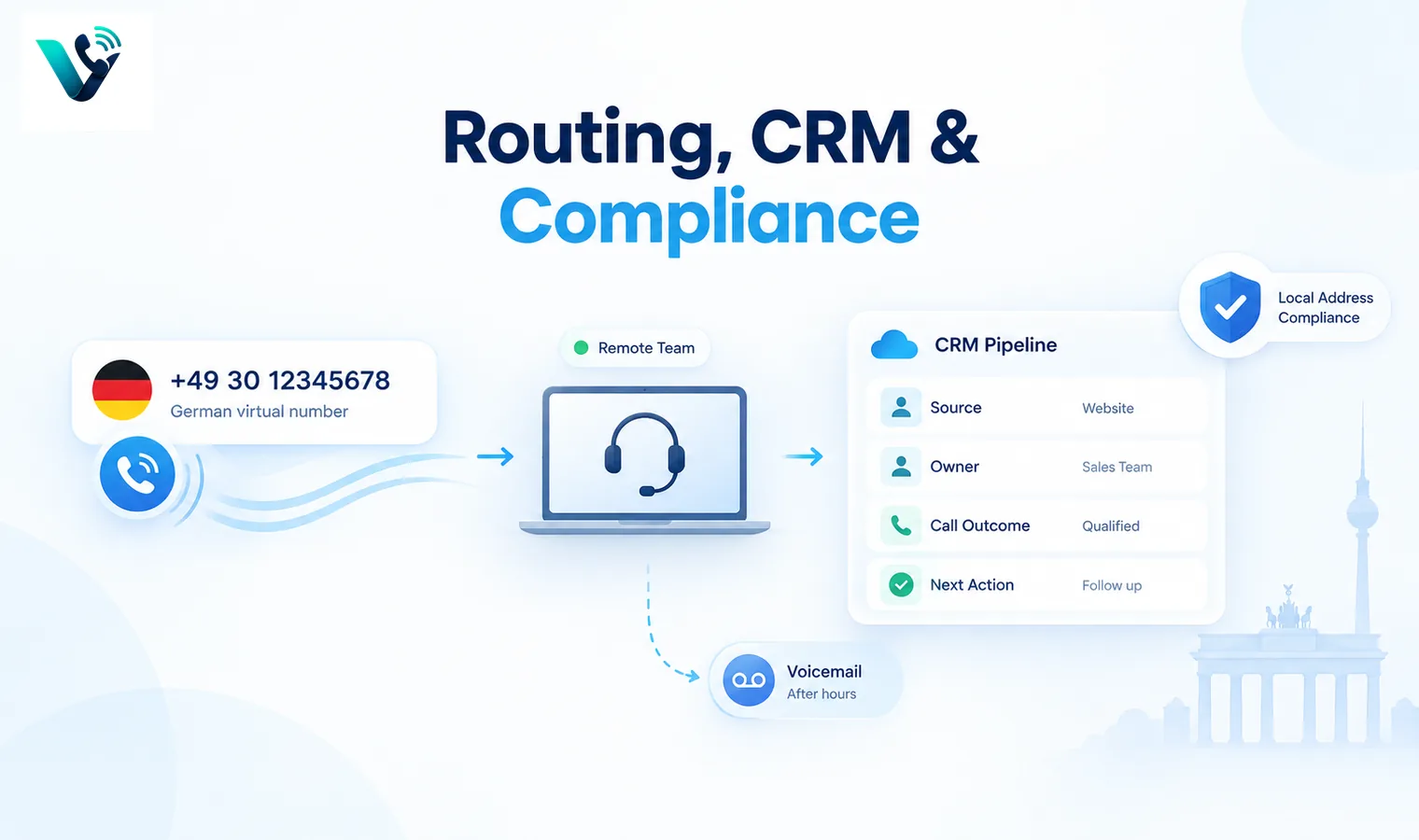
Test before publishing the number
Test inbound calls from Germany and from the team's actual answering locations. Check caller ID, transfers, voicemail, business hours and after-hours routing. If the number is used for outbound sales, confirm that the displayed caller ID is correct. If recording is enabled, confirm that the business's legal and operational requirements for recording are satisfied before turning it on.
A useful implementation principle is to keep the customer-facing experience simple while making the internal workflow measurable. The phone number, routing rule and CRM record should describe the same journey. If one part changes, test the full path again: from the first impression and incoming call through ownership, follow-up and reporting. This avoids a common failure mode in which the telephony system works technically but the sales process still loses enquiries between systems.
Common mistakes
The biggest mistake is treating a German geographic number like an unrestricted online username. Another is using an address only to qualify for a number while presenting it publicly as an office that does not exist. A third is failing to plan what happens outside German business hours. The phone number is only one part of the market-entry system; eligibility, transparency, routing and follow-up all matter.
A useful implementation principle is to keep the customer-facing experience simple while making the internal workflow measurable. The phone number, routing rule and CRM record should describe the same journey. If one part changes, test the full path again: from the first impression and incoming call through ownership, follow-up and reporting. This avoids a common failure mode in which the telephony system works technically but the sales process still loses enquiries between systems.
Try this on your own numbers
Local numbers in 118 countries, AI call notes and one shared inbox. Live the same day, no contract.
German virtual number checklist
Define the target city or region, confirm the exact number type, ask the provider for current local-presence requirements, prepare matching documents, configure routing and connect the number to the CRM. Re-check requirements whenever the number is moved or reconfigured. German numbering is regulated and geographic by design, so compliance should be treated as part of setup rather than an afterthought.
A useful implementation principle is to keep the customer-facing experience simple while making the internal workflow measurable. The phone number, routing rule and CRM record should describe the same journey. If one part changes, test the full path again: from the first impression and incoming call through ownership, follow-up and reporting. This avoids a common failure mode in which the telephony system works technically but the sales process still loses enquiries between systems.
Practical implementation checklist
Element |
Purpose |
What to check |
Geographic number |
Local network area |
Check eligibility and local-presence evidence |
Documents |
Verification |
Match business and address records |
Routing |
Remote answering |
Use compliant virtual routing |
Alternative range |
Broader service |
Consider national or other appropriate number types |
Frequently asked questions
- Are German geographic numbers tied to location?
- Yes. German local network numbers are designed to indicate a geographic area.
- Why might a local address be required?
- Providers may need evidence that the business qualifies for the geographic number under the applicable allocation rules.
- Can a remote team answer a German number?
- Often yes after compliant allocation, depending on provider service and routing capabilities.
- Can I use a German number without a German office?
- Do not assume that. Eligibility depends on the number type and provider requirements.
- What documents might be requested?
- The provider may request business, identity or address documentation; the exact list varies.
- Are there alternatives to geographic numbers?
- Yes. Germany has other number categories, including national, mobile and freephone ranges.