What Is Local Presence Dialling and Is It Allowed
By Jamila Parker · · 2 min read

Local presence dialling displays a regional caller ID to increase familiarity. Learn how it works, where risks arise, and how to use it responsibly.
Key takeaways
- Choose the feature based on workflow, customer experience, and team size.
- Clear rules and testing matter more than simply enabling a feature.
- Use accurate business information and respect applicable privacy and calling requirements.
- Review performance data and update the call flow as the business grows.
How It Works
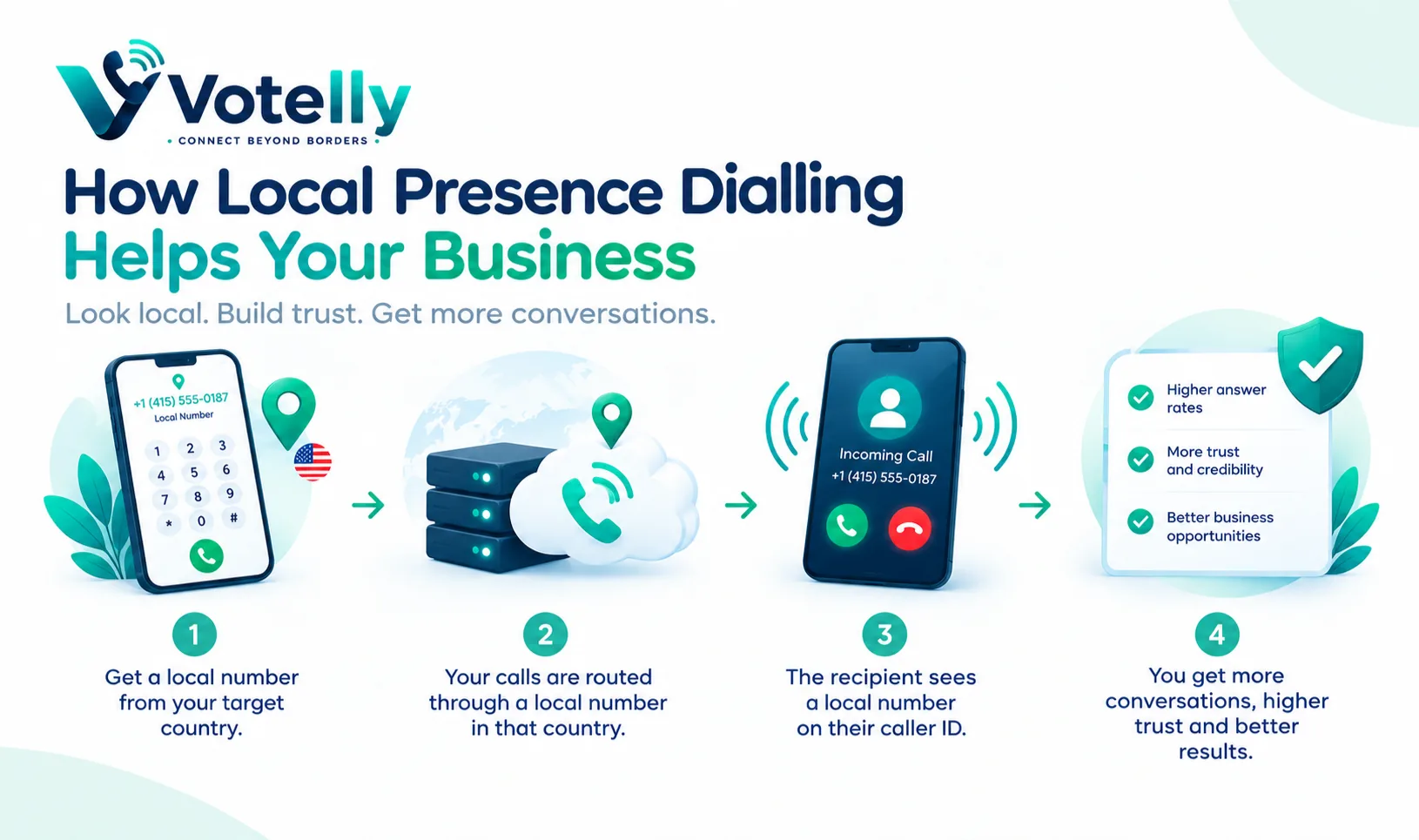
Local presence dialling displays a caller ID associated with the prospect’s region rather than one national number. Sales teams use it to make an unfamiliar call appear geographically recognisable. The technique is different from falsely spoofing a number: the displayed number should be owned or authorised by the business and should support a genuine callback path.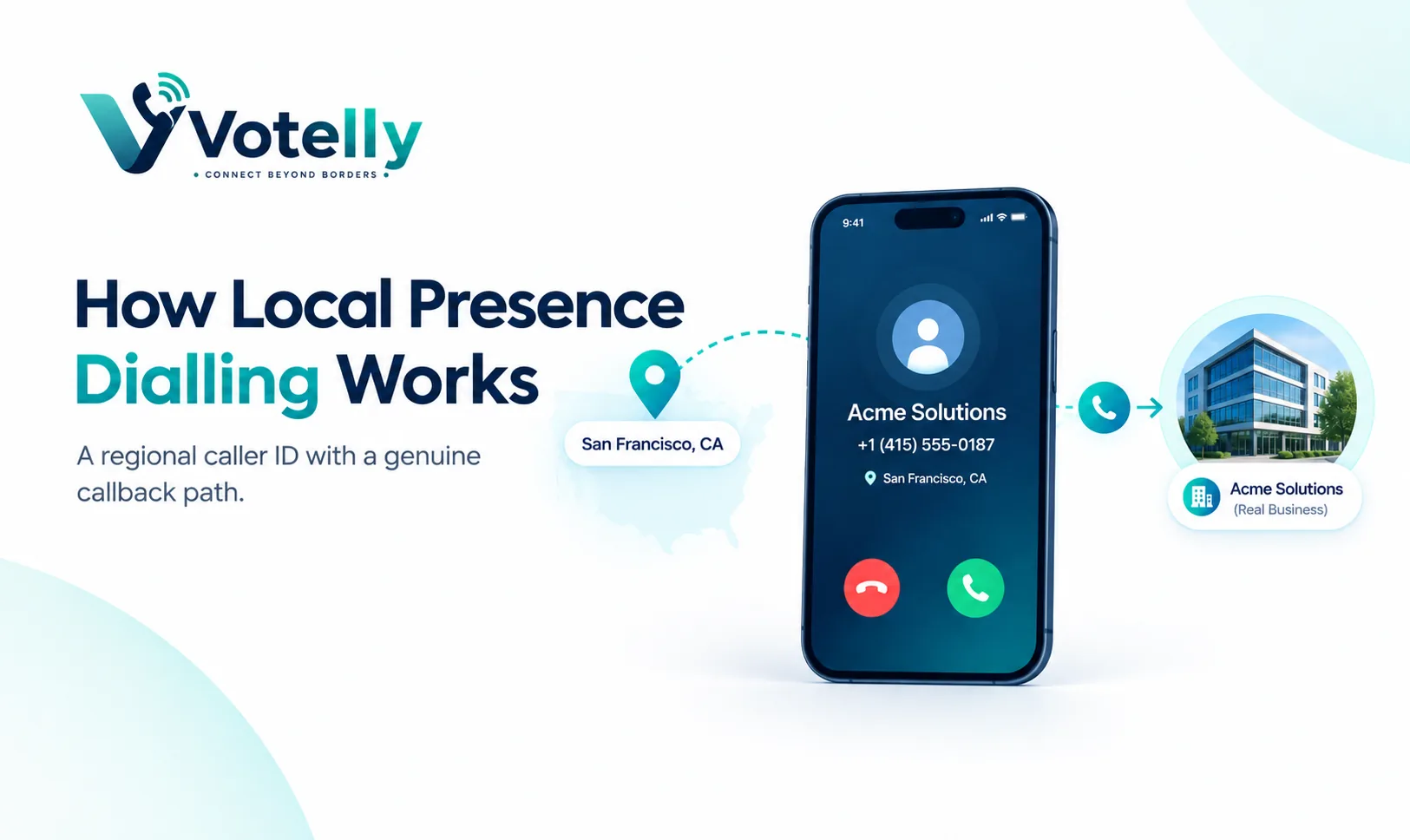
Why Teams Use It
- A regional number may feel more familiar.
- Campaigns can use dedicated numbers for attribution.
- Callbacks can be routed to the correct sales team.
- Local numbers can support territory-based workflows.
Is It Allowed?
The answer depends on the country, carrier, calling purpose, consent rules, caller-ID laws, and provider policies. In the United States, FCC rules prohibit knowingly transmitting misleading or inaccurate caller ID with intent to defraud, cause harm, or obtain value wrongfully; the FCC also regulates caller-ID authentication and call blocking. [web:24] Never display a number you do not own or have authority to use, never impersonate a local organisation, and ensure the number is answered or has a clear callback path.
Try this on your own numbers
Local numbers in 118 countries, AI call notes and one shared inbox. Live the same day, no contract.
Compliance Checklist
- Use only numbers assigned to or authorised for your business.
- Identify the business clearly when speaking with a prospect.
- Respect do-not-call lists, consent, time-of-day rules, and opt-outs.
- Maintain records of calling purpose and consent where required.
- Monitor spam labels, complaints, answer rates, and callback outcomes.
- Avoid number cycling designed to evade detection.
When Not to Use It
Do not use local presence as a disguise, to impersonate a company, or to evade spam controls. If your real office is national, a consistent branded caller ID may build more trust than constantly changing regional numbers.
A Better Sales Workflow
- Assign authorised regional numbers to territories.
- Match each number to a real callback destination.
- Present accurate business identification.
- Record opt-outs immediately.
- Review performance and complaints by number.
Frequently asked questions
- What is local presence dialling?
- What Is Local Presence Dialling and Is It Allowed? describes a VoIP or business calling approach that helps organisations manage calls more consistently and efficiently.
- Who benefits from this feature?
- Small businesses, sales teams, support teams, and contact centres can benefit when the feature matches their call volume and workflow.
- Is it included in every VoIP plan?
- No. Availability, limits, reporting, recording, and external-call charges vary by provider and plan.
- How should I set it up?
- Define the desired customer journey, configure the feature, test normal and exception paths, then monitor results.
- What is the biggest mistake to avoid?
- Avoid copying a complex setup without checking staffing, privacy, caller experience, and fallback options.
- How does it support SEO and customer trust?
- A clear, useful guide helps visitors understand the service. Publish original content, use descriptive titles and links, and keep product claims accurate.