Local Presence Dialing in 2026: Does It Still Improve Answer Rates?
By Jamila Parker · · 9 min read

Local presence dialing can still influence call performance, but 2026 data does not support a universal answer-rate boost. The better strategy is trusted identity, relevant outreach and responsible number use.
Key takeaways
- Current evidence is mixed: some vendor datasets report higher local-match connect rates, while other large call datasets found no positive lift.
- A local area code is not a substitute for caller trust; unknown-number screening, spam labels and spoofing awareness have changed customer behaviour.
- Use local presence only with numbers your business controls, with honest callback routing and compliant calling practices.
- Measure connects, conversations, complaints and conversions—not answer rate alone.
For years, outbound teams have used local presence dialing to display a phone number with an area code that appears geographically close to the person being called. The idea is intuitive: people may be more comfortable answering a familiar-looking local number than a distant or toll-free number.
In 2026, that idea is still widely discussed, but the answer is more complicated than "local numbers always get more pickups." Modern phones screen unknown callers, carriers apply spam analytics, consumers understand spoofing better, and branded calling tools can display verified business identity. As a result, the quality and reputation of the number may matter as much as its area code.
The most useful way to evaluate local presence today is to separate the psychological theory from actual campaign data, then judge whether it improves the outcomes your business cares about.
What is local presence dialing?
Local presence dialing is an outbound calling method in which a business selects an outbound caller ID that matches, or is geographically close to, the recipient's area. A sales team contacting prospects in several US cities, for example, might use different local numbers for different regions while routing callbacks back to the same central team.
A legitimate implementation uses numbers assigned to or controlled by the business. Those numbers should be callable, monitored and mapped to a clear business identity. Local presence becomes problematic when it turns into deceptive "neighbourhood spoofing" displaying a number that merely imitates the called party's local area without a genuine, accountable callback identity.
That distinction matters because carriers and analytics providers increasingly evaluate the behaviour associated with the number, not just the digits shown on the screen.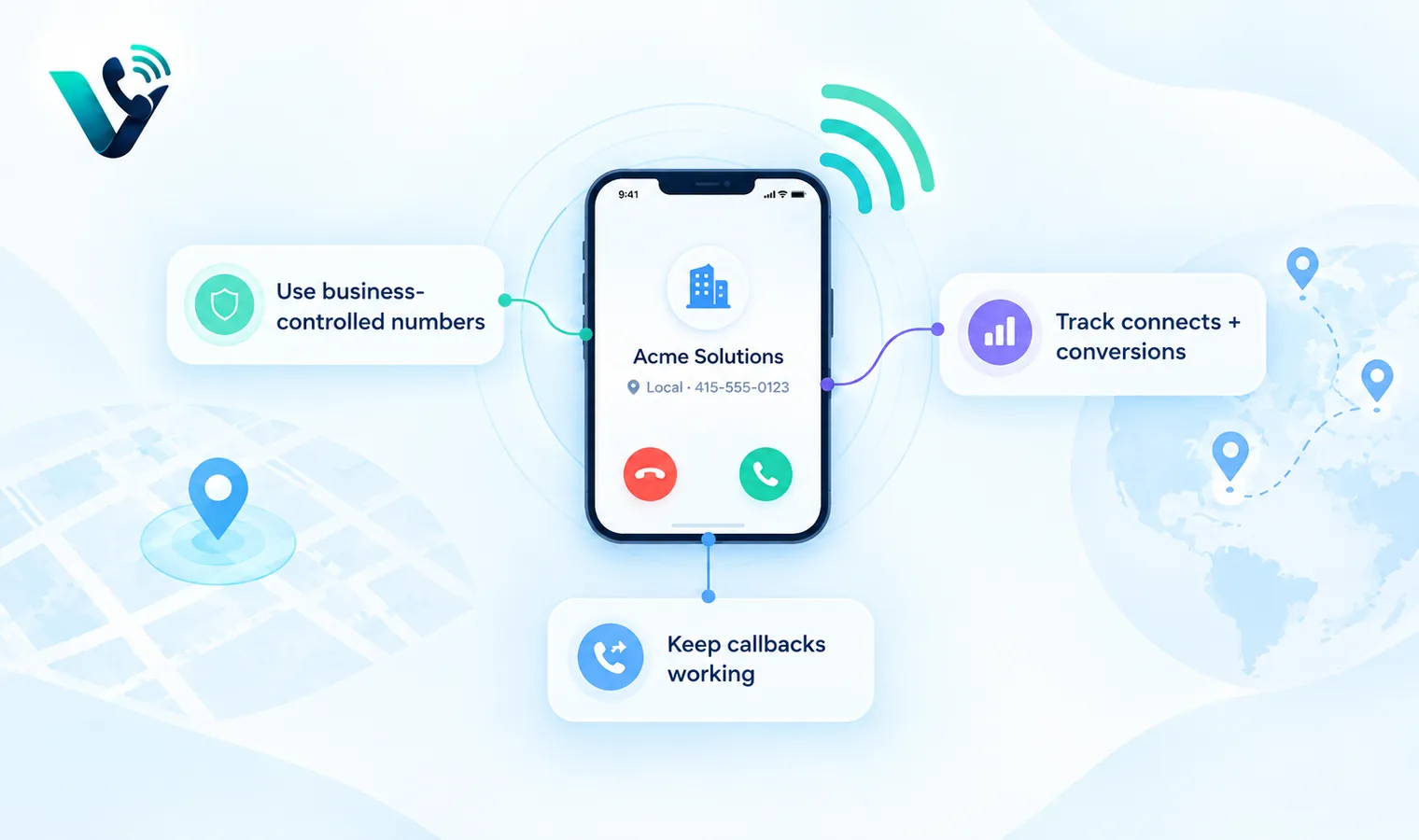
Does local presence still improve answer rates in 2026?
There is no universal percentage that can be responsibly applied to every campaign. Recent vendor data points in different directions.
Klenty published 2026 internal calling data reporting a 3.2% connect rate for matched local-area calls versus 1.95% for non-local calls, which it described as roughly a 64% relative lift. That is useful evidence, but it is one vendor's dataset and should not be treated as a guaranteed market-wide result.
Orum previously analysed roughly 1.5 million outbound calls and reported a different result: calls using local presence connected at about 4.6%, compared with about 5.5% for non-local calls in that dataset. Orum concluded that local presence did not provide the assumed connect-rate advantage in its sample.
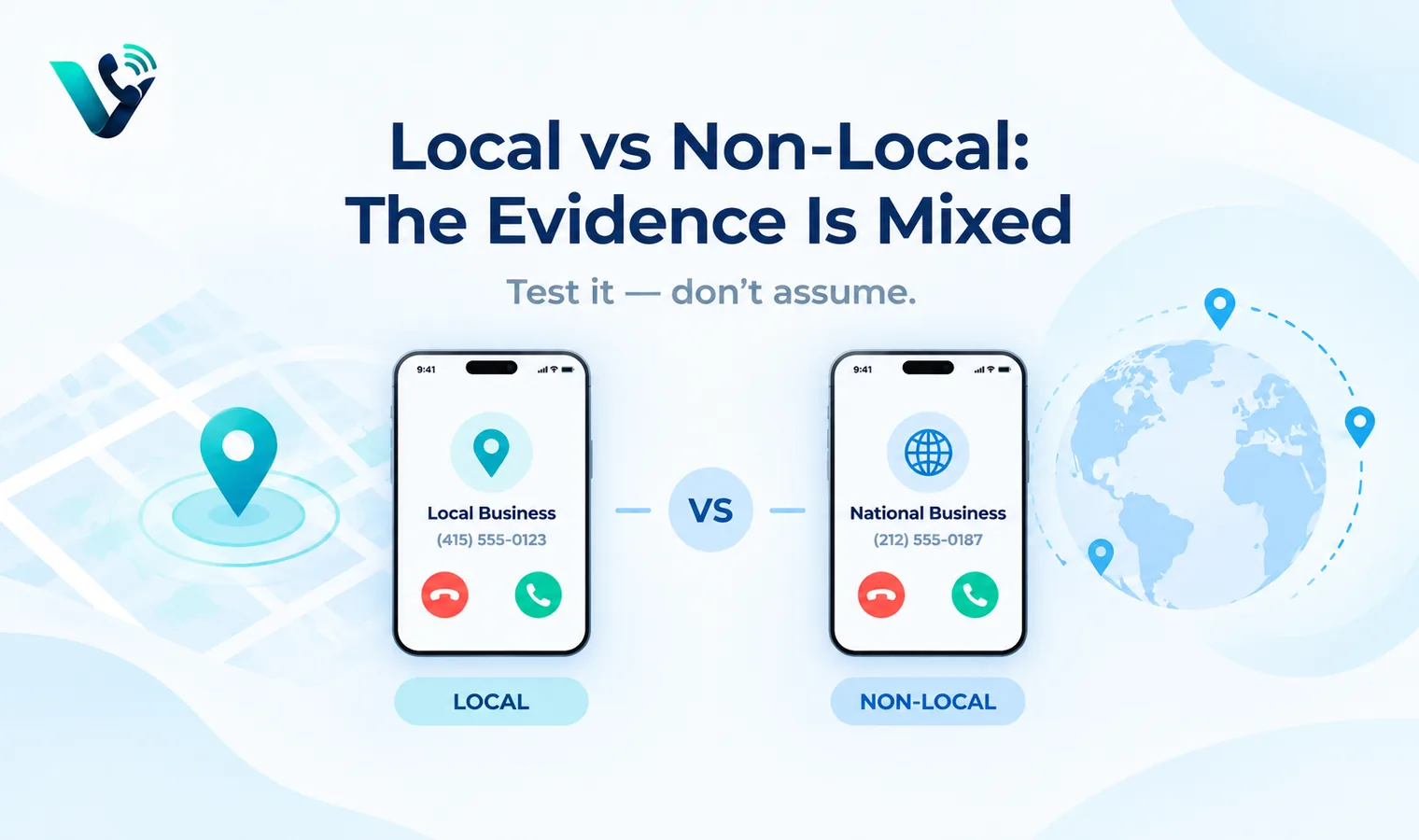
These findings are not necessarily contradictory in the sense of one being "wrong." Different customer segments, time periods, regions, dialer behaviour, list quality and number-reputation conditions can produce different outcomes. The strongest conclusion is that local presence is a testable tactic, not a guaranteed performance lever.
Why a local area code may matter less than it used to
Unknown calls are screened more aggressively
Consumers receive a high volume of unwanted calls. Hiya's State of the Call research has reported that a very large share of calls from unidentified numbers go unanswered. When the screen says only a city or state, a local area code may not provide enough confidence to overcome that caution.
Spam analytics look beyond geography
Carriers, handset ecosystems and analytics vendors consider behavioural signals such as call volume patterns, user complaints, blocks and reputation history. If a local number quickly generates negative feedback, the area code will not protect it from a spam or scam label.
People recognise neighbourhood spoofing
Scammers have historically used numbers that share the first several digits of a recipient's number to create false familiarity. Consumer education and carrier controls have reduced the trust advantage of that trick. A legitimate business should avoid any implementation that resembles deceptive spoofing.
Branded calling changes the comparison
Where supported, branded calling can present a verified business name, logo or call reason. That creates a different trust signal: instead of asking the customer to infer legitimacy from geography, the caller provides identity directly. Availability varies by carrier, device, country and provider, but the trend makes "local versus non-local" only one part of caller-ID strategy.
When local presence can still make sense
Local presence can be useful when geography is genuinely relevant to the relationship. A home-services company, property manager, regional healthcare network, local recruitment firm or multi-location business may reasonably want customers to receive calls from a local office number.
It can also help with callback behaviour. If the displayed number routes to a local team or to a central queue that knows why the customer was contacted, the experience remains coherent when the recipient calls back later.
The key is authenticity. The business should own or legitimately control the number, keep it active, answer callbacks, and use it consistently enough to build a healthy reputation. A rotating pool of disposable local numbers may create short-term novelty but can weaken long-term identity and make reputation management harder.
Local presence vs branded caller ID
Local presence and branded caller ID are not mutually exclusive. A business can use a geographically relevant number and also register or brand that number where supported. The choice depends on your audience and calling purpose.
If you primarily call existing customers, a stable published number with recognisable identity may outperform frequent number rotation. If you operate in multiple cities, a local number for each branch can be natural. If your calls are national, a consistent toll-free or national business number may be easier to remember and manage.
The strategic question is not "which number looks most likely to trick someone into answering?" It is "which identity will customers recognise, trust and successfully call back?"
The risk of chasing answer rate alone
Answer rate is an incomplete KPI. A tactic can generate more pickups while producing shorter conversations, more complaints or lower conversion quality. For legitimate outbound teams, the useful funnel is broader:
- Dial-to-connect rate: how many attempts reach a person.
- Conversation rate: how many connects become meaningful conversations.
- Qualified outcome rate: how many conversations create a valid next step.
- Conversion rate: how many calls contribute to the intended business result.
- Complaint and block rate: how often recipients report or block the number.
- Callback success: whether a recipient can reach the business later using the displayed number.
A local-presence experiment should improve the overall funnel without damaging reputation or customer trust.
How to test local presence dialing properly
Start with a controlled A/B test. Use comparable lead segments, the same time windows, the same sales team, and similar call cadences. Test a stable set of local numbers against a stable non-local or national business identity.
Run the experiment long enough to avoid judging from a few lucky days. Track the number of dials, answered calls, real conversations, qualified outcomes, opt-outs, complaints and blocked calls. Also review whether any tested caller IDs receive spam labels during the period.
Do not change several variables at once. If one group receives better leads, different scripts and local caller IDs, you will not know what caused the result.
Segment the results by region
A local presence strategy can perform differently in dense metro areas, rural regions and markets where people frequently keep mobile numbers after moving. Because number portability lets people retain numbers, the area code does not always indicate where a person currently lives.
Segmenting by region, customer type and relationship stage helps you identify where local presence is genuinely useful rather than applying it to every call.
Best practices for responsible local presence in 2026
- Use numbers assigned to your business. Do not manipulate caller ID to impersonate unrelated local numbers.
- Keep callback routes working. Every displayed number should lead to a staffed destination, useful IVR or clear voicemail.
- Register business numbers where available. Caller-ID registration and branded-calling programmes can help analytics providers associate the number with a legitimate business, although registration does not guarantee the absence of spam labels.
- Watch number reputation. A sudden drop in answers may be a reputation issue rather than a geography issue.
- Control dial volume and cadence. Aggressive burst patterns and repeated unwanted calls can trigger complaints.
- Respect consent and telemarketing rules. Local presence does not change your compliance obligations.
- Use a stable identity for customer-service calls. Existing customers benefit from consistency more than artificial locality.
Note: Caller-ID presentation, telemarketing, consent and spoofing rules vary by country. Always confirm the requirements that apply to the destination market and your use case.
What about international teams calling a local market?
A virtual local number can give an international company a practical local contact point even without a local call centre. Calls can route over VoIP to a support or sales team in another country while customers dial or return a familiar in-country number.
That can be useful for accessibility and cost, but the number must still be used transparently. In some jurisdictions, obtaining geographic numbers can require a local address or documented connection to the area. Marketing and telemarketing rules may also apply based on where the called party is located, not where the agent sits.
For an international business, the right goal is a local customer experience, not a misleading local identity.
Try this on your own numbers
Local numbers in 118 countries, AI call notes and one shared inbox. Live the same day, no contract.
Final verdict on the tactic without the hype
Local presence dialing is still a legitimate tactic in 2026, but the evidence does not justify treating it as an automatic answer-rate multiplier. Some current datasets show a positive effect; other large datasets have shown none. That means each business should test it against its own audience.
A strong outbound programme combines relevant targeting, clean data, reasonable call frequency, clear caller identity, healthy number reputation and a callback experience that makes sense. If a local number improves results within that system, keep it. If it does not, a consistent branded or national identity may be the better long-term choice.
The winning metric is not how local the number looks. It is whether customers recognise the call as legitimate, choose to engage, and can trust the business after they answer.
Local presence: What the evidence says
Evidence source |
Observed result |
How to interpret it |
|
Klenty 2026 internal data |
3.2% local vs 1.95% non-local connect rate |
Positive vendor dataset; not a universal guarantee |
|
Orum ~1.5M-call analysis |
4.6% local vs 5.5% non-local |
No positive local-presence effect in that sample |
|
Hiya call-trust research |
Unknown calls frequently go unanswered |
Identity and reputation are increasingly important |
Frequently asked questions
- What is local presence dialing?
- It is the practice of using an outbound business number that is geographically relevant to the person or market being called, while routing calls to the appropriate team.
- Does local presence increase answer rates?
- Sometimes, but not consistently across all datasets. Recent vendor data is mixed, so businesses should run controlled tests with their own audience.
- Is local presence dialing the same as spoofing?
- No. Legitimate local presence uses numbers assigned to or controlled by the business. Spoofing can involve falsifying caller ID to impersonate a number the caller does not control.
- Can local presence numbers be marked as spam?
- Yes. Spam labelling is influenced by reputation, complaints, call patterns and analytics signals. A local area code does not prevent a spam label.
- Should we rotate local numbers frequently?
- Frequent rotation can make identity and reputation management harder. Stable, monitored numbers with working callbacks are generally better for a trustworthy customer experience.
- What should we measure besides answer rate?
- Track conversations, qualified outcomes, conversions, complaints, blocks, spam labels and callback success. These metrics reveal whether the tactic creates real business value.