Nigeria, Kenya and South Africa: Calling Into African Markets
By Jamila Parker · · 8 min read

A practical business guide to calling and receiving calls in Nigeria, Kenya and South Africa, including numbering, local presence, routing, documentation and provider checks.
Key takeaways
- Nigeria, Kenya and South Africa each manage their own national numbering resources; there is no single Africa-wide business-number model.
- Local or geographic numbers can support market presence, while toll-free availability and rules vary by country and provider.
- Call quality, mobile reachability and regional routing should be tested from real local networks before launch.
- Use licensed-provider routes and verify KYC, number type, outbound caller ID and messaging separately for each country.
Quick answer: Treat each African market separately
Calling into African markets is operationally easier when the business standardises its cloud phone platform but treats each country’s number supply and regulation independently. Nigeria, Kenya and South Africa all have active telecom regulators and national numbering plans. A number that is simple to provision in one market may require different documents or be offered in different categories in another.
For international sales and support teams, the goal should be reliable customer access: A legitimate local or service number, good call quality, clear routing and realistic service hours.
Nigeria: +234 and market-specific local identity
Nigeria uses country code +234. The Nigerian Communications Commission develops and administers the national numbering plan and publishes area-code information for fixed telephony. Lagos and Abuja are among the most commercially relevant calling identities for many international companies, but available ranges depend on the provider and current allocation.
For business use, verify whether the offered number is geographic, mobile-related, toll-free or another category and whether it supports inbound calls, outbound presentation and messaging. A provider’s generic “Nigeria coverage” claim should not replace an exact number and feature check.
Kenya: +254 and regulated numbering resources
Kenya uses country code +254. The Communications Authority of Kenya manages the national numbering plan and states that licensed operators requiring numbers are eligible for assignment from national numbering resources. The Authority updated its telecommunications numbering plan in 2026, reinforcing that numbering is an actively managed national resource.
For international teams, a Kenya number can be routed into a regional support or sales queue. Confirm number type, documentation, routing and mobile reachability. Kenya has a strong mobile communications culture, so workflows that depend on voice plus messaging should be tested end to end rather than assumed from the number format.
South Africa: +27, geographic identity and number management
South Africa uses country code +27. ICASA manages national numbering resources and notes that numbers can carry information about service type and geographic significance; for example, fixed-line prefixes can indicate areas such as Johannesburg. ICASA allocates numbering resources to licensed electronic communications service providers, which then assign numbers to subscribers.
South Africa also has active number-portability and number-management rules. In July 2026, ICASA announced amendments dealing with churn, deactivation and recycling of inactive mobile numbers, illustrating why businesses should keep subscriber and service records current rather than treating numbers as permanent assets without lifecycle management.
Local presence versus customer service reality
A local number can make it easier for customers to recognise and dial the business, but it should not be used to create a misleading impression. If a company serves Nigeria from a regional hub, the service model should still be clear and reliable. Customers care most about whether the number works, whether someone answers and whether their issue is resolved.
For outbound sales, local caller ID may help recognition but is not a guaranteed answer-rate solution. Contact relevance, consent, calling time, reputation and complaints all matter. Stable, authorised business identities are safer than aggressive number rotation.
Routing across three markets
Use separate entry numbers for Nigeria, Kenya and South Africa, then route them into common cloud infrastructure. The dialled number should pass market context to the agent and trigger the correct greeting, business hours, language options and CRM workflow.
If the same agents cover several countries, skills-based routing can prioritise agents familiar with the relevant market. Overflow can move to a regional queue, but avoid sending every African market into one generic queue with no context.
Call quality and infrastructure checks
Test from real local mobile and fixed networks. Measure post-dial delay, audio clarity, one-way-audio failures, dropped calls and DTMF through IVR. Ask the provider about regional points of presence, upstream carriers and failover. An international number is only valuable if customers can reach it reliably.
For high-volume contact centres, confirm concurrent-call capacity and whether the provider can scale channels quickly during campaigns. Also check fraud controls because international voice routes can be targeted by toll fraud.
KYC and compliance planning
Expect documentation to vary by market and number type. A provider may request business registration, address, identity documents or intended-use information. Because national numbering resources are administered by regulators and licensed operators, companies should obtain numbers through legitimate provider channels.
If calls are recorded, marketed or linked to personal data, telecom numbering is only one part of compliance. Review privacy, direct-marketing and recording obligations for the countries and industries involved.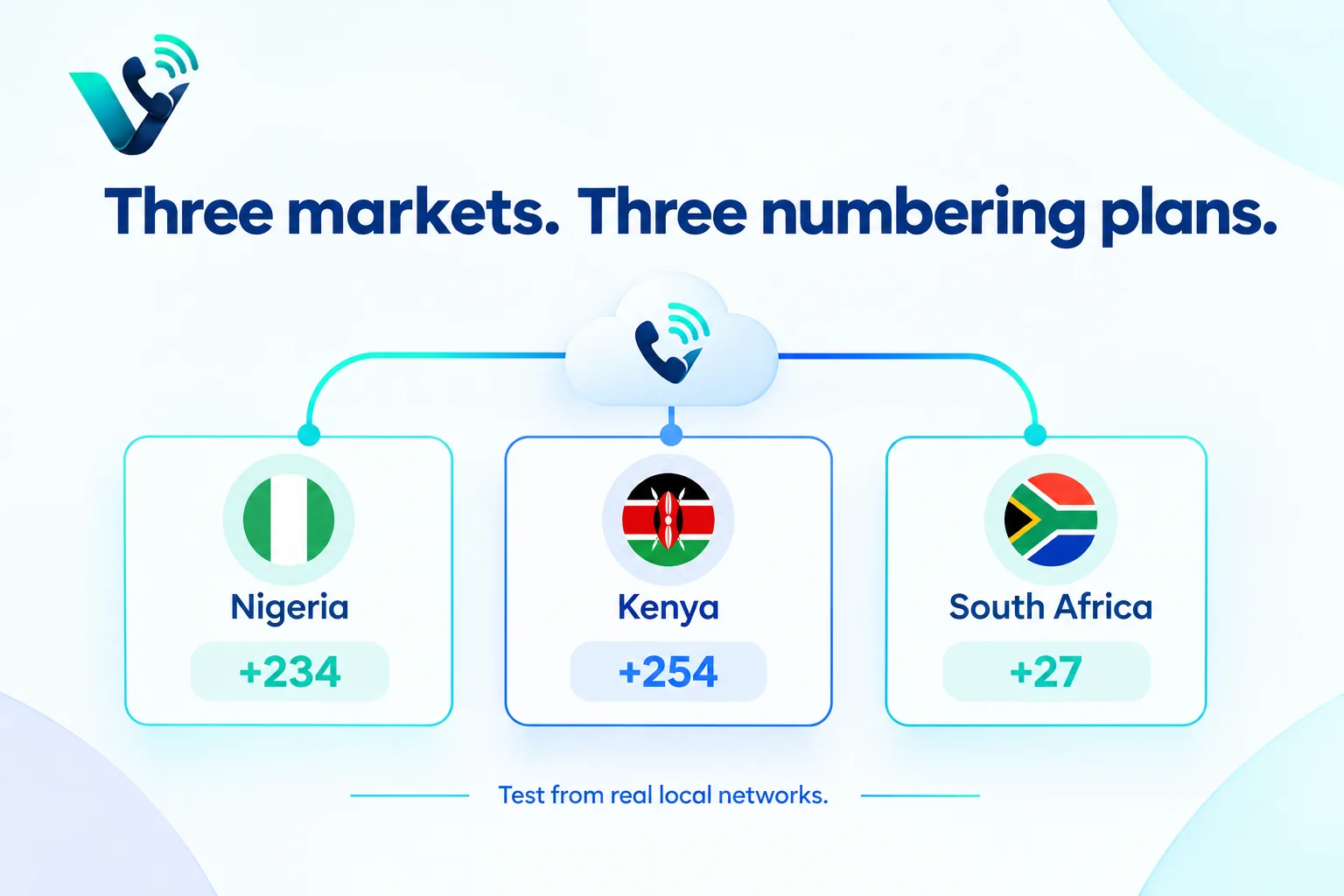
Choosing between local and toll-free numbers
Local geographic numbers can be useful for sales and partner operations where a regional identity matters. Toll-free can be attractive for customer care if the service is available and reachable from the networks customers use. The best mix can differ across Nigeria, Kenya and South Africa.
Compare monthly rental, inbound rates, mobile reachability, documentation, caller-ID support and actual traffic. Do not assume toll-free has identical behaviour across countries.
Market expansion sequence for African voice coverage
Add countries in the order of real commercial need. Start with the market where pipeline or customer volume is strongest, establish a tested number and routing pattern, then reuse the operating template for the next country. This is more reliable than launching ten untested numbers at once.
Document what changes by market: Number format, provider, KYC, business hours, languages, toll-free availability, outbound caller-ID policy and support escalation. Document what stays standard: CRM logging, security, agent training, call-quality monitoring and number ownership.
Procurement questions to ask before committing
When evaluating calling into African markets, ask the provider to answer the commercial and technical questions in writing. Confirm the exact number type, current inventory, monthly rental, inbound and outbound call rates, included channels, overage pricing, minimum term, cancellation process and whether the number can be ported later. Then ask which capabilities are tied to the exact number rather than to the platform in general. This distinction matters because a dashboard may support SMS, recording or outbound caller ID even when a particular country range does not.
Compliance questions deserve the same treatment. Ask which carrier or licensed operator supplies the number, what KYC or business documents are required, whether a local address or entity is needed, and whether any intended-use restriction applies. Nigeria, Kenya and South Africa each manage their own national numbering resources; there is no single Africa-wide business-number model. A provider that can explain these dependencies clearly is usually easier to work with than one that promises universal instant activation without qualifying the number type or market.
Test the complete customer journey before launch
A successful calling into African markets deployment should be tested from the customer side, not only from the admin portal. Place calls from the networks your customers are likely to use, listen for post-dial delay, confirm two-way audio, press IVR keys, transfer between agents, leave voicemail and trigger after-hours routing. If the workflow includes outbound calling, verify that the intended caller ID is presented correctly and that callbacks return to a monitored destination. If SMS is important, test sending and receiving with the real number instead of assuming support from a feature list.
Also test failure conditions. Temporarily make the primary queue unavailable and confirm that overflow or failover works. Check what happens when all agents are busy, when a call arrives outside business hours and when the destination system is offline. Local or geographic numbers can support market presence, while toll-free availability and rules vary by country and provider. These tests are inexpensive compared with discovering a broken route after the number has been printed on a campaign, customer portal or product packaging.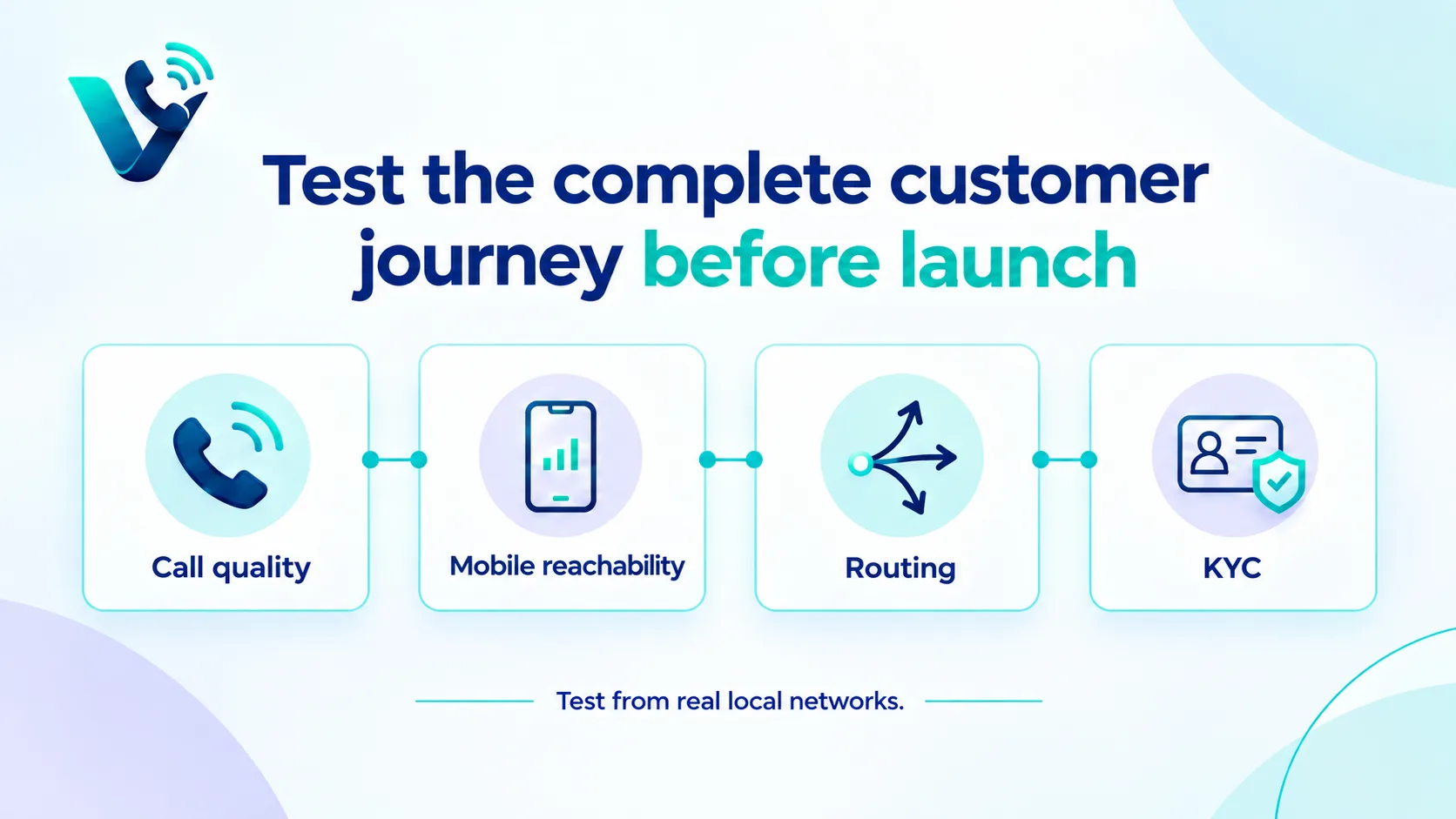
Try this on your own numbers
Local numbers in 118 countries, AI call notes and one shared inbox. Live the same day, no contract.
Measure the first 30 days and adjust
After launch, treat calling into African markets as an operating channel with measurable outcomes. Track total calls, unique callers, answer rate, missed calls, average speed to answer, abandoned calls, call duration, transfer rate and the business result that matters for the use case. For sales that might be qualified meetings or revenue; for support it may be first-contact resolution, reopen rate or customer satisfaction. Segment performance by number so the team can see whether the chosen market or number type is actually useful.
Review cost at the same time. Include rental, usage, forwarding, recording, contact-centre licences and any carrier surcharges, then compare that total with the value created. If the number receives little traffic, consider whether it still serves a brand or compliance purpose. If demand is high, add channels or more specialised routing before adding more public numbers. Good virtual numbers / africa strategy usually comes from improving a small number of well-managed customer entry points rather than accumulating numbers with no clear owner.
Bottom line
Calling into African markets works best as a country-by-country numbering strategy on top of one well-governed cloud communications platform. For Nigeria, Kenya and South Africa, verify the regulator-aligned number source, test local reachability, design market-aware routing and keep ownership and KYC records current. That produces a scalable foundation for sales and support expansion.
Frequently asked questions
- What are the country codes for Nigeria, Kenya and South Africa?
- Nigeria is +234, Kenya is +254, and South Africa is +27.
- Who manages phone numbering in Nigeria?
- The Nigerian Communications Commission (NCC) develops and administers the national numbering plan.
- Who manages phone numbering in Kenya?
- The Communications Authority of Kenya manages Kenya’s national numbering resources and plan.
- Who manages phone numbering in South Africa?
- ICASA manages South Africa’s national numbering resources and allocates them to eligible licensees.
- Can one global team answer numbers from all three countries?
- Yes. Cloud routing can deliver separate national numbers into one platform while preserving market context for routing and reporting.
- Should businesses use local or toll-free numbers in African markets?
- It depends on availability, caller behaviour, support volume, documentation and cost. Test the specific market rather than using one rule for the continent.