Number Reputation: Why Your Calls Get Flagged as Spam
By Jamila Parker · · 8 min read

Understand number reputation, spam labels, call behavior, caller ID signals and practical steps businesses can take to reduce unwanted call labeling.
Key takeaways
- Choose the number type and routing model around the customer journey, not just the country name.
- Capture source, ownership and next action as soon as a lead arrives.
- Check current numbering and compliance requirements before publishing a local or geographic number.
- Use reporting to compare qualified outcomes, not only call volume.
- Test voice, routing, fallback and CRM behaviour before launch.
Number Reputation: Why Your Calls Get Flagged as Spam is primarily a question of matching phone infrastructure to a real customer and sales workflow. For businesses using number reputation, the practical priorities are eligibility, clear routing, accurate customer-facing information, fast follow-up and measurable attribution. The sections below explain the implementation in a way that can be used as a publishing and operations checklist.
Spam labels are reputation signals, not a single blacklist
When a customer sees a warning such as Spam Likely, the label can come from carrier or call-analytics systems that evaluate signals around the calling number and its behaviour. There is not one universal reputation database that controls every handset. Different analytics systems can use different data and a number can have different statuses across networks. That is why a business may see inconsistent results between recipients.
A useful implementation principle is to keep the customer-facing experience simple while making the internal workflow measurable. The phone number, routing rule and CRM record should describe the same journey. If one part changes, test the full path again: from the first impression and incoming call through ownership, follow-up and reporting. This avoids a common failure mode in which the telephony system works technically but the sales process still loses enquiries between systems.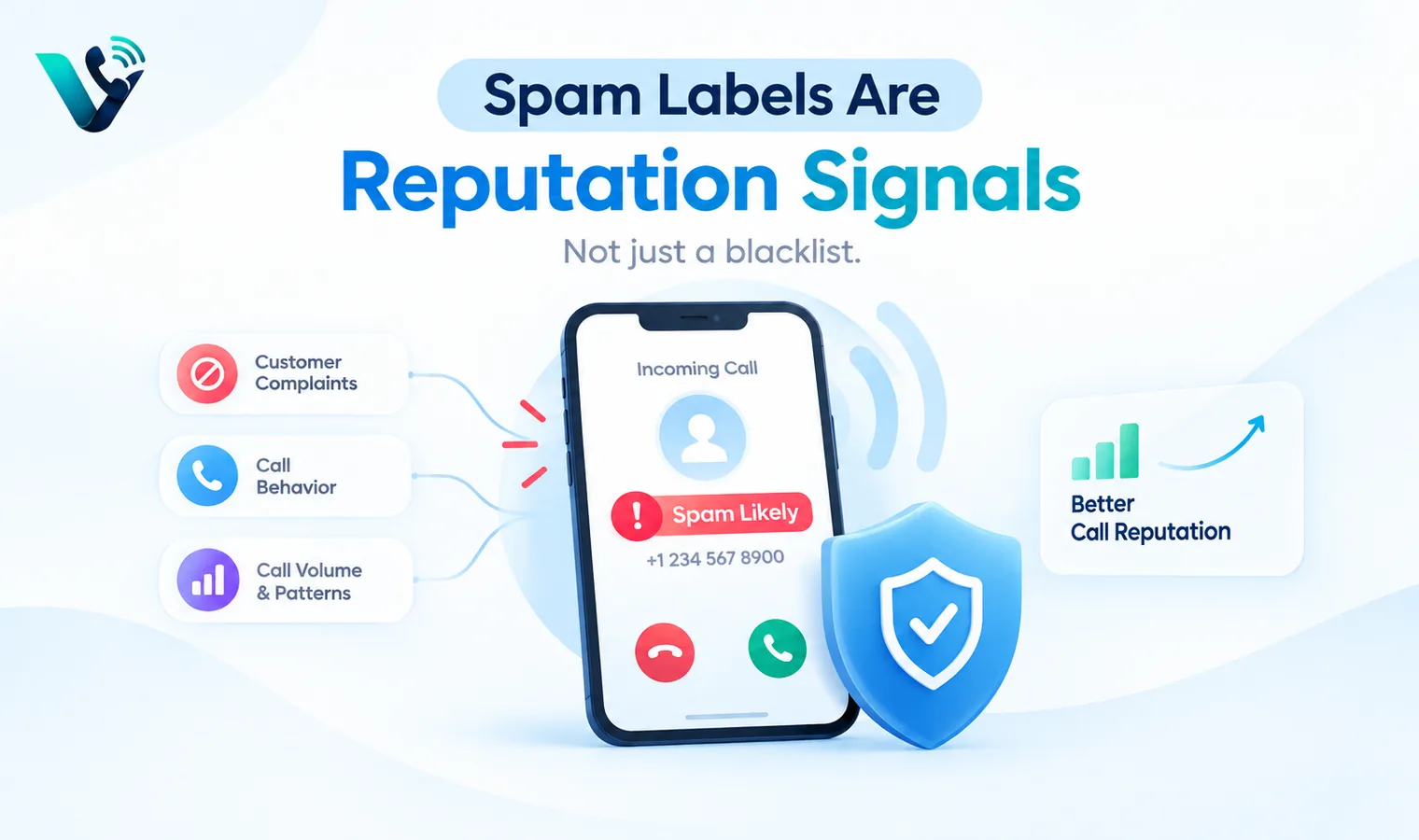
What can influence number reputation?
Published reputation systems describe signals such as customer complaints, blocking behaviour, calling volume, answer rates, call duration patterns, destination diversity, number age and authentication signals. A legitimate business can therefore be classified incorrectly if its traffic resembles patterns associated with unwanted calls. The important distinction is between intent and observable behaviour: an analytics system generally scores signals, not the internal reason a company made a call.
A useful implementation principle is to keep the customer-facing experience simple while making the internal workflow measurable. The phone number, routing rule and CRM record should describe the same journey. If one part changes, test the full path again: from the first impression and incoming call through ownership, follow-up and reporting. This avoids a common failure mode in which the telephony system works technically but the sales process still loses enquiries between systems.
Why new and recycled numbers can be difficult
A newly activated number has little history. A recycled number may also carry history from a previous user. This means a business can start with a number that does not have a completely blank reputation profile. Number maturity and ongoing engagement can become relevant signals as the number develops a calling history. Businesses should therefore monitor newly acquired numbers rather than assuming the number is automatically trusted because it was purchased legitimately.
A useful implementation principle is to keep the customer-facing experience simple while making the internal workflow measurable. The phone number, routing rule and CRM record should describe the same journey. If one part changes, test the full path again: from the first impression and incoming call through ownership, follow-up and reporting. This avoids a common failure mode in which the telephony system works technically but the sales process still loses enquiries between systems.
High volume is not the only problem
Volume matters, but volume alone does not explain every label. High rates of unanswered calls, very short calls, repeated attempts to the same destinations, broad destination lists and customer complaints can create a pattern that resembles unwanted traffic. A business that increases outbound activity should increase monitoring at the same time. Sudden changes are easier to diagnose when the team already has baseline data.
A useful implementation principle is to keep the customer-facing experience simple while making the internal workflow measurable. The phone number, routing rule and CRM record should describe the same journey. If one part changes, test the full path again: from the first impression and incoming call through ownership, follow-up and reporting. This avoids a common failure mode in which the telephony system works technically but the sales process still loses enquiries between systems.
Caller ID authentication and trust
In the United States, caller authentication frameworks such as STIR/SHAKEN are part of the broader effort to reduce caller ID spoofing. Authentication does not guarantee that a call will never receive a spam label, but it can contribute to a more trustworthy call identity. Businesses should work with their provider to understand what attestation is available and whether outbound numbers are correctly associated with the business.
A useful implementation principle is to keep the customer-facing experience simple while making the internal workflow measurable. The phone number, routing rule and CRM record should describe the same journey. If one part changes, test the full path again: from the first impression and incoming call through ownership, follow-up and reporting. This avoids a common failure mode in which the telephony system works technically but the sales process still loses enquiries between systems.
How to reduce avoidable risk
Use numbers that the business controls, keep caller identity consistent, avoid misleading caller ID, follow applicable consent rules, and monitor complaint or block signals. Do not rotate through numbers simply to escape a label; that can make the calling program harder to understand and can create a larger operational problem. A sustainable approach is to improve the calling pattern and document the legitimate purpose of the traffic.
A useful implementation principle is to keep the customer-facing experience simple while making the internal workflow measurable. The phone number, routing rule and CRM record should describe the same journey. If one part changes, test the full path again: from the first impression and incoming call through ownership, follow-up and reporting. This avoids a common failure mode in which the telephony system works technically but the sales process still loses enquiries between systems.
What to do if a number is already flagged
First identify where the label appears and which number is affected. Check recent call volume, answer rates, complaint patterns and number history. Review provider-level registration or reputation tools where available. Some analytics providers support review or remediation processes. The outcome is not guaranteed because different systems operate independently, so remediation should be treated as a process rather than a switch that permanently clears a number.
A useful implementation principle is to keep the customer-facing experience simple while making the internal workflow measurable. The phone number, routing rule and CRM record should describe the same journey. If one part changes, test the full path again: from the first impression and incoming call through ownership, follow-up and reporting. This avoids a common failure mode in which the telephony system works technically but the sales process still loses enquiries between systems.
Build reputation monitoring into operations
Number reputation should be treated like email deliverability: monitor it before customers report a problem. Keep a list of outbound numbers, their purpose, team ownership and market. Review performance after campaigns or major changes. If a team suddenly adds thousands of calls, record the reason and expected pattern. This operational context makes troubleshooting much faster when a label appears.
A useful implementation principle is to keep the customer-facing experience simple while making the internal workflow measurable. The phone number, routing rule and CRM record should describe the same journey. If one part changes, test the full path again: from the first impression and incoming call through ownership, follow-up and reporting. This avoids a common failure mode in which the telephony system works technically but the sales process still loses enquiries between systems.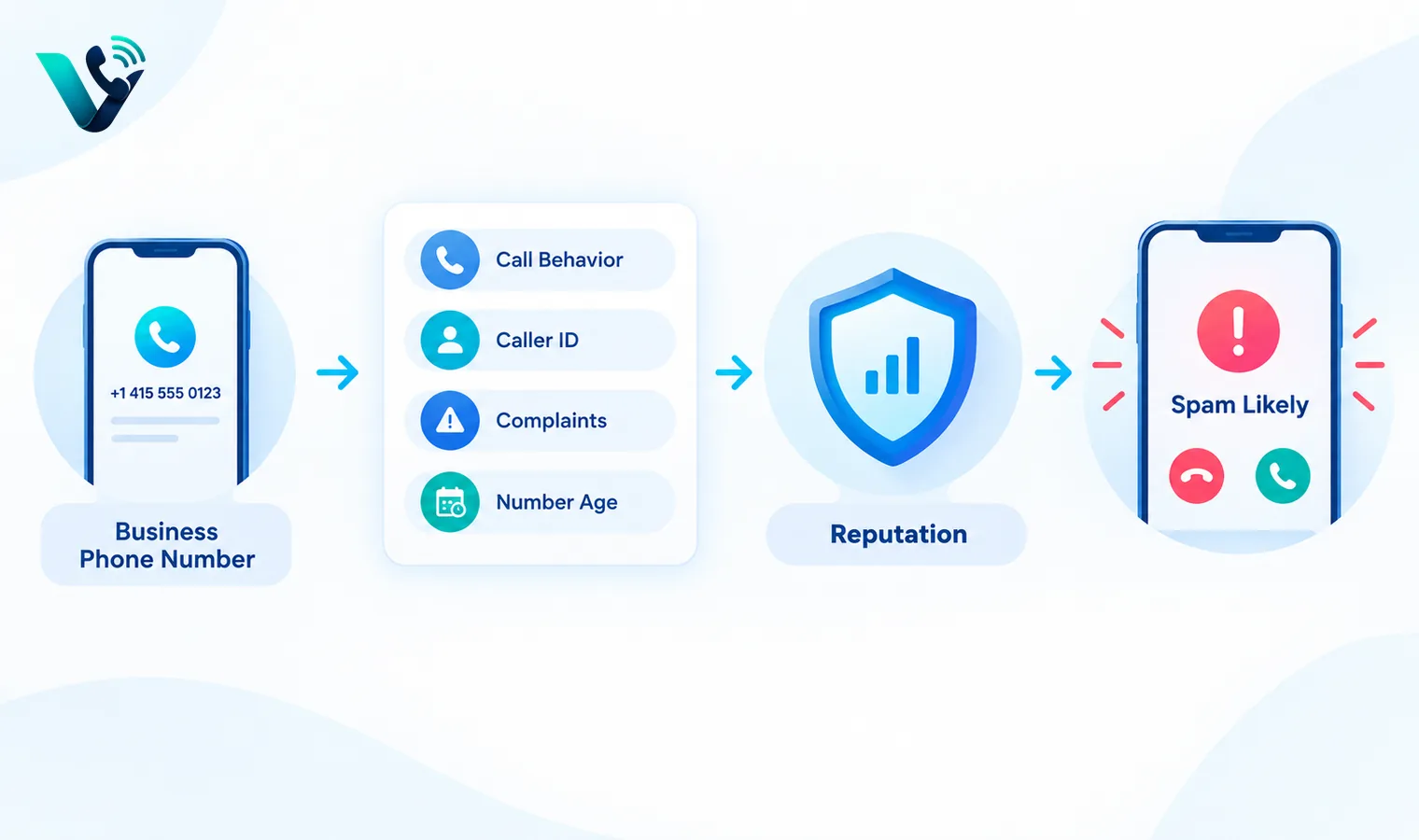
Protect the customer experience
The most useful reputation strategy is also the most basic: call people who have a legitimate reason to hear from the business, provide context quickly, respect opt-outs and make it easy to identify the caller. Customers are more likely to engage when the call is relevant and expected. Reputation systems are imperfect, but good calling practices reduce the underlying behaviours that create complaints.
A useful implementation principle is to keep the customer-facing experience simple while making the internal workflow measurable. The phone number, routing rule and CRM record should describe the same journey. If one part changes, test the full path again: from the first impression and incoming call through ownership, follow-up and reporting. This avoids a common failure mode in which the telephony system works technically but the sales process still loses enquiries between systems.
How a CRM supports reputation
A CRM can help control outbound activity by keeping ownership, lead status, call history and follow-up timing visible. LeadMino can serve as the system where sales teams record the relationship after the call. That makes it easier to distinguish a genuine follow-up from a repeated blind dial and to measure whether outreach is producing conversations rather than only call attempts.
Try this on your own numbers
Local numbers in 118 countries, AI call notes and one shared inbox. Live the same day, no contract.
A useful implementation principle is to keep the customer-facing experience simple while making the internal workflow measurable. The phone number, routing rule and CRM record should describe the same journey. If one part changes, test the full path again: from the first impression and incoming call through ownership, follow-up and reporting. This avoids a common failure mode in which the telephony system works technically but the sales process still loses enquiries between systems.
Practical implementation checklist
Element |
Purpose |
What to check |
Complaints |
Customer feedback |
Monitor blocks and reports |
Calling pattern |
Behaviour |
Watch volume, answer rate and repeat attempts |
Authentication |
Caller identity |
Confirm provider support and attestation |
Remediation |
Recovery |
Use available reputation review processes |
Frequently asked questions
- What is number reputation?
- It is the collection of signals used by carriers and analytics systems to assess how outbound calls are perceived.
- Why can a legitimate number be flagged?
- Analytics systems evaluate behaviour and feedback, so legitimate traffic can resemble unwanted traffic.
- Does a new number have a clean reputation?
- Not necessarily. New numbers have little history and recycled numbers may carry previous history.
- Can registration prevent spam labels?
- Registration can help provide identity and monitoring, but no system can guarantee a permanent absence of spam labels.
- What should I do if a number is flagged?
- Review calling behaviour, complaints, authentication and reputation data, then use available remediation processes.
- Should I rotate numbers to avoid spam labels?
- Frequent rotation can create operational and reputation problems. Improve the calling program and monitor it instead.