Power vs Predictive vs Preview vs Progressive Dialler
By Jamila Parker · · 2 min read

Compare four outbound dialler modes and see how speed, agent control, compliance, contact quality and team size affect the right choice.
Key takeaways
- Choose the feature based on workflow, customer experience, and team size.
- Clear rules and testing matter more than simply enabling a feature.
- Use accurate business information and respect applicable privacy and calling requirements.
- Review performance data and update the call flow as the business grows.
The Four Modes
Outbound diallers automate parts of the calling workflow, but they make different trade-offs between speed, agent control, contact quality, and compliance. The best mode depends on list quality, campaign purpose, staffing, answer rates, and the time agents need to prepare.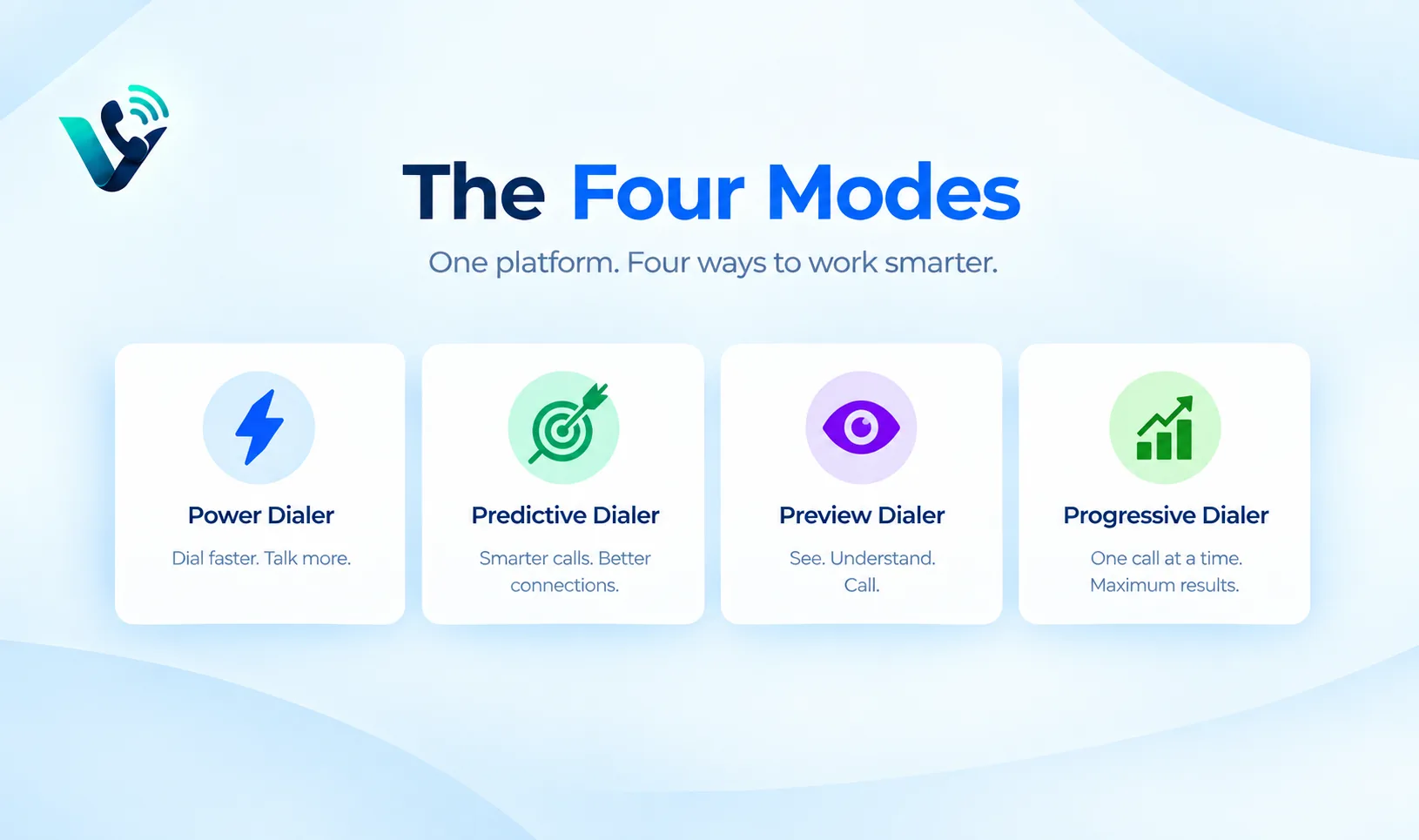
Power Dialler
A power dialler calls the next contact when an agent becomes available. It generally prioritises agent control and predictable behaviour over maximum connection speed. It suits smaller teams, targeted lists, and campaigns where agents need to review context.
Predictive Dialler
A predictive dialler uses pacing algorithms to dial multiple numbers based on expected agent availability. It can raise talk time in larger campaigns, but inaccurate pacing may create abandoned calls or silent connections. Configuration, consent, local laws, and provider safeguards matter.
Preview Dialler
A preview dialler shows customer information before the call begins. The agent can review notes, decide whether to call, and prepare a relevant opening. It is slower, but useful for high-value sales, account management, and complex conversations.
Progressive Dialler
A progressive dialler automatically presents the next contact when an agent is ready, typically avoiding the aggressive pacing of predictive systems. It balances productivity with a more controlled customer experience.
Try this on your own numbers
Local numbers in 118 countries, AI call notes and one shared inbox. Live the same day, no contract.
Feature Comparison
Mode |
Speed |
Agent control |
Good fit |
Power |
Medium |
High |
Small targeted teams |
Predictive |
Highest |
Lower |
Large, clean campaigns |
Preview |
Lower |
Highest |
Complex or high-value leads |
Progressive |
Medium-high |
Medium-high |
Balanced outbound work |
How to Choose
Start with campaign risk and customer value, not just dialling speed. Use preview for strategic accounts, power or progressive for general sales activity, and predictive only when list quality, staffing, monitoring, and compliance processes are mature.
Operational Guardrails
- Use permission-based lists and honour opt-outs.
- Set abandonment and pacing limits.
- Give agents context and a clear script.
- Monitor answer rates, complaints, contact outcomes, and conversions.
- Test a small campaign before scaling.
Frequently asked questions
- What is power predictive preview progressive dialler?
- Power vs Predictive vs Preview vs Progressive Dialler describes a VoIP or business calling approach that helps organisations manage calls more consistently and efficiently.
- Who benefits from this feature?
- Small businesses, sales teams, support teams, and contact centres can benefit when the feature matches their call volume and workflow.
- Is it included in every VoIP plan?
- No. Availability, limits, reporting, recording, and external-call charges vary by provider and plan.
- How should I set it up?
- Define the desired customer journey, configure the feature, test normal and exception paths, then monitor results.
- What is the biggest mistake to avoid?
- Avoid copying a complex setup without checking staffing, privacy, caller experience, and fallback options.
- How does it support SEO and customer trust?
- A clear, useful guide helps visitors understand the service. Publish original content, use descriptive titles and links, and keep product claims accurate.