How to run call blocks that reps do not hate
By Jamila Parker · · 8 min read

Call blocks fail when they become forced dial sprints with bad lists and constant interruption. Build focused prospecting blocks that protect energy, context and buyer timing.
Key takeaways
- Sales call blocks should remove switching costs, not create a high-pressure dial contest.
- List quality and buyer timing matter more than squeezing extra dials into a badly prepared block.
- Give reps a clear objective, a prepared list and short recovery time so intensity stays sustainable.
- Measure meaningful conversations and qualified next steps alongside call volume.
- Use rep feedback and block-level data to redesign the schedule instead of blaming motivation.
Sales call blocks are supposed to make prospecting easier. Instead, many teams turn them into the most disliked hour of the week: Everyone joins a video room, a manager watches a dial counter, the list is half wrong, Slack keeps moving and reps are expected to sound natural while racing a timer. The problem is not time blocking itself. The problem is designing the block around visible activity instead of good conversations.
Start with the job of the block
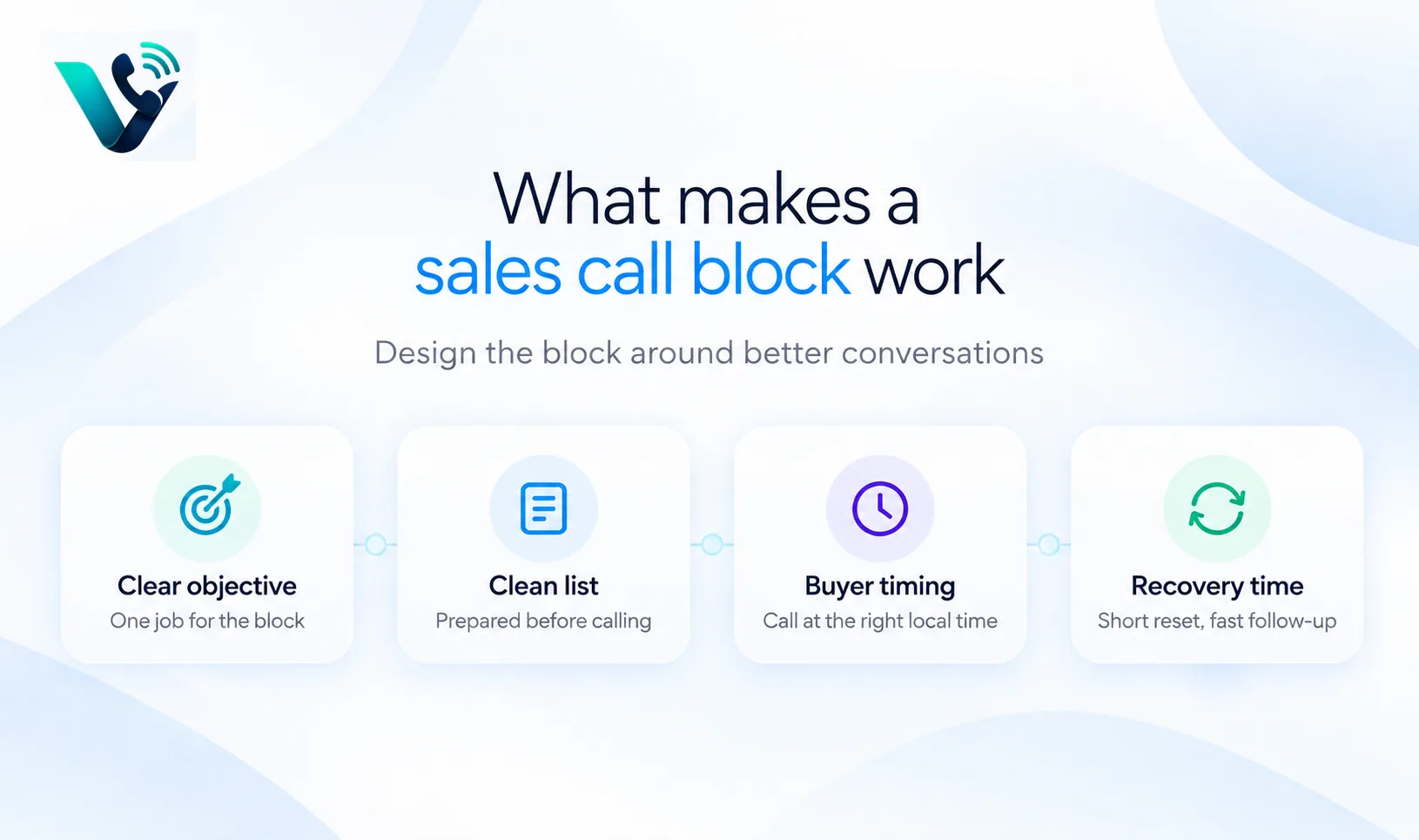
A useful call block has one primary job. It may be a first-touch outbound block, a callback block, a reactivation block, an event follow-up block or a named-account block. Mixing every intent into one session creates cognitive switching. The opener, context and next action change from call to call, so the rep spends more time reorienting than speaking.
Write the objective in outcome language. “Make 60 calls” is an activity target. “Create ten intended-person conversations from this event list and book qualified next steps” is an operating objective. You may still monitor volume because it helps explain capacity, but the block should not reward empty activity.
Build the list before the block starts
Nothing makes reps hate a sales call block faster than discovering that half the list is unusable. Remove duplicates, obvious invalid numbers, suppressed contacts and records that do not match the campaign. Verify the minimum fields needed for a relevant opener. For higher-value accounts, add one reason to call: A role change, hiring pattern, product launch, expansion, prior interaction or another legitimate trigger.
List preparation should be owned by a process, not by the first ten minutes of the call block. If reps are expected to research each record live, shorten the list and call it an account-prospecting block. If the objective is higher-volume outreach, give them a cleaner, more standardised queue. Different motions need different block designs.
Use buyer local time as a boundary
A team-wide call block at 9 a.m. only makes sense when the buyers are also in a reasonable calling window. HubSpot’s 2025 survey found late morning was a commonly reported productive period, but your own answer and meeting data should determine the schedule. If one office covers several time zones, create territory-specific blocks rather than forcing the whole floor to call the same region at once.
This also improves rep experience. Calling obviously bad times produces more voicemail, fewer conversations and more rejection that has nothing to do with rep skill. A well-timed block feels better because the work produces feedback. Reps hear real objections, questions and interest instead of an hour of rings.
Choose a block length that protects intensity
There is no magic duration, but 45 to 90 minutes is easier to sustain than an open-ended “power hour” that quietly becomes two and a half hours. For newer reps or difficult markets, use shorter blocks with a brief reset. For an experienced team using a clean power dialler queue, a longer block may be comfortable. The point is to preserve call quality as fatigue rises.
Block design |
Best for |
Watch out for |
|
45 minutes + 10 minute reset |
New reps, complex calls, intense objection handling |
Too much setup time if the list is not ready |
|
60-75 minute focused block |
Most outbound teams |
Internal meetings cutting into the window |
|
90 minute campaign block |
Clean lists, experienced reps, high-volume motion |
Fatigue and scripted delivery near the end |
|
Callback sprint |
High-intent follow-up |
Mixing cold records into the same queue |
Give reps autonomy inside the structure
Reps are more likely to resist call blocks when every detail is controlled from above. Standardise the boundaries the campaign, eligible contacts, compliance rules, logging fields and block window then allow some autonomy in how the rep opens, researches and sequences the conversation. Experienced sellers should not need permission to skip a clearly bad record or prioritise a promised callback.
Autonomy also means the right to protect the block. Managers should avoid dropping internal meetings into the window, and teammates should know that non-urgent messages can wait. If leadership says prospecting time is important but repeatedly interrupts it, the schedule becomes symbolic rather than operational.
Make follow-up part of the block design
A call block creates work after the call. Prospects ask for emails, calendar invites, information or a later callback. If the schedule immediately launches another meeting, reps either delay follow-up or rush notes between calls. Reserve ten to twenty minutes after a high-intensity block for promised actions and dispositions. Fast follow-up makes the live conversation more valuable and reduces mental clutter before the next activity.
Do not turn the leaderboard into the block
Friendly competition can energise some teams, but public rankings can also reward the wrong behaviour. A rep can top a dial leaderboard with a poor list, rushed calls or repeated attempts to the same contacts. If you use a live board, show a small set of meaningful metrics: Intended-person connects, conversations, qualified next steps and perhaps list-quality issues. Keep individual coaching separate from public performance theatre.
For managers, the block is a diagnostic opportunity. If the whole team has low connect rates, investigate the list, local time and caller identity. If connect rates are healthy but meetings are weak, inspect targeting and conversations. If one rep is far below peers on the same list and window, then coaching becomes more relevant.
Use technology to remove friction, not judgement
A power dialler can reduce manual number entry, record switching and activity logging. Local caller ID can make outbound identity more relevant in markets where that capability is appropriate. CRM integrations can remove duplicate data entry. Those are useful because they protect the rep’s attention. Automation becomes harmful when it accelerates a bad list or removes the pause needed to read context before a high-value call.
Votelly’s power-dialler and sales-team pages are natural internal links here because they focus on keeping reps in conversation and reducing manual dialling. The editorial message should remain balanced: Faster dialling improves the workflow only when the list, timing and follow-up process are good enough to deserve acceleration.
Design a call-block scorecard
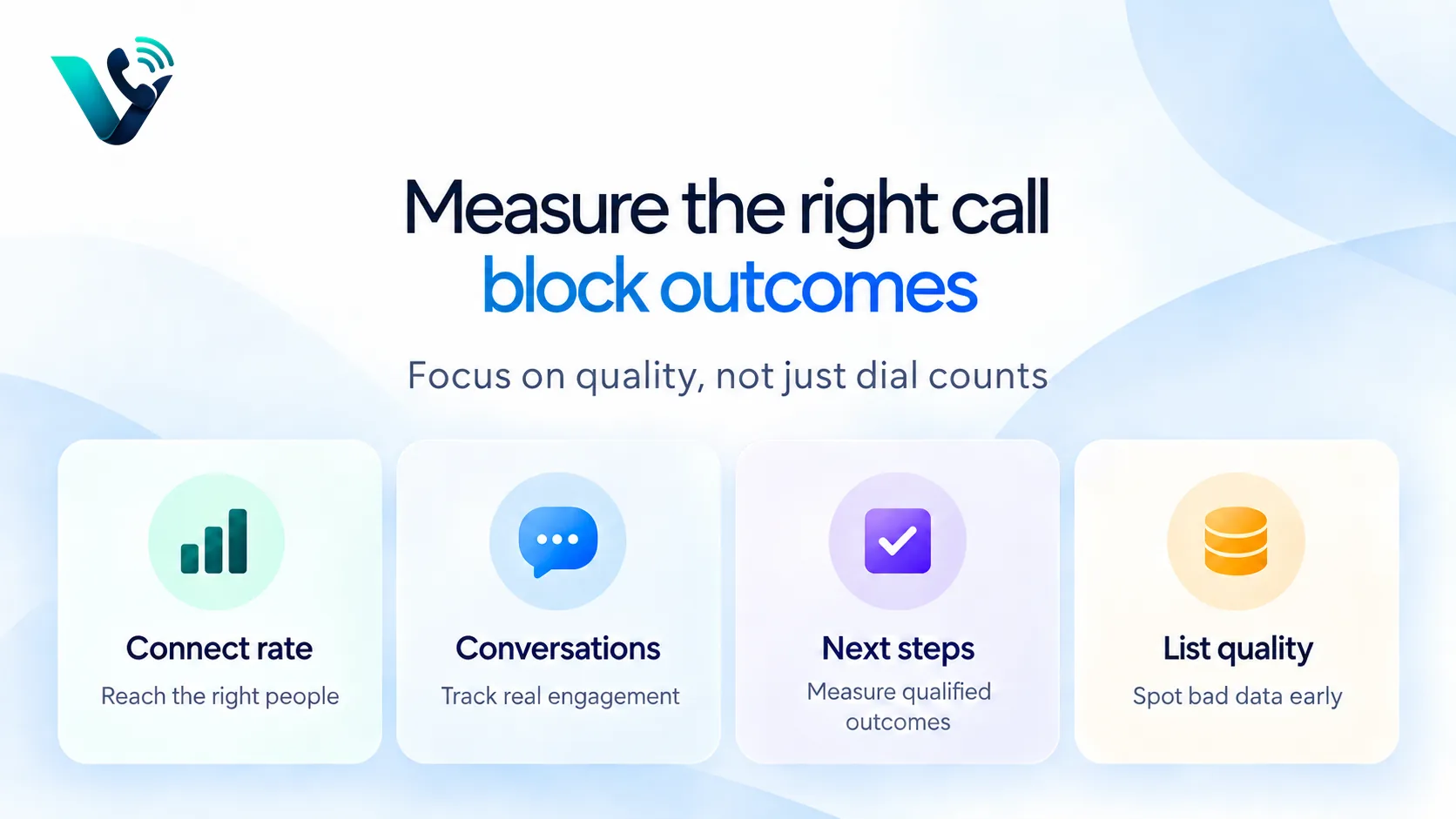
Measure each block as a mini funnel. Start with eligible records loaded, then dials, intended-person connects, meaningful conversations, positive dispositions, meetings or next steps, and follow-up completion. Add invalid-number rate and wrong-person rate so managers can see when data quality is the real constraint. Compare blocks by territory and time window instead of blending everything into one weekly average.
- Connect rate answers whether the team is reaching the intended people.
- Conversation-to-next-step rate answers whether the message and targeting are working.
- Meetings held or opportunities created answer whether booked activity has quality.
- List error rate answers whether reps are wasting effort before a conversation can begin.
- Follow-up completion answers whether promises made during the block are being kept.
A two-week experiment to improve call blocks
For week one, leave the current block largely unchanged and record the baseline: Duration, list size, connect rate, conversations, meetings, list errors and rep feedback. Ask one short question after each block: What created the most friction today? Common answers will be bad data, poor timing, lack of context, interruptions, unclear goals or too much time without a break.
For week two, change one structural variable. Move the block to a better buyer-local window, clean the list more aggressively, shorten the session, create a dedicated callback queue or remove internal interruptions. Keep the target segment and messaging as stable as possible. If outcomes improve and rep friction falls, the block design not motivation was part of the problem.
Try this on your own numbers
Local numbers in 118 countries, AI call notes and one shared inbox. Live the same day, no contract.
What a rep-friendly call block feels like
Reps should also know how the block will end. A hard stop matters because it creates psychological safety around intensity. If the team promises a 60-minute block, do not extend it because the dashboard looks weak. End on time, capture what the team learned and schedule the next experiment. Consistent boundaries make call blocks easier to commit to, especially after a difficult session. They also prevent managers from teaching that poor results are solved only by adding more volume.
Rotate campaign themes when the same list becomes stale. Variety should come from a different segment or purpose, not from changing the process every day.
The rep knows who they are calling and why. The data is good enough that most records are worth an attempt. The block starts and ends on time. The manager cares about real conversations more than theatrical activity. Promised follow-up has space in the calendar. Coaching uses actual call evidence instead of pressure. When those conditions exist, a sales call block can feel like protected selling time rather than a punishment session.
The best call blocks are boring in the right way: Repeatable, prepared and easy to enter. Reps do not need a motivational speech every time because the operating system reduces friction. That is the standard to aim formore focused conversations, cleaner learning and enough energy left for the next block tomorrow.
Frequently asked questions
- What is a sales call block?
- A sales call block is a protected period where reps focus primarily on phone prospecting, callbacks or another defined calling motion instead of switching between unrelated tasks.
- How long should a cold calling block be?
- Many teams can sustain 45 to 90 minutes of focused calling, but the best duration depends on call complexity, rep experience and the quality of the dial list.
- Should managers set a dial target for every block?
- Dial volume can help with capacity planning, but it should be paired with intended-person connects, meaningful conversations and qualified next steps so reps are not rewarded for empty activity.
- How do you stop call blocks from causing burnout?
- Use clean lists, reasonable buyer-local times, clear start and end points, short recovery periods, autonomy and follow-up space. Avoid endless blocks and public pressure based only on call counts.
- Can a power dialler improve call blocks?
- Yes, when it removes manual dialling and logging from a well-prepared campaign. It can also accelerate bad data, so list quality and eligibility rules still matter.
- How does Votelly fit into call blocks?
- Votelly’s current website describes power dialling, local caller ID, CRM-connected call activity and analytics for sales teams. Check live product pages for exact availability and configuration.