Can a Virtual Phone Number Receive SMS?
By Jamila Parker · · 7 min read

Yes, some virtual numbers can receive SMS—but capability depends on the exact number, country, carrier and provider. Learn how to check before buying.
Key takeaways
- Some virtual numbers can receive SMS, but not all virtual numbers are SMS-enabled.
- SMS capability should be checked at the exact-number level.
- Domestic and international SMS reachability can differ.
- Business messaging may require registration or verification.
- Do not assume an SMS-enabled number will work for every OTP or verification service.
Can a virtual phone number receive SMS? Sometimes - but the answer depends on the exact number, provider, country, carrier path and intended message type. “Virtual” describes how the number is delivered; it does not guarantee messaging. The safest workflow is to verify inbound SMS, outbound SMS, domestic and international reach, registration and third-party acceptance before publishing the number.
The short answer: Sometimes
A virtual phone number can receive SMS when the exact number and provider service support inbound messaging. Twilio's current documentation explicitly exposes SMS capability as a property of available phone numbers, separate from voice. This is the key buying principle: “virtual” describes how the service is delivered, not what the number can do. A virtual number may be voice-only, SMS-enabled, or dual-purpose.
An SMS-enabled virtual number is a specific capability, not a universal property of cloud telephony. When shopping, ask the provider to show whether the exact number supports inbound SMS, outbound SMS or both. If messaging is central to the customer journey, do not buy a voice-first number and assume texting can be added later.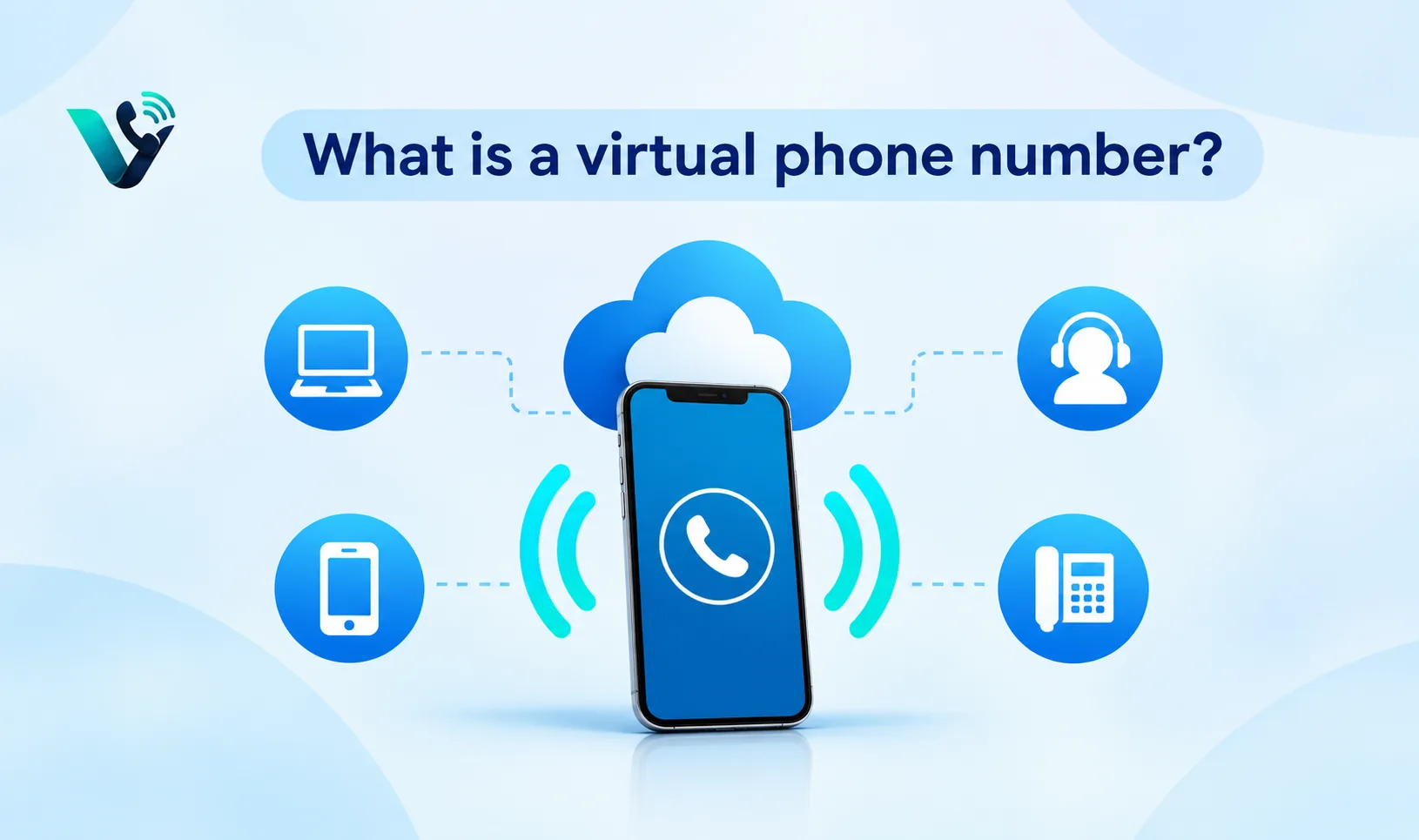
Voice-enabled does not mean SMS-enabled
A business can have a cloud number that receives calls perfectly but cannot receive text messages. Providers may offer voice-only numbers, SMS-only numbers or dual-function numbers. Before publishing a number for customer texting, check inbound SMS capability, outbound SMS capability and the countries from which messages can be received. Do not rely on a general platform feature page when the exact number has not been checked.
Voice and messaging can follow different technical and commercial paths. A business SMS virtual number should be selected for the message workflow it needs: inbound customer replies, outbound notifications, two-way sales conversations or another defined use. Check the exact number before putting “text us” on a website or campaign.
Domestic versus international SMS
SMS reachability can depend on the originating carrier and the number's messaging permissions. Twilio notes that some local SMS-enabled numbers are limited to domestic messaging, while certain global SMS-enabled numbers can receive international messages subject to carrier delivery. This means a customer in another country may not be able to text the same virtual number even though a domestic customer can.
A number may receive messages from domestic carriers while international delivery behaves differently. If customers will text from more than one country, test representative networks and ask the provider which routes are supported. International reach should be treated as a requirement to verify, not an automatic extension of domestic SMS capability.
What about two-way business texting?
Two-way texting requires both inbound and outbound capability. The business needs to know whether replies reach the same number, whether messages are stored in the platform and whether multiple employees can access the conversation. If the number is used for sales, the CRM should ideally record the conversation or at least the activity and next action. Otherwise, the customer message can remain trapped in one employee's phone interface.
Confirm whether replies return to the same number, whether multiple employees can share the inbox and how the business records ownership. For sales and support, the message thread should not disappear inside one employee's personal interface.
SMS registration and compliance
Some markets require businesses to register messaging use cases, sender identities or traffic categories. The exact requirements depend on country, carrier and message type. Promotional messaging can also have consent and preference rules. Before launching SMS, document the purpose of the messages, the recipient relationship, opt-out process and provider registration. Voice compliance does not automatically cover SMS.
Registration can depend on market, carrier and message purpose. Document whether messages are service, transactional or promotional, how recipients are added and how opt-outs are handled. Voice capability does not satisfy messaging requirements automatically, so make SMS compliance a separate line in the implementation checklist.
Can virtual numbers receive OTPs?
This is where businesses often run into unexpected limitations. A number may technically receive SMS but still be rejected by a website, financial service or authentication provider because that service blocks VoIP or non-mobile numbers. Therefore, “SMS capable” and “accepted for verification” are two different questions. If OTP reception is the use case, check the third-party service's own policy before committing to the number.
An SMS-capable number can still fail for OTP or verification because the third-party service may block VoIP or non-mobile ranges. If verification is the real use case, check the receiving service's policy before buying the number. “Can receive SMS” and “accepted for verification” are different questions.
How to check a number before buying
Ask the provider for the number's voice and SMS capabilities, domestic/international reachability, supported message types and registration status. Many provider APIs expose these fields directly. Twilio's available-number documentation includes inbound and outbound SMS connectivity as separate properties. Use this kind of capability check before building the workflow rather than after customers start sending messages.
Ask for number-level capability data: inbound SMS, outbound SMS, supported countries, message types, registration status and any restrictions. If the provider exposes these fields through a dashboard or API, capture the result in the project notes before launch. This avoids designing a workflow around a generic marketing page.
SMS and CRM integration
For business communication, the SMS conversation should be associated with the customer record. Store the number, contact, campaign or source, owner and next action. LeadMino can be the CRM layer for that ownership and follow-up process. The phone platform can handle message transport while the CRM provides the business context. This is particularly useful when multiple agents share a customer queue.
For business texting, connect the conversation to the customer record. Store the contact, number, source, owner and next action, and record the message activity when possible. A shared CRM context is especially valuable when several agents answer the same SMS-enabled virtual number.
Troubleshooting missing SMS
If messages do not arrive, check whether the number is SMS-enabled, whether the sender is domestic or international, whether the carrier allows the route, whether registration is complete and whether the message was filtered. Test from more than one network. Do not immediately replace the number; first identify which capability or routing rule is failing. A capability matrix makes troubleshooting much faster.
When a message does not arrive, diagnose the path before replacing the number. Check SMS capability, sender location, carrier route, registration status, filtering and platform logs. Test from more than one network. A simple capability matrix can show whether the problem is the number, the route or the message configuration.
SMS readiness checklist
Before using a virtual number for SMS, confirm inbound and outbound capability, domestic and international reachability, sender registration, consent requirements, OTP compatibility, shared access, message storage, CRM integration and fallback contact methods. A virtual number can be an excellent business SMS endpoint, but only when the exact number supports the use case and the messaging rules are understood.
Before publishing a number for texting, confirm inbound and outbound SMS, domestic and international reach, supported message types, registration, team access, opt-out handling, CRM ownership and OTP expectations if relevant. Then run real test messages from the customer markets that matter most.
Try this on your own numbers
Local numbers in 118 countries, AI call notes and one shared inbox. Live the same day, no contract.
Common mistakes to avoid
Assuming every virtual number can text: Verify SMS on the exact number.
Testing only outbound messages: Two-way workflows need inbound and outbound capability.
Confusing SMS capability with OTP acceptance: Third-party verification services may apply their own number-type rules.
Ignoring international sender paths: Domestic success does not guarantee international reachability.
Leaving shared SMS outside the CRM: Keep ownership and next actions visible when several agents respond.
Practical implementation checklist
Area |
Purpose |
Check |
|
Voice |
Inbound/outbound |
Check exact number |
|
SMS |
Inbound/outbound |
Verify capability and reachability |
|
Verification |
OTP/services |
Check third-party acceptance |
Frequently asked questions
- What is the main thing to check about can a virtual phone number receive SMS?
- Check the exact number type, provider eligibility, required documentation and the communication features you actually need.
- Can a remote team use the number?
- Often yes, if the provider supports the routing and the number is eligible for the intended service.
- Does a virtual number automatically support SMS?
- No. SMS capability is separate and should be verified for the exact number.
- Do I need a local office?
- Not necessarily, but some number types or markets can require local presence or address evidence.
- Can I connect the number to a CRM?
- Yes. Connecting calls and messages to a CRM helps preserve ownership, source, status and next action.
- What should I test before publishing it?
- Test inbound and outbound calling, caller ID, business hours, overflow, SMS if needed, and the CRM workflow.
- Can one virtual number handle calls and SMS?
- Some numbers support both, but dual capability must be confirmed for the exact number and market.
- Why does SMS work from one carrier but not another?
- Carrier routing, country reachability, registration or filtering can differ, so test representative sender networks and review provider logs.