How to Choose a Business Phone Number Customers Will Remember
By Jamila Parker · · 9 min read

A memorable business phone number is easy to say, easy to type and aligned with how customers contact your company. Compare local, toll-free, national and vanity options before you commit.
Key takeaways
- Choose the number type around the customer experience: local trust, national reach, toll-free access or brand memorability.
- Simple digit patterns and pronounceable vanity words are easier to recall than random numbers.
- Check portability, ownership, callback routing, SMS needs and future geographic expansion before publishing a number widely.
- The best number is one customers can recognise, reach reliably and continue using as the business grows.
A business phone number looks like a small branding decision until it appears on your website, invoices, Google Business Profile, ads, vehicles, email signatures and customer phones. Once customers start saving and sharing it, changing it can be painful. That is why it is worth taking a structured approach when you choose a business phone number.
A memorable number is not necessarily the fanciest number available. It is the one customers can understand when it is spoken aloud, recognise when it appears on caller ID, and use again without searching through several channels.
Modern VoIP also changes the decision. The number no longer has to be physically tied to one desk. A local, toll-free or national number can route to teams, queues and devices in different locations. That flexibility makes the customer-facing identity more important than the physical line behind it.
Start with the role the number will play
Before browsing numbers, define the job. Is this the main company line, a sales line, a support number, a regional office number, a campaign tracking number or an international market entry number?
A single main number should prioritise longevity and recognition. A campaign number can prioritise attribution. A local branch number should feel connected to its market. A customer-support number should be easy to find and call back.
When companies skip this step, they often end up using one random number for everything and later struggle to separate teams, reporting and reputation.
Local numbers: Familiar and geographically relevant
A local number uses an area code associated with a particular geographic region. For businesses serving a defined city or region, that can be a natural signal of local presence. It also gives customers a familiar format when they want to call a nearby office.
Local numbers are especially suitable for trades, professional services, clinics, property businesses and regional teams. They can also be useful for international companies that genuinely serve customers in a specific market, although some countries require a local address or other geographic connection before assigning certain number ranges.
The limitation is scale. A number that strongly identifies one city may feel less representative after a company expands nationwide. In that case, you may keep the original local number while adding a national or toll-free number rather than replacing it.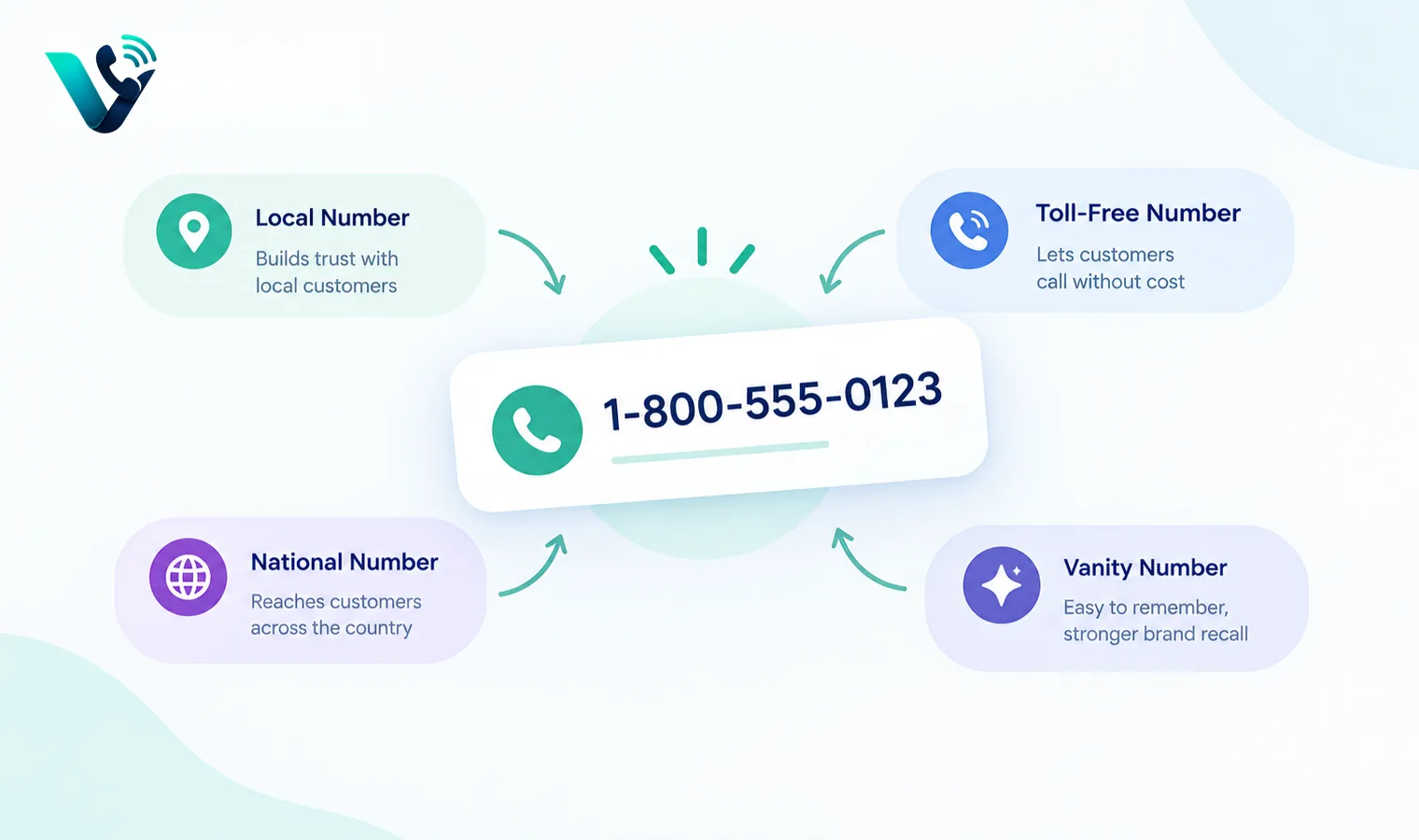
Toll-free numbers: One national identity
Toll-free numbers are designed so the called party is not charged the standard cost of the call under the applicable numbering system. In the United States and Canada, toll-free ranges such as 800 and related prefixes are widely recognised. In the UK, 080 numbers are free-to-caller ranges under Ofcom's numbering framework. Australia uses 1800 for freephone services, alongside 13 and 1300 business-number options with different charging structures.
A toll-free number can be helpful for national customer service, reservations, sales and organisations that do not want to appear tied to one city. It can also create a consistent identity across branches.
The trade-off is that a toll-free number may feel less local for neighbourhood-focused businesses. It also does not automatically make a company look more credible; the quality of the customer experience still matters.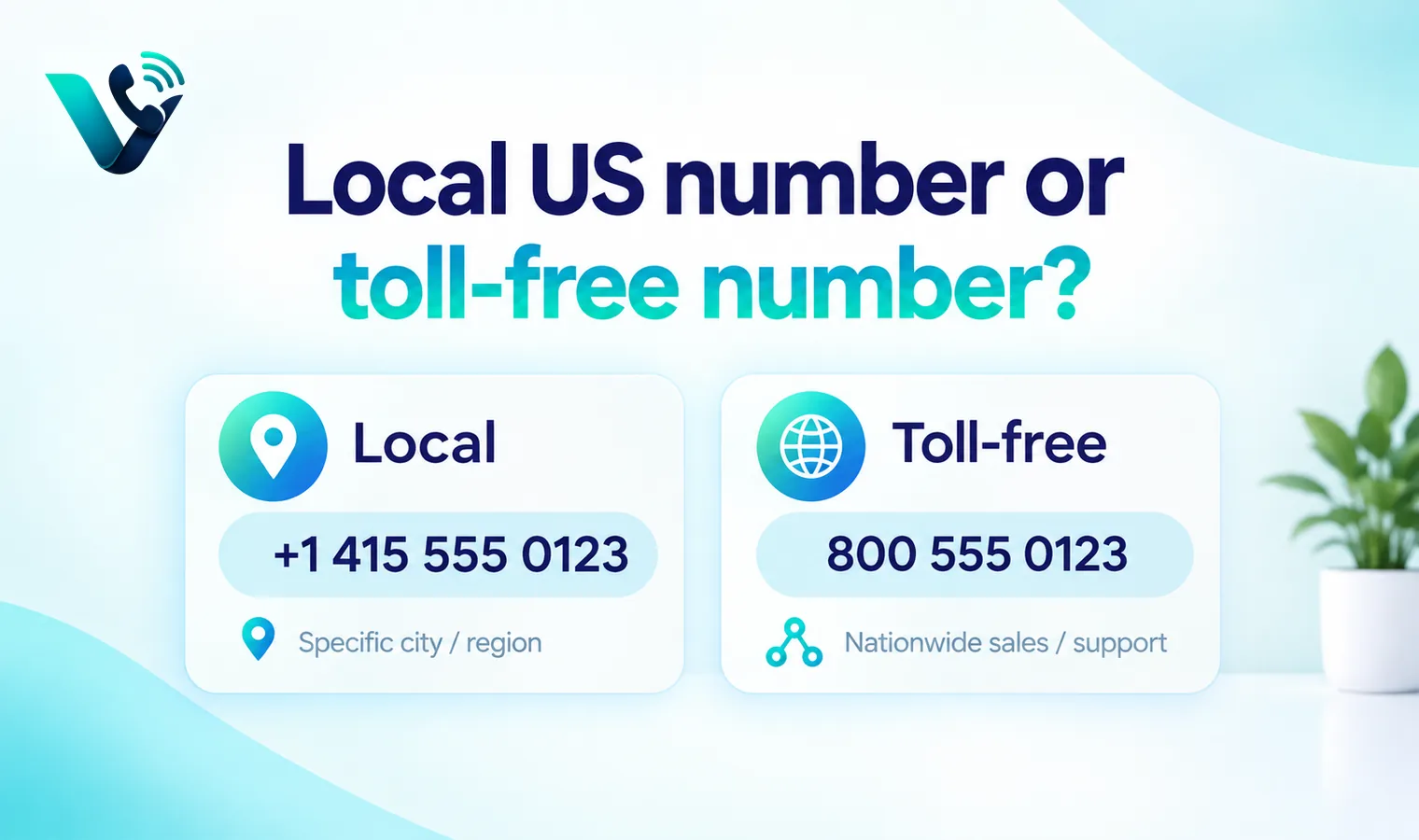
Vanity numbers: Turn digits into a word or pattern
A vanity number maps digits to letters to create a memorable word or phrase, such as a number ending in a brand or service term. The FCC has long recognised vanity toll-free numbers as numbers whose alphanumeric equivalents spell words or names that help recognition.
Vanity numbers are useful when the word is short, obvious and strongly tied to the business. They can perform well in radio, outdoor advertising, vehicle graphics and any channel where a customer has only a few seconds to remember the contact information.
Do not force the idea. An awkward abbreviation or a word that requires explanation can be harder to remember than a clean numeric pattern.
The seven tests of a memorable business number
1. The say-it-once test
Read the number aloud to someone once and ask them to repeat it. If you have to slow down, explain punctuation or repeat several groups, the pattern may be too difficult.
2. The write-it-down test
Imagine a customer hearing the number on a podcast, radio ad or phone conversation. Can they write it correctly without seeing it? Repeating digits, symmetrical patterns and simple groups are easier than a random sequence.
3. The mobile-screen test
Customers often encounter a business number as an incoming call, not in an advert. Consider what name or identity may appear with the number and whether recipients can call it back. A memorable number with poor caller-ID reputation is not a strong business asset.
4. The future-growth test
Ask whether the number will still make sense if the business adds locations, remote teams or new countries. A main number should survive organisational change.
5. The portability test
Before investing heavily in a number, confirm the provider's portability and ownership terms. Businesses should understand whether the number can be moved to another compatible provider later and what documentation proves the right to use it.
6. The messaging test
If customers will text the number, confirm SMS or business messaging support before publishing it. Voice capability does not automatically mean every number type supports every messaging use case.
7. The accessibility test
The number should work for the audience you are targeting. An international customer may prefer an in-country number rather than an expensive international call. A national support audience may prefer one consistent number instead of guessing which branch to call.
Number type matters by country
Telephone-number categories are not globally identical. A strategy that works in the United States should not be copied blindly to the UK, Canada, Australia or Germany.
Ofcom describes UK 01 and 02 ranges as geographic numbers, 03 as non-geographic numbers charged like 01/02, and 080 as free-to-caller. ACMA's Australian numbering information distinguishes geographic 02/03/07/08 numbers, mobile 04 numbers and 13/1300/1800 business ranges. Germany has geographic local network numbers as well as non-geographic ranges such as 032.
If you operate internationally, decide whether you need one global contact identity or separate in-country numbers. Many companies use both: A central corporate number plus local market numbers that route into the same VoIP platform.
Should you choose a "lucky" or premium pattern?
Premium or memorable patterns can be valuable when recall matters. Repeated digits, mirrored groups and short recognisable sequences can be easier to retain. But do not overpay simply because a number looks attractive in a spreadsheet.
Evaluate the commercial context. A company running mass-media advertising may gain real value from memorability. A B2B software company whose customers click a website contact button may gain more from branded caller ID, good routing and consistent support availability than from a premium digit pattern.
The number should support the acquisition channel rather than become a vanity purchase for its own sake.
Avoid these common business-number mistakes
- Choosing a number before defining the use case. This creates routing and reporting problems later.
- Publishing a temporary number as the main identity. Temporary campaign numbers should stay separate from permanent customer contacts.
- Using a number that cannot receive callbacks. Customers expect the displayed number to work.
- Ignoring caller-ID reputation. A memorable number that appears as spam will underperform.
- Assuming an area code proves physical presence. Some jurisdictions have allocation requirements, and customers can also move while retaining numbers.
- Forgetting portability. Confirm how you can move the number if you change providers.
- Mixing every call type on one number. High-volume outbound sales can affect the reputation of a number also used for critical customer service.
Build the routing before you publish the number
With VoIP, the number is only the front door. Decide where it opens. A main line might route to an auto-attendant, then to sales, support and billing queues. A local office number might ring a regional group during business hours and a central support team after hours.
Set up voicemail, overflow, holidays and failover before the number appears in marketing. Test from external networks and on mobile devices. If the number is meant for campaigns, ensure reporting can attribute calls to the right source without creating a confusing customer experience.
Make the number easy to remember everywhere
Consistency reinforces memory. Format the number the same way across the website, email signatures, social profiles, directories and printed material. Use clickable `tel:` links on mobile web pages. If you use a vanity word, show the numeric version nearby so international users and devices without letter mapping can still dial it.
For customer-facing calls, consider number registration or branded-calling options supported by your provider and market. The more consistently the number is associated with the same legitimate business, the easier it is for customers to recognise.
A practical selection process
- Define the use case and target geography.
- Choose the number category: local, national/non-geographic, toll-free or vanity.
- Shortlist at least three available numbers.
- Test each number by speaking, writing and recalling it.
- Confirm voice, messaging, portability and regulatory requirements.
- Decide the inbound routing and callback destination.
- Check how the number fits future locations and international expansion.
- Publish it consistently and monitor call quality and reputation.
Note: Number availability and allocation rules vary by provider and jurisdiction. A provider may require address or business documentation for some geographic or regulated number ranges.
Final takeaway
The best way to choose a business phone number is to treat it as a long-term customer identity, not just a technical resource. Geography, toll-free access and vanity branding can all be useful, but only when they match how customers actually interact with the company.
Prioritise clarity, recall, reliable callbacks, portability and future growth. Then let VoIP handle the routing behind the scenes. Customers should only have to remember one thing: This is the number that reliably connects them to your business.
Try this on your own numbers
Local numbers in 118 countries, AI call notes and one shared inbox. Live the same day, no contract.
Business phone number options at a glance
Number type |
Best for |
Main consideration |
|
Local / geographic |
Regional businesses and local offices |
May signal a specific area; allocation rules can vary |
|
Toll-free / freephone |
National support and sales |
Consistent reach; less geographically local |
|
National / non-geographic |
One identity across regions |
Country-specific ranges and pricing rules |
|
Vanity / memorable |
Advertising and brand recall |
Word or pattern must be simple and genuinely memorable |
Frequently asked questions
- What is the best phone number for a small business?
- The best option depends on your market. A local number is often suitable for a local service business, while a toll-free or national number can suit companies serving customers across a wider area.
- What makes a business phone number memorable?
- Simple grouping, repeated digits, a clear vanity word, easy pronunciation and consistent formatting all improve recall.
- Should a business use a local or toll-free number?
- Use a local number when geographic connection matters and a toll-free or national number when one identity across a wider market is more important. Many businesses use both.
- Can I keep my business number if I change VoIP providers?
- Often yes through number portability, subject to the number type, country, provider and account status. Confirm portability terms before heavily promoting a number.
- Can a business number receive SMS?
- Some can, but messaging support depends on number type, provider and country. Confirm the required messaging capability before publishing the number for texts.
- Is a vanity phone number worth it?
- It can be valuable when customers hear or see the number briefly in advertising, but only if the word or pattern is simple and relevant.