How to Get a US Virtual Phone Number From Anywhere
By Jamila Parker · · 8 min read

Learn how to get a US virtual phone number from outside the US, choose an area code, set up routing and understand calling and SMS requirements.
Key takeaways
- Choose the number type and routing model around the customer journey, not just the country name.
- Capture source, ownership and next action as soon as a lead arrives.
- Check current numbering and compliance requirements before publishing a local or geographic number.
- Use reporting to compare qualified outcomes, not only call volume.
- Test voice, routing, fallback and CRM behaviour before launch.
How to Get a US Virtual Phone Number From Anywhere is primarily a question of matching phone infrastructure to a real customer and sales workflow. For businesses using US virtual phone number, the practical priorities are eligibility, clear routing, accurate customer-facing information, fast follow-up and measurable attribution. The sections below explain the implementation in a way that can be used as a publishing and operations checklist.
What a US virtual phone number is
A US virtual phone number is a US telephone number handled through internet-based software rather than a traditional desk phone or a physical SIM in the user's location. For international businesses, it can provide a US-facing contact point while the team works from another country. Calls can be answered in a browser, desktop app, mobile app or through forwarding, depending on the provider.
A useful implementation principle is to keep the customer-facing experience simple while making the internal workflow measurable. The phone number, routing rule and CRM record should describe the same journey. If one part changes, test the full path again: from the first impression and incoming call through ownership, follow-up and reporting. This avoids a common failure mode in which the telephony system works technically but the sales process still loses enquiries between systems.
Who uses a US virtual number?
Common use cases include international sales teams, customer support, agencies, remote companies and businesses testing demand in the US. A virtual number can also separate business calls from a founder's personal number. The key is to choose a number for a legitimate business communication purpose. A virtual number is not a universal substitute for every US-only service or verification process.
A useful implementation principle is to keep the customer-facing experience simple while making the internal workflow measurable. The phone number, routing rule and CRM record should describe the same journey. If one part changes, test the full path again: from the first impression and incoming call through ownership, follow-up and reporting. This avoids a common failure mode in which the telephony system works technically but the sales process still loses enquiries between systems.
Choose local or toll-free
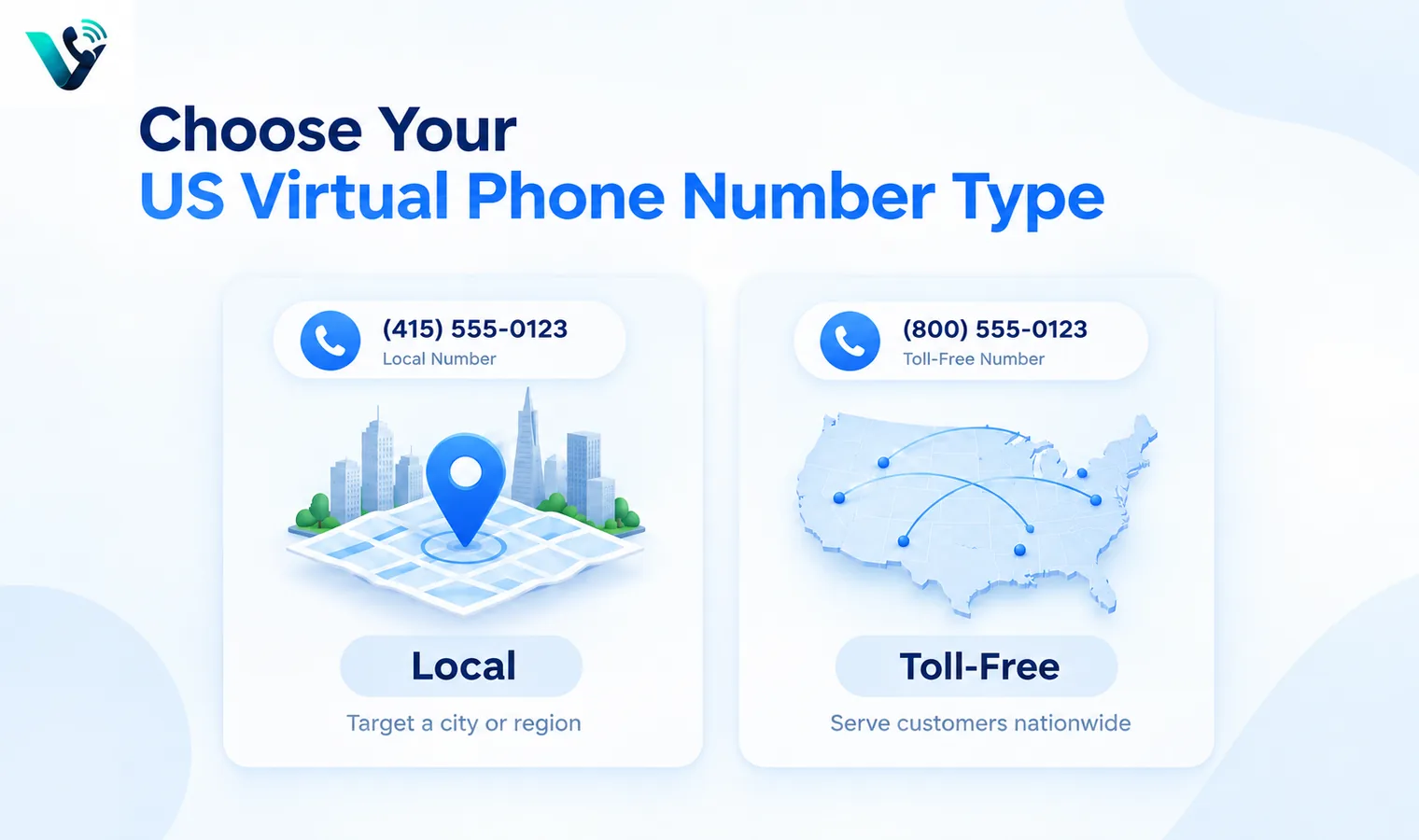
A local number uses a geographic area code and can be useful when the business is targeting a specific city or region. A toll-free number can make more sense when the company serves customers nationally and does not want to imply one local office. The choice should follow the market strategy rather than the assumption that one type is always more trustworthy.
A useful implementation principle is to keep the customer-facing experience simple while making the internal workflow measurable. The phone number, routing rule and CRM record should describe the same journey. If one part changes, test the full path again: from the first impression and incoming call through ownership, follow-up and reporting. This avoids a common failure mode in which the telephony system works technically but the sales process still loses enquiries between systems.
What you may need to activate it
Requirements vary by provider and use case. Calling may be available with basic account information, while business messaging can require additional registration and legal business details. US business texting can involve A2P 10DLC registration for local numbers, with different processes for toll-free messaging. Providers can also request a service or emergency address. Confirm the current requirements before buying the number if SMS is important to the workflow.
A useful implementation principle is to keep the customer-facing experience simple while making the internal workflow measurable. The phone number, routing rule and CRM record should describe the same journey. If one part changes, test the full path again: from the first impression and incoming call through ownership, follow-up and reporting. This avoids a common failure mode in which the telephony system works technically but the sales process still loses enquiries between systems.
Step-by-step setup
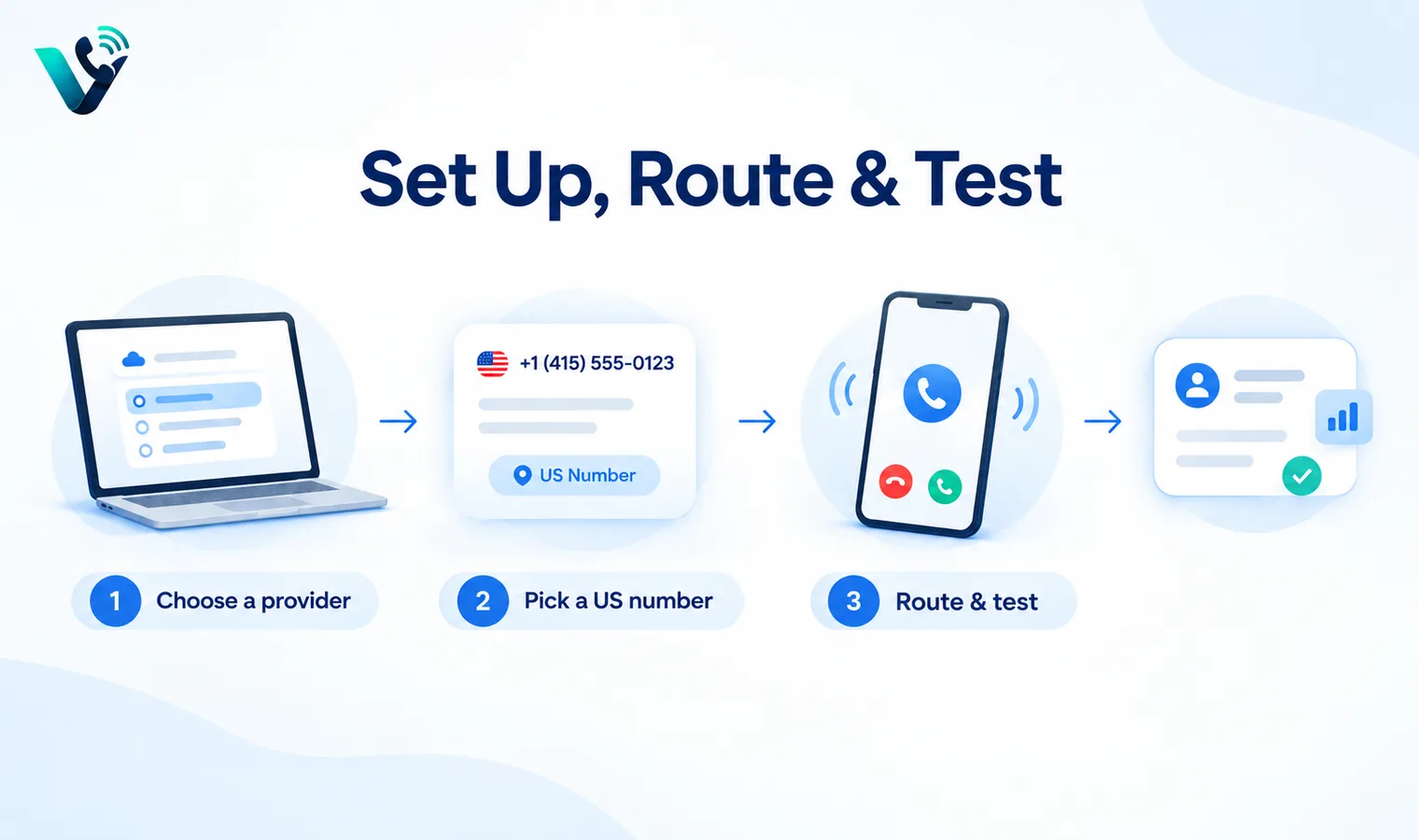
First choose a provider that supports the number type and features you need. Next select the United States and choose a local area code or toll-free option. Add the number to the account, assign the users or queue that should answer it, configure business hours and create an after-hours path. Test inbound calls from inside and outside the US before publishing the number.
A useful implementation principle is to keep the customer-facing experience simple while making the internal workflow measurable. The phone number, routing rule and CRM record should describe the same journey. If one part changes, test the full path again: from the first impression and incoming call through ownership, follow-up and reporting. This avoids a common failure mode in which the telephony system works technically but the sales process still loses enquiries between systems.
Set up outbound caller ID carefully
If the number will be used for sales calls, make sure the displayed caller ID is consistent with the number your customers know. Avoid confusing customers by presenting one number on the website and a different unrelated number during follow-up. If you use multiple numbers for campaigns, document the purpose of each number and connect it to the CRM so the sales history remains understandable.
A useful implementation principle is to keep the customer-facing experience simple while making the internal workflow measurable. The phone number, routing rule and CRM record should describe the same journey. If one part changes, test the full path again: from the first impression and incoming call through ownership, follow-up and reporting. This avoids a common failure mode in which the telephony system works technically but the sales process still loses enquiries between systems.
US virtual number and CRM workflow
The phone number should be part of the lead process, not an isolated communication tool. Capture the caller, source, owner, call outcome and next action. LeadMino's public guidance on speed to lead and form capture stresses fast ownership and source preservation. The same approach makes a virtual US number more useful: the call becomes a trackable lead event rather than a ring that disappears from the reporting system.
A useful implementation principle is to keep the customer-facing experience simple while making the internal workflow measurable. The phone number, routing rule and CRM record should describe the same journey. If one part changes, test the full path again: from the first impression and incoming call through ownership, follow-up and reporting. This avoids a common failure mode in which the telephony system works technically but the sales process still loses enquiries between systems.
Common mistakes to avoid
One mistake is buying a number before deciding who will answer it. Another is assuming that voice and SMS have identical compliance requirements. A third is choosing an area code only because it looks familiar, without considering the geographic story the business is presenting. Finally, do not use a virtual number to misrepresent a physical presence that does not exist. Local presence should be clear and accurate.
A useful implementation principle is to keep the customer-facing experience simple while making the internal workflow measurable. The phone number, routing rule and CRM record should describe the same journey. If one part changes, test the full path again: from the first impression and incoming call through ownership, follow-up and reporting. This avoids a common failure mode in which the telephony system works technically but the sales process still loses enquiries between systems.
Testing before launch
Test calls from different networks, voicemail, forwarding, business-hours routing, after-hours handling and simultaneous calls. If SMS is required, test registration status and message delivery separately from voice. Check that the CRM creates or updates the right lead record. Document what happens when the primary agent is unavailable. A five-minute test can prevent a published number from becoming a dead end for customers.
A useful implementation principle is to keep the customer-facing experience simple while making the internal workflow measurable. The phone number, routing rule and CRM record should describe the same journey. If one part changes, test the full path again: from the first impression and incoming call through ownership, follow-up and reporting. This avoids a common failure mode in which the telephony system works technically but the sales process still loses enquiries between systems.
Try this on your own numbers
Local numbers in 118 countries, AI call notes and one shared inbox. Live the same day, no contract.
US number FAQ considerations
The most common questions are whether a US address is required, whether the number can be used abroad, whether SMS works immediately, whether a local area code can be selected and whether the number can be shared across a team. The answer depends on the provider and the exact service. Published provider guidance confirms that voice setup and business texting can have different requirements, so businesses should treat them as separate implementation steps.
A useful implementation principle is to keep the customer-facing experience simple while making the internal workflow measurable. The phone number, routing rule and CRM record should describe the same journey. If one part changes, test the full path again: from the first impression and incoming call through ownership, follow-up and reporting. This avoids a common failure mode in which the telephony system works technically but the sales process still loses enquiries between systems.
Practical implementation checklist
Element |
Purpose |
What to check |
Local |
City/region presence |
Select available area code |
Toll-free |
National access |
Use when broad US coverage matters |
Voice |
Calling |
Configure users, queues and business hours |
SMS |
Messaging |
Check separate registration and eligibility |
Frequently asked questions
- Can I get a US virtual phone number from outside the US?
- Yes, providers offer US virtual numbers that can be answered from other countries, subject to their requirements.
- Do voice and SMS have the same requirements?
- No. Business texting can involve separate registration and compliance steps.
- Can I choose a US area code?
- Many providers let you choose from available local area codes, but availability varies.
- Do I need a US office?
- Not necessarily for virtual voice service, but provider and use-case requirements must be checked.
- Can a team share one US number?
- Yes, if the provider supports queues, shared assignment or multi-user routing.
- Will a virtual number work for every US verification service?
- No. Some services restrict VoIP or require specific number types, so check the service's own requirements.