How to Get a Local Business Number in Another Country
By Jamila Parker · · 8 min read

how to get a local business number in another country, what documents may be required, and how virtual numbers support global teams.
Key takeaways
- A local number uses the numbering format of a specific city, region or country, but with a cloud phone service it does not have to be tied to one desk phone.
- Choose the market first, then decide whether you need a geographic local number, national number, mobile-capable number or toll-free number.
- For a small team, direct routing to one user may be enough.
- Number ownership rules are not identical across markets.
- Measure the result after implementation and adjust the workflow using real customer and call data.
A local business number lets a company appear reachable in a market without opening a physical office there. Instead of asking customers to place an international call, the business can publish a familiar local number and route incoming calls to a team, queue, mobile device or cloud phone system. For sales, support and expansion teams, that can reduce friction at the first point of contact while keeping the underlying operation centralized.
Votelly context: For an international number strategy, a cloud platform can separate the public-facing number from the physical location of the team, while routing and business-hour rules control where calls are delivered. Explore Votelly
What a local business number actually is
A local number uses the numbering format of a specific city, region or country, but with a cloud phone service it does not have to be tied to one desk phone. Calls can be routed over VoIP to users in another office or country.
Operationally, this is where what a local business number actually is becomes measurable rather than theoretical. Map the current process first, then change one variable at a time so the team can see whether the new approach improves responsiveness, conversion or customer effort.
Local presence should not be confused with pretending to have a physical office. Businesses should present their location accurately and use the number as a contact method rather than a misleading location claim.
A useful way to apply this is to test the rule on a defined segment instead of changing every call flow at once. For local business number in another country, a controlled rollout makes it easier to spot edge cases, compare before-and-after results and correct problems before scale adds complexity.
Practical note: Set a baseline before changing the workflow so the impact can be measured rather than guessed.
Step-by-step: Getting a number in another country
Choose the market first, then decide whether you need a geographic local number, national number, mobile-capable number or toll-free number. Availability and allowed capabilities differ by country.
The customer impact should stay visible in the decision. Ask what the caller or prospect experiences before, during and after the call, then make sure the configuration supports that journey rather than only making the internal workflow look efficient.
Check regulatory requirements before purchase. Some countries ask for proof of identity, a local address, business registration, intended use or other supporting documents before a number can be activated.
For managers, the important step is ownership: decide who monitors the result, which threshold triggers a review and what fallback applies when the preferred path is unavailable. That turns step-by-step: getting a number in another country into a repeatable operating process.
Select the number, assign it to a user or call flow, configure business hours and voicemail, then place test calls from inside and outside the target country before publishing it.
Data quality can change the result as much as the phone setting itself. Verify contact details, agent availability and routing inputs before judging performance; otherwise the team may blame local business number in another country for a problem created by incomplete or inconsistent data.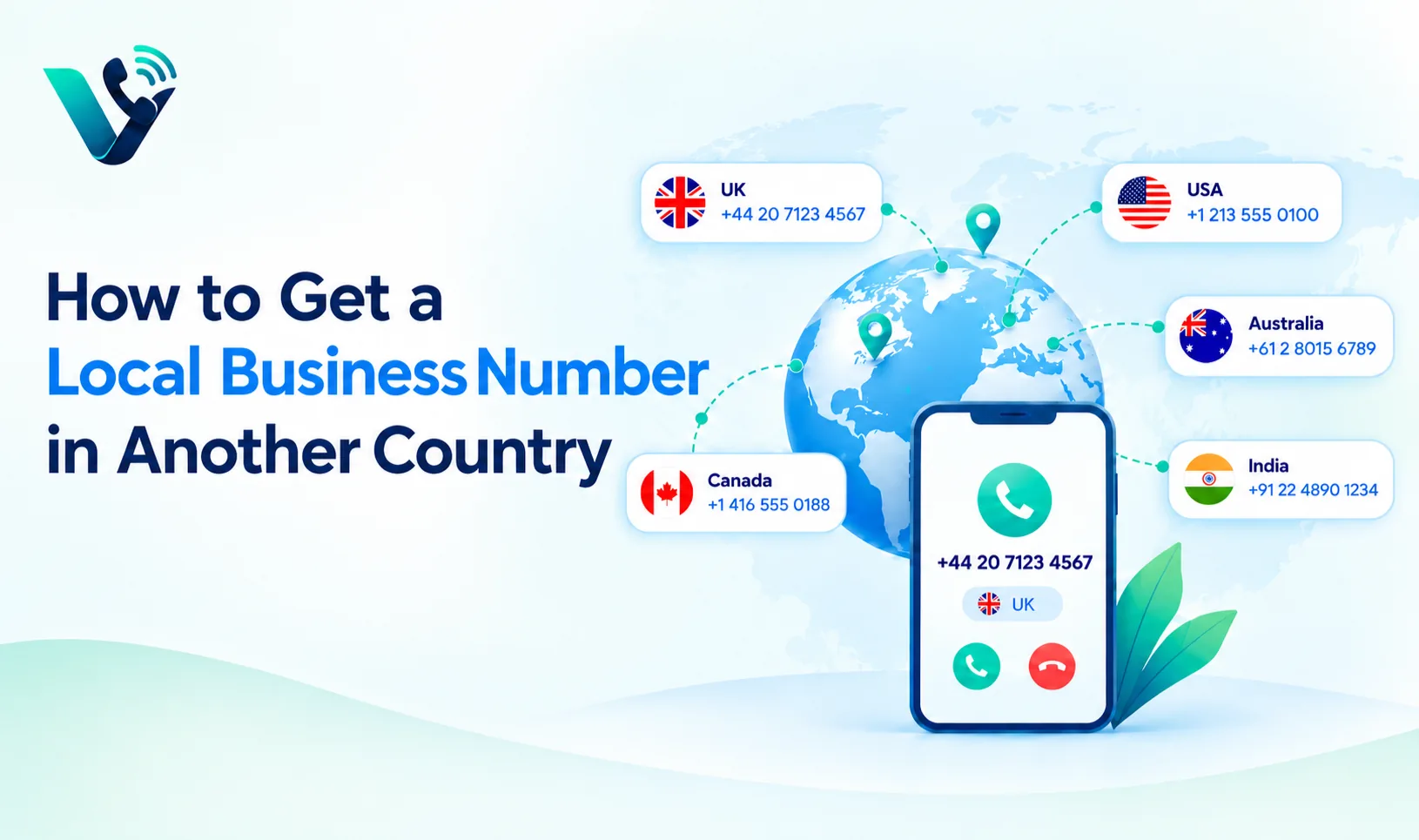
Practical note: Write down the fallback path before launch; edge cases are easier to handle when ownership is clear.
How to route calls once the number is active
For a small team, direct routing to one user may be enough. Growing teams usually benefit from ring groups, queues or time-based rules so calls are distributed instead of depending on a single person.
Avoid optimizing this in isolation. Pair the primary metric with a customer-outcome measure so improvements in speed or volume do not quietly increase transfers, repeat contacts, missed calls or low-quality conversations.
Add failover behavior for unanswered calls. A caller should reach another agent, a queue, voicemail or a callback option rather than hearing endless ringing.
The safest implementation is incremental. Define the desired outcome, test the behavior with real traffic, collect agent feedback, and keep the rollback path simple. Once the workflow is stable, expand it to additional teams or markets.
Practical note: Test the experience from the caller side as well as the agent side before expanding the change.
Compliance, Caller ID and Customer Expectations
Number ownership rules are not identical across markets. Keep registration documents current and do not assume a number that is available for purchase can automatically be used for every type of traffic.
This decision also needs a clear exception path. Calls rarely behave exactly as planned, so document what happens during peaks, after hours, on failed connections and when no suitably available agent can take the interaction.
When making outbound calls, use caller ID that your organization is authorized to present. Consistent, legitimate caller identity is important for customer trust and call deliverability.
Operationally, this is where compliance, caller id and customer expectations becomes measurable rather than theoretical. Map the current process first, then change one variable at a time so the team can see whether the new approach improves responsiveness, conversion or customer effort.
Practical note: Keep the first rollout narrow enough that the team can identify the cause of any improvement or regression.
A practical rollout plan for a new market
Start with one number and one defined purpose, such as inbound sales or customer support. Measure answer rate, missed calls, call reasons and follow-up outcomes before adding more numbers.
A useful way to apply this is to test the rule on a defined segment instead of changing every call flow at once. For local business number in another country, a controlled rollout makes it easier to spot edge cases, compare before-and-after results and correct problems before scale adds complexity.
Document who owns the number, which call flow it uses, what happens outside business hours and how quickly missed calls should be returned. This turns a number purchase into an operating process.
The customer impact should stay visible in the decision. Ask what the caller or prospect experiences before, during and after the call, then make sure the configuration supports that journey rather than only making the internal workflow look efficient.
Practical note: Review the result by time window, queue or segment so a good average does not hide a weak customer experience.
How to apply this with Votelly
Translate the idea into a simple operating rule: decide which number receives or presents the call, who should handle it, what happens when the preferred path is unavailable, and which outcome will be reviewed after launch. Votelly can act as the cloud calling layer while your CRM or support workflow keeps customer context and follow-up connected. For customer-facing service planning, also review the customer support page.
Implementation checklist
- Define the exact business objective before changing the phone workflow.
- Confirm number ownership, regulatory and caller-ID requirements for the countries involved.
- Test inbound and outbound behavior using real devices and multiple networks where possible.
- Create a fallback path for unanswered, failed or after-hours calls.
- Track a small set of outcome metrics before and after the change.
- Review customer feedback and agent feedback, not only system statistics.
- Update scripts, help content and internal documentation when the workflow changes.
30-day measurement plan
During the first 30 days of a local business number in another country rollout, track inbound call volume, answer rate, missed calls, callback completion and the countries or regions generating traffic. Confirm that the published number is reachable from the devices customers actually use and that outbound caller ID presents the intended business identity. If the number supports a new market, separate new-market calls from existing traffic so performance is easy to evaluate.
Review the routing path weekly, including business hours, voicemail, overflow and any after-hours behavior. Confirm that ownership and registration documents remain current and that the number is being used for the approved purpose. At the end of the month, decide whether to keep one number, add regional numbers or change the routing based on real usage rather than assumptions about local presence.
Try this on your own numbers
Local numbers in 118 countries, AI call notes and one shared inbox. Live the same day, no contract.
Common mistakes to avoid
- Changing local business number in another country without recording a baseline, which makes improvement difficult to prove.
- Using a single monthly average and missing recurring problems that happen only during busy intervals.
- Adding complexity before the team has clear ownership, fallback rules and consistent data.
- Optimizing for speed or volume while ignoring transfers, repeat contacts, complaints or customer effort.
- Publishing a number or workflow before testing callbacks, after-hours behavior and failure scenarios.
Conclusion
A successful local business number in another country strategy combines the right number type with accurate registration, clear routing and a dependable callback experience. Start with one market or use case, verify the setup end to end and expand only after the process works reliably for real customers.
Frequently asked questions
- What is local business number in another country?
- Local business number in another country is the topic covered in this guide. In practice, the exact setup or calculation depends on the phone system, market, queue design and the business process around it.
- What is the main business benefit of local business number in another country?
- The main benefit is better control over how calls are placed, answered, distributed or measured, which can reduce avoidable friction for customers and teams.
- What should I check before changing local business number in another country?
- Review the current process, the customer journey and the data related to what a local business number actually is. Confirm any number, privacy or caller-ID requirements that apply to your market before rollout.
- How should I measure whether local business number in another country is working?
- Choose metrics that match the objective. Depending on the topic, that may include answer rate, ASA, service level, abandonment, transfers, repeat contacts, qualified conversations or conversion.
- Can a small business use local business number in another country?
- Usually, yes, but the simplest configuration is often the best starting point. Small teams should avoid adding routing or automation complexity that they do not yet need.
- Can Votelly support a local business number in another country workflow?
- Votelly is designed around cloud business calling and number management. Check the live product and country availability for the exact feature, number type or routing behavior you plan to use.