Overflow routing: how to stop busy queues from becoming lost calls
By Jamila Parker · · 4 min read

Overflow routing gives busy queues somewhere useful to go before callers abandon. Here is how to design thresholds, destinations and fallback logic.
Key takeaways
- Treat overflow routing as a workflow with ownership, not only a phone-system feature.
- Keep routing and status choices simple enough that staff use them consistently.
- Measure response and outcomes, not just call volume.
- Use automation to create the next action, alert or fallback automatically.
- Test real calls regularly so broken routes are found before customers find them.
Overflow routing should make business calling more reliable, not more complicated. The best setup gives callers a predictable path, gives staff clear ownership, and gives managers enough data to see where calls are being answered, delayed, transferred, missed or recovered. This guide focuses on practical design choices rather than feature lists, so you can adapt the workflow to a small sales team, a growing support desk or a distributed call centre.
What Overflow Routing Actually Does
Overflow routing is an operations design problem as much as a phone-system setting. The goal is to decide what should happen when the ideal path is unavailable, then make that behaviour predictable for callers and staff. A strong design reduces uncertainty: callers know what happens next, agents know who owns the interaction, and managers can see where demand is leaking.
Overflow routing moves callers when the primary queue reaches a condition such as maximum wait time, no available agents or a service-level threshold. The destination may be another team, callback, voicemail or an answering service.
Choose The Right Overflow Trigger
Time-based triggers are usually easier to understand than queue length alone. Combine thresholds with staffing and service context where possible.
Measurement matters because overflow routing can look healthy while opportunities still leak. Track the whole path from incoming call to human response and final outcome. Raw call counts are useful for workload planning, but they do not explain whether the caller reached the right person, waited too long, received a callback or converted into a useful next step.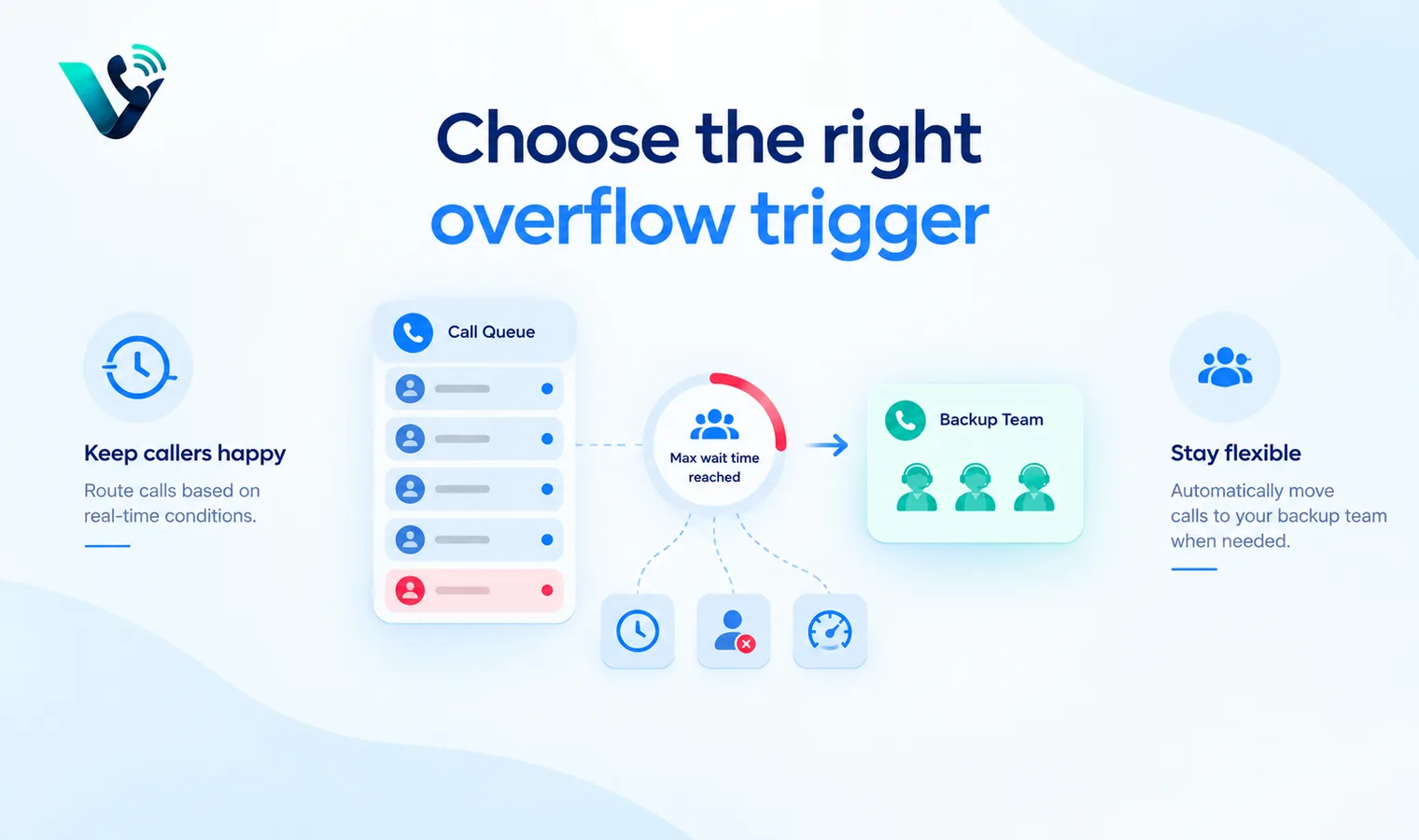
Where Should Overflow Calls Go?
Use backup teams only when they have the skills and authority to help. For lower-priority enquiries, callback can be better than sending a caller through multiple queues.
The first step is to define the outcome you want from overflow routing. For most teams that means faster response, fewer abandoned interactions, clearer ownership and less manual chasing. Write those outcomes down before changing technology. Otherwise it is easy to add more routing rules, dashboards or automations without knowing whether customer experience actually improved.
Avoid The Ping-Pong Problem
Never overflow a call into a queue that can send it back to the first. Define one directional path and a final fallback.
Keep the workflow short. Every extra branch adds another place for calls to stall or be misrouted. Prefer a small number of clearly named queues, destinations and statuses. Use time, availability, caller intent and priority only when those signals genuinely change what the business should do next.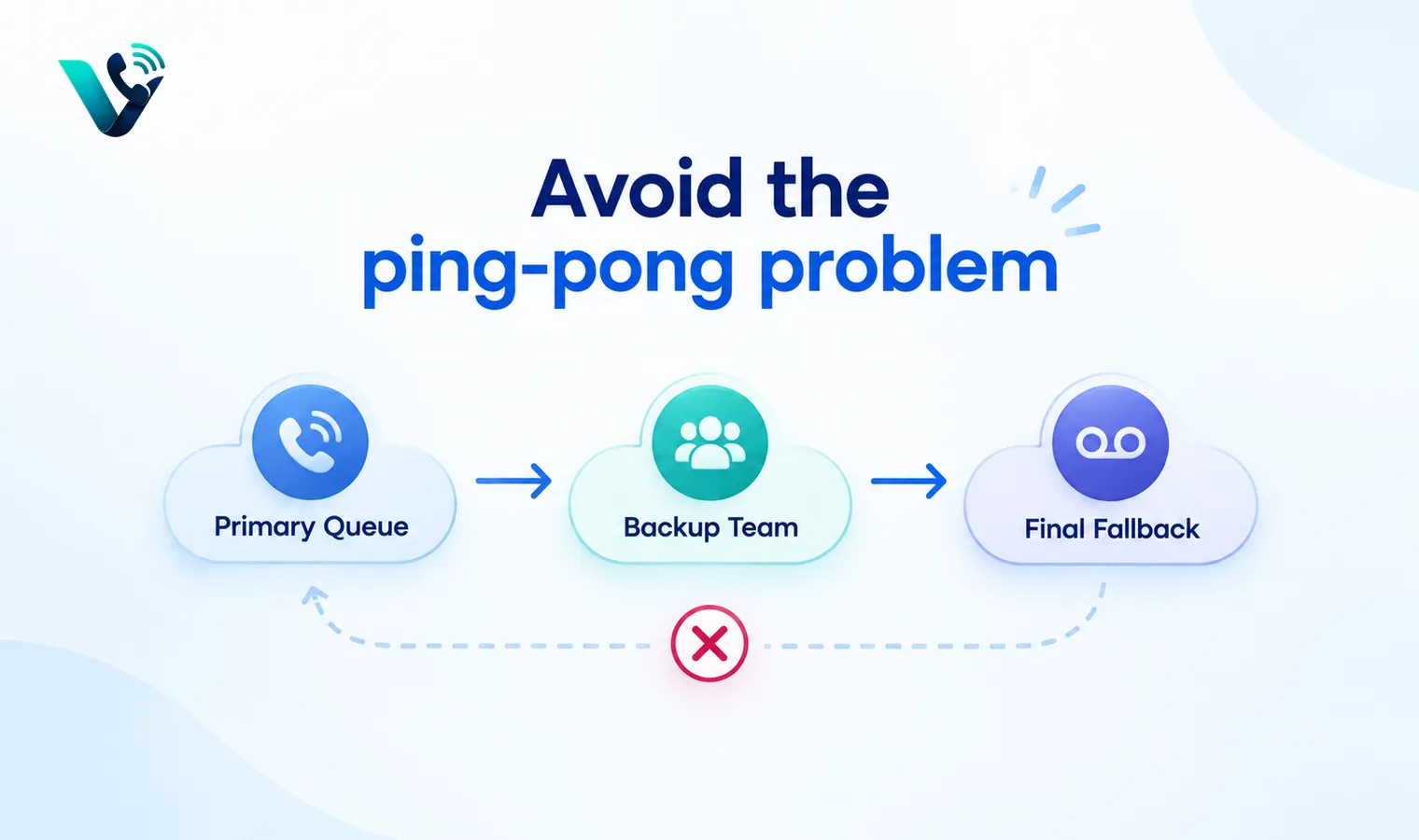
Monitor The Pressure Signals
Track overflow rate, wait before overflow, answer rate in the backup destination, abandonment and repeat-call rate. Rising overflow can indicate a staffing or forecasting issue.
Measurement matters because overflow routing can look healthy while opportunities still leak. Track the whole path from incoming call to human response and final outcome. Raw call counts are useful for workload planning, but they do not explain whether the caller reached the right person, waited too long, received a callback or converted into a useful next step.
Try this on your own numbers
Local numbers in 118 countries, AI call notes and one shared inbox. Live the same day, no contract.
Practical Rollout
Finally, test the workflow like a customer. Call from an external number, try during busy periods and outside normal hours, choose different menu options, let the queue time out and verify every fallback. The most damaging routing problems are often invisible in the administrator view but obvious within one real test call.
Start with one queue and one threshold, review a week of data, then adjust. Simple routes are easier to troubleshoot and own.
How To Connect This Topic To Votelly
Use this article as an educational entry point, then link readers to the most relevant live Votelly product page once the exact feature and URL are confirmed. Safe current destination: www.votelly.com
When related articles in this batch are published, add contextual links between routing, recovery, coaching, wallboard and sales-calling guides. This creates a topic cluster without inventing product URLs that may not exist.
Frequently asked questions
- What is overflow routing?
- Overflow routing is the structured process or configuration used to make business calling more reliable, measurable and easier to manage.
- How should a small team start with overflow routing?
- Start with one clear workflow, one owner and a small number of measurable targets. Add complexity only after call data shows a problem the extra rule will solve.
- What should be measured?
- Track volume, answer or response time, final outcome, abandonment or missed interactions where relevant, and whether the promised next action happened on time.
- How often should the setup be reviewed?
- Review monthly at first and after staffing, schedule, campaign or routing changes. Mature setups can move to quarterly reviews with exception-based monitoring.
- Can automation replace human ownership?
- Automation can route, alert, transcribe and create tasks, but the business still needs a named person or team responsible for the final customer outcome.
- How can Votelly fit into the workflow?
- A cloud business calling platform can centralise numbers, routing and call activity so teams can build consistent workflows across locations. Confirm the exact Votelly features available in your plan before publishing product-specific claims.